Plan switchgear disposition early in a building closure
A commercial building closure or electrical changeout can create a narrow window to assess and remove switchgear. Planning disposition alongside the closure schedule gives the seller, facility team, and buyer time to identify the equipment, establish who owns it, coordinate access, and agree on removal responsibilities before other work limits the available space or time.
For projects in Washington, DC, Northern Virginia, and Maryland, conditions vary from site to site. A downtown loading area, a shared service entrance, a secured campus, and a suburban facility can each have different access rules and scheduling constraints. Do not assume that a truck, crane, or rigging crew can arrive whenever needed. Confirm site access, delivery or loading routes, work hours, security procedures, and any building-management requirements early. These details affect whether a proposed removal plan is workable; they do not establish a final offer or guarantee a particular schedule.
Begin the conversation before the planned outage, closure, or changeout date if possible. The buyer can review the information and make a cash offer after assessing the equipment and project details. If the offer is accepted, payment is arranged upfront. The seller is not required to test the switchgear. Scope, timing, payment arrangements, and removal responsibilities should be confirmed before equipment is taken out.
Identify the lineup before defining the scope
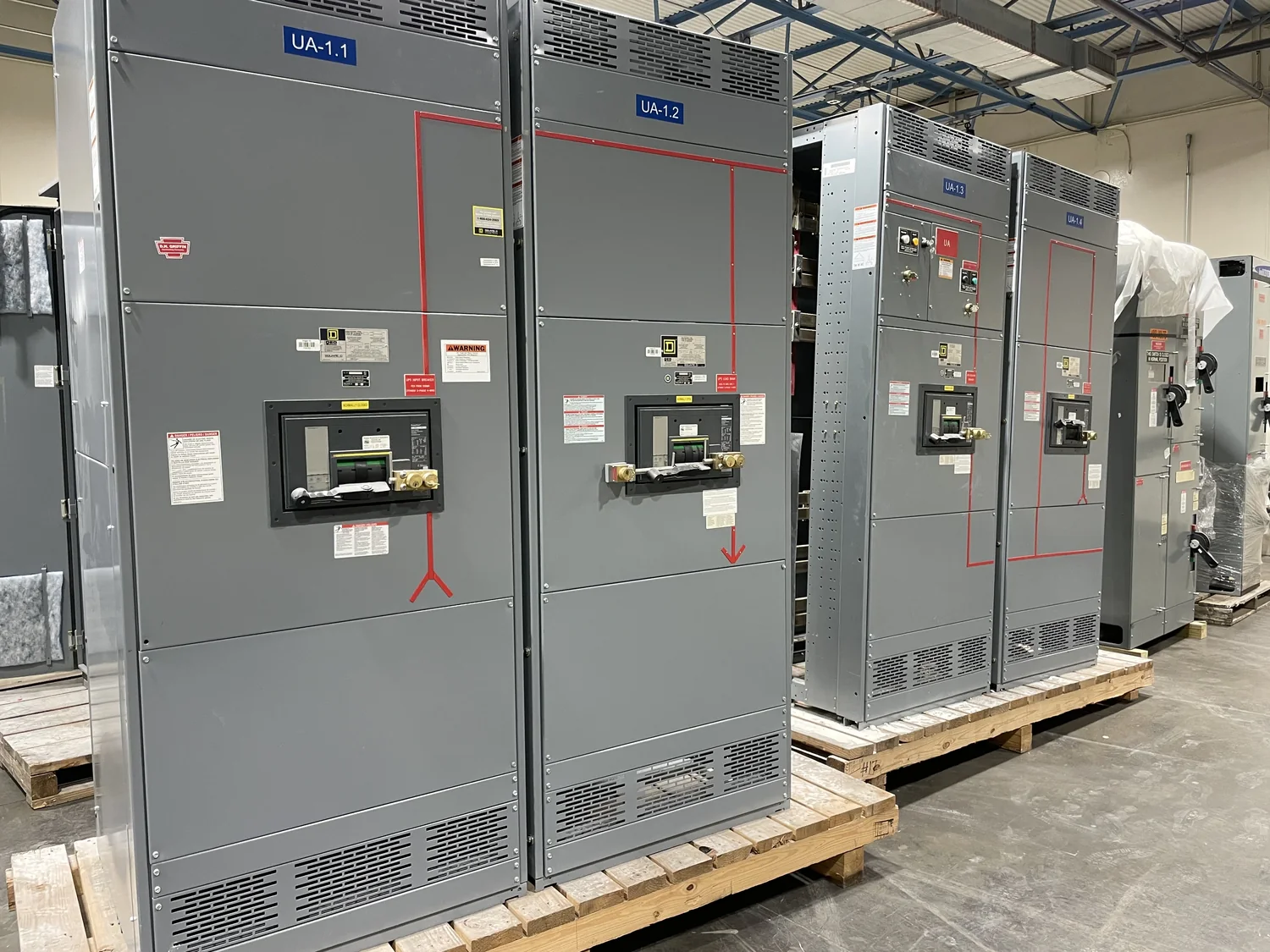
Switchgear can be part of a larger electrical system, and a building closure may involve only some of the equipment in a lineup. Make clear which sections are available and which must remain in place. Include readable photos of the full lineup and individual sections, along with close-ups of nameplates and any visible labels. Share lineup dimensions and, when available, the overall height, width, depth, and approximate weight or handling information. If exact measurements or weights are not readily available, say so rather than estimating them as confirmed facts.
Nameplate information can help the buyer understand what is being considered. Photograph the full plate clearly, including manufacturer, model or catalog information, ratings, and other markings that appear on it. The buyer considers all voltage classes, so do not exclude equipment simply because its voltage is unfamiliar or because detailed specifications are not available yet. Avoid guessing at ratings from appearance; a clear photograph is more useful than an unsupported description.
Describe completeness as accurately as possible. Note whether the lineup includes sections, doors, covers, breakers, drawout components, controls, or other associated items, and identify anything already removed or intended to stay with the building. If components are staged separately, photograph them and explain which equipment they belong to. These details help establish what the offer covers and what must be included in the removal plan.
Confirm ownership, authority, and site access
Before arranging a sale, confirm that the equipment is owned by the seller or that the seller is authorized to transfer it. Commercial properties may involve building owners, tenants, property managers, contractors, lenders, or other parties with responsibilities or interests in equipment. If ownership or authority is shared or uncertain, resolve that question before committing to a transaction or scheduling removal. The buyer can review the available ownership and project information, but the seller should not represent that it has authority unless that is established.
Access information is just as important as equipment information. Explain where the switchgear is located, whether it is indoors or outdoors, and how a removal crew would reach it. Note relevant constraints such as stairs, elevators, door and corridor dimensions, tight turns, low clearances, limited staging space, restricted loading zones, or distance to the truck-access point. Include current photos of the route where practical, especially if equipment must pass through occupied or shared areas.
In the DC region, access and timing may depend on the particular property and its operating rules. Tell the buyer about check-in procedures, escort requirements, reserved loading areas, building notifications, permitted work windows, and any known restrictions on vehicle placement or lifting operations. Do not assume that a location can accommodate a crane or that a street, loading dock, or service entrance will be available. Those arrangements must be checked for the actual site and confirmed with the responsible parties.
Coordinate safe disconnection and removal
The buyer handles crane, rigging, disconnects, loading, freight, and hauling, subject to project arrangements and site access. Confirm in writing before removal how these responsibilities will be carried out, what access the buyer will have, and what the seller or site team must arrange. Equipment location, dimensions, the route out of the building, staging area, and available work window can all affect the removal plan. A site review or additional information may be needed before the scope is set.
Only qualified personnel should de-energize, isolate, and disconnect electrical equipment. Any disconnection must follow the site’s safety and outage procedures and be coordinated with the people responsible for the electrical system. Do not ask building staff, occupants, or other unqualified personnel to open, disconnect, move, or handle energized equipment. Discuss the required outage timing and isolation arrangements with the site team and qualified personnel before setting a removal date.
Tell the buyer about site-specific constraints that could affect lifting or hauling, including overhead obstructions, floor or ground conditions, limited turning space, loading-dock limits, adjacent operations, and restrictions on noise or work hours. Do not assume that equipment can be removed in one piece or that a particular lifting method will be suitable. The removal approach depends on the actual lineup, route, site conditions, and arrangements made for the project.
Share a complete information package before setting the date
A useful first package includes clear photos of the complete lineup, close-ups of every available nameplate, lineup dimensions, and an itemized description of what is included or excluded. Add the equipment location, ownership or authorization information, access details, anticipated closure or changeout schedule, and known removal constraints. Identify any missing information directly so it can be addressed during review. Clear, current photographs and measurements can reduce avoidable back-and-forth, but they do not replace project-specific review.
Once the buyer has reviewed the information, it can make a cash offer for consideration. No final price should be assumed from a brief description, a single photo, or an estimated rating. If the offer is accepted, payment is arranged upfront; confirm the payment and removal arrangements before work begins. No seller testing is required, though the buyer may ask for additional photos or details to clarify the equipment and proposed scope.
For a smoother closure or changeout, agree on the sequence: confirm authority to sell, identify the exact equipment, review access and removal constraints, coordinate qualified disconnection under site procedures, confirm the buyer’s removal responsibilities and project arrangements, and then schedule the work. This approach supports practical planning across Washington, DC, Northern Virginia, and Maryland without presuming the site’s specifications, access conditions, or schedule.