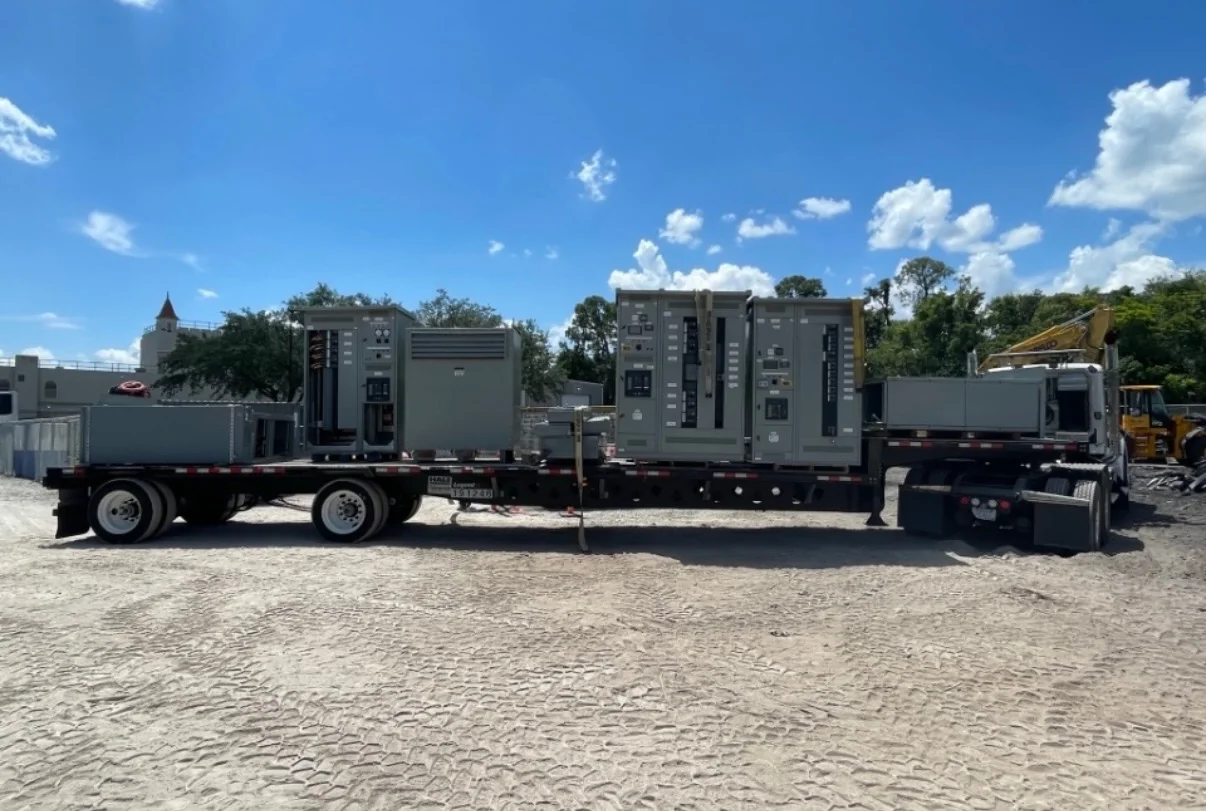
A buyer for switchgear during commercial building decommissioning
When a commercial building is being vacated, renovated, or decommissioned, switchgear may need to be evaluated as part of the facility’s broader equipment disposition plan. The practical first step is to identify what is installed, establish who owns it, and understand how it can be accessed and removed. This buyer serves businesses in Washington, DC, Northern Virginia, and Maryland, and buys electrical equipment; it does not sell equipment or provide a resale catalog.
The buyer can consider switchgear across all voltage classes. No testing is required from the seller to begin a review, and there is no need to arrange energized testing just to request an offer. A preliminary review can start with clear photographs, available nameplate information, approximate lineup dimensions, and a description of the project schedule and site conditions. Those details help determine whether further information or a site-specific removal plan is needed. They do not establish a final price by themselves.
If an offer is made and accepted, payment is arranged upfront. The buyer handles crane, rigging, disconnects, loading, freight, and hauling, subject to the project arrangements and the site’s access and scheduling constraints. Responsibilities and timing should be confirmed before removal is planned. The seller should not assume that a particular piece of lifting equipment, removal method, or pickup date will suit the site until the project has been reviewed.
What to document before requesting an offer
Start with clear, well-lit photos of the switchgear lineup as a whole and of its individual sections. Include front views and, where safely accessible, side, rear, and interior views that show configuration and condition. Do not remove covers, enter restricted areas, or approach exposed electrical hazards to get photographs. Any access or inspection must follow the facility’s safety rules and be handled by appropriately qualified personnel.
Provide legible nameplate photos when available, along with any equipment labels or drawings that identify the lineup. Useful details may include manufacturer and model information, ratings, section count, overall dimensions, and the arrangement of the equipment. This is a request for identifying information, not a claim that any specific brand or configuration will be accepted. If a nameplate is missing or unreadable, say so and share whatever records or images are available rather than guessing at a rating.
Describe completeness as accurately as possible. Note whether the lineup appears to include its sections, doors, barriers, bus components, and associated equipment, and identify anything already removed, damaged, or planned for separate disposition. Include approximate length, height, and depth, plus any known limits on the route from the equipment room to the loading point. Measurements should be verified by someone qualified to access the equipment and surrounding area; estimates can be labeled as estimates.
Ownership and authority to sell matter as much as equipment identity. Confirm whether the business owns the switchgear or is authorized to arrange its disposition, and flag any lease, lender, landlord, contractor, or other party whose approval may be required. If the building is being transferred or decommissioned under a larger contract, identify who can approve removal and payment arrangements. Clear authority helps avoid planning a removal before the right parties have agreed.
Plan access, safety, and removal responsibilities
Switchgear removal is a coordinated project, not simply a freight pickup. Before scope and timing are set, describe the equipment-room location, door and corridor clearances, stairs or elevators, loading-dock arrangements, exterior access, and any known restrictions on truck or crane positioning. If the equipment must pass through occupied areas or shared spaces, explain relevant access windows and coordination requirements. In Washington, DC, Northern Virginia, and Maryland, building-specific access, traffic, loading, and scheduling constraints can vary; confirm applicable arrangements with the property team rather than assuming a standard route.
De-energization, isolation, and disconnect work must be performed by qualified personnel under the site’s safety and outage procedures. Do not ask unqualified employees or contractors to disconnect, open, move, or handle electrical equipment. Coordinate the required qualified personnel, outage window, access permissions, and site procedures with the facility’s responsible team. The buyer handles disconnects as part of the project arrangement, but the exact scope and sequence must be agreed in advance with the site; this does not replace the facility’s safety controls or required coordination.
The buyer handles crane, rigging, disconnects, loading, freight, and hauling, subject to the project arrangements and site access. Before work is scheduled, confirm who is responsible for coordinating access, outage timing, any required site escorts, staging, and the condition in which the equipment will be made available. Share known restrictions on lifting, overhead clearance, floor access, loading areas, and removal paths. These details can affect the removal plan, cost review, and feasible timing, so they should be raised early rather than left to pickup day.
Provide realistic target dates and identify key milestones, such as building turnover, contractor work, or a planned outage. A requested date is not a confirmed schedule: timing depends on review, coordination, site access, and agreed project arrangements. If the lineup is one part of a larger decommissioning, clarify whether it must be removed before other work begins and whether other parties will be working in the same area. Keep the equipment secure and the access route controlled until the project team confirms the plan.
How the offer and project review work
The information provided supports an initial review; it does not guarantee acceptance, a removal method, or a particular offer. A useful submission brings together the photos, nameplates, dimensions, completeness notes, ownership confirmation, site location within the DC-region service area, access details, and target schedule. If important details are unavailable, explain what is unknown. The buyer can then identify what additional information may be needed before setting scope.
There is no seller testing requirement. Do not commission tests solely to begin the buying process unless the facility has a separate operational or compliance reason to do so. Any condition information already on hand can be shared, including known damage or missing components, but a final offer depends on review of the equipment and project circumstances. The buyer considers all voltage classes, while actual identification and logistics remain specific to the lineup being reviewed.
If an offer is accepted, payment is arranged upfront. The buyer pays the crane, rigging, loading, freight, and hauling costs and handles disconnects, with the exact responsibilities and arrangements confirmed for the project. Agree on payment, scope, access, timing, and removal conditions before equipment is disconnected or a crew is scheduled. No final price should be inferred from general descriptions or photographs alone; it requires review of the particular switchgear and its removal circumstances.
A practical submission checklist
Before contacting the buyer, gather overall and detail photos, legible nameplates if available, approximate lineup dimensions, and a clear note about what is complete or missing. Add confirmation of ownership or authority to sell, the building’s location, equipment-room and loading access information, known route or lifting constraints, and a realistic target schedule. Include the name of the person coordinating facility access and qualified site work, if known.
For a building decommissioning in Washington, DC, Northern Virginia, or Maryland, early coordination can make the equipment review more useful and help surface logistical questions before the schedule becomes urgent. Keep technical information factual, distinguish measured dimensions from estimates, and flag approvals or access conditions that remain unresolved. Once the details are reviewed, the buyer can discuss whether to make an offer and, if accepted, confirm upfront payment and the project-specific removal arrangements.