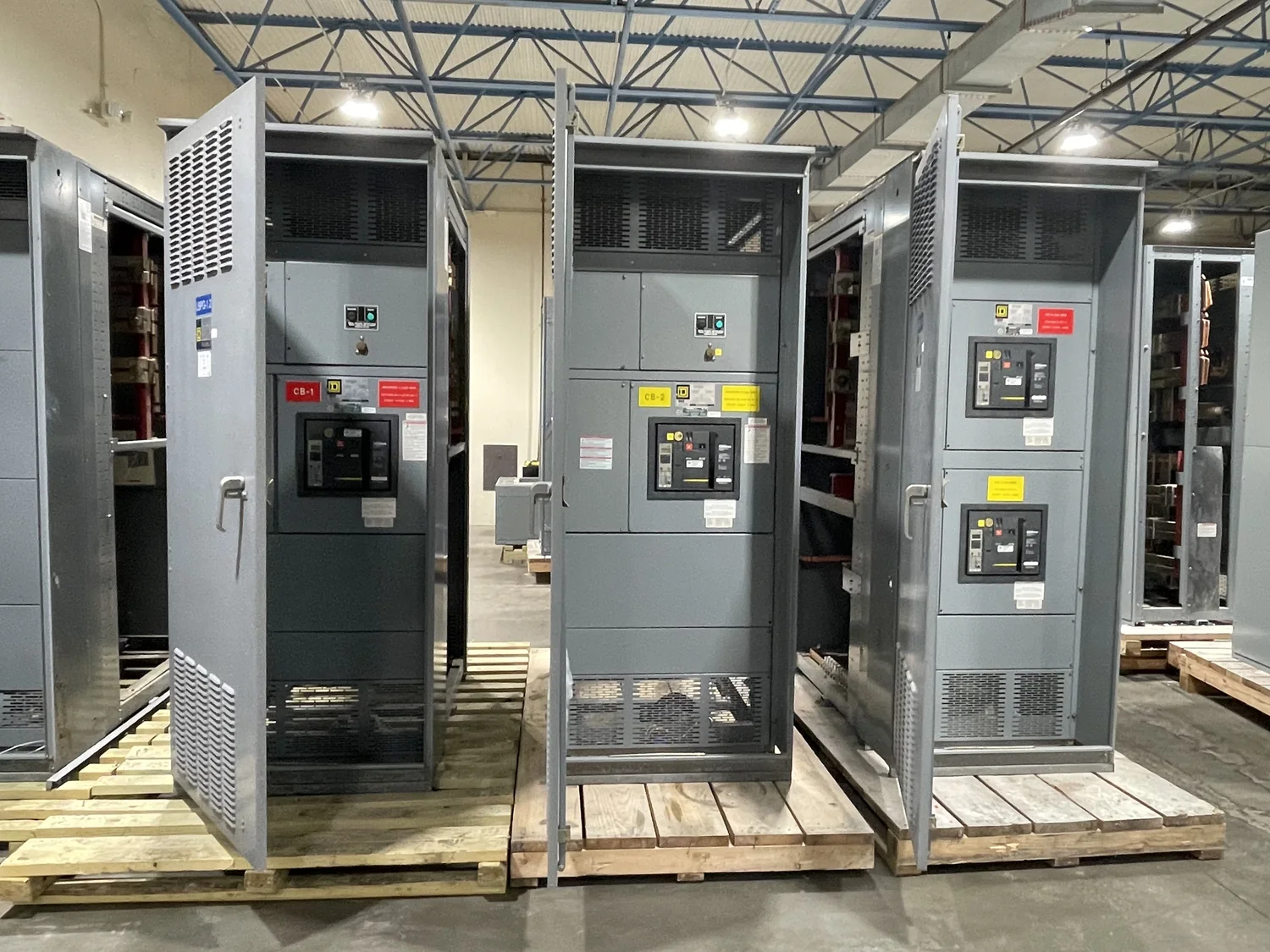
Identify the equipment
A useful first step is to treat the equipment as an identifiable asset, not as an anonymous pile of metal. This guide covers selling 240V low-voltage switchgear from a facility in Washington DC. Record the asset's visible manufacturer, model or catalog marking, serial or identification marking when present, and any readable nameplate information. Photograph the front, rear, sides, doors, labels, bus or cable entry areas, loose parts, and the surrounding lineup without opening energized equipment. Note whether the item is a complete section, a connected lineup, a loose component, or an accessory, and keep each photograph tied to an inventory line. The actual rating should be checked against the nameplate and available equipment records before an offer is finalized. The details you share help us understand the scope and prepare a suitable purchase and removal plan. An inventory can also state what is not known: missing labels, obscured markings, inaccessible faces, uncertain ownership, or equipment that remains connected. Do not infer a rating, compatibility, operating history, remaining life, or code status from appearance. For brand and rating topics especially, use the exact marking on the actual asset rather than treating the page title as proof. This keeps the buyer's review grounded in seller-provided facts and makes later questions easier to answer.
Assess visible condition
For a responsible buyer review, begin with what can be observed and documented without disturbing the installation. Describe visible condition in plain terms: enclosure dents, corrosion, paint loss, cracked or missing covers, broken hardware, contamination, water evidence, removed doors, loose components, and signs of prior disassembly. Separate those observations from operational history. For 240V low-voltage switchgear, a photograph can show presence or damage, but it cannot establish that the equipment is safe, energized, de-energized, functional, or suitable for reuse. List accessories and sections that are absent instead of assuming they are included. If a detail cannot be confirmed from records or photographs, describe it as unknown rather than filling the gap with an assumption. Seller-side testing is not required. Do not energize, open, manipulate, disconnect, or attempt electrical diagnosis merely to improve an inquiry. A qualified electrical specialist must control any work involving energized systems, stored energy, isolation, grounding, disconnects, or regulatory requirements. If a facility has its own safety, outage, security, or environmental procedures, those procedures govern access. The practical goal is an honest visual and documentary record, not a self-performed technical certification.
Plan site access
Before discussing removal, consider the path through the facility in Washington DC to the loading point. Note gates, docks, doors, stairs, elevators, ceiling height, turning space, floor protection, restricted areas, operating hours, escorts, and any need to coordinate with a property manager. Identify whether the equipment is in a basement, mezzanine, rooftop, fenced yard, vault, or active production area. Those physical facts matter as much as the equipment label because a usable path may be limited by building rules or other retained systems. Identifying who controls access and who can approve an outage or release helps the project move forward. Share simple measurements only when they are known and safe to obtain; do not enter restricted or energized areas to collect them. A proposed sequence should distinguish equipment that can be released now from equipment still serving a building, process, tenant, or utility function. That distinction prevents an inventory conversation from being mistaken for authorization to remove operating infrastructure.
Coordinate removal
Removal is a coordinated logistics activity, not an informal pickup. The buyer covers freight and arranges the crane, rigging, loading, and hauling for the agreed scope; the seller should not assume that ordinary staff can move electrical equipment. The seller must identify the equipment boundary, preserve access, disclose hazards and site rules, and make the asset available at the agreed time. Disconnects and all electrical work are handled by qualified specialists under the site's required safety controls. Crane placement, rigging points, lift plans, traffic control, permits, and floor or dock protection are confirmed against actual site conditions rather than guessed from a photograph. A clean handoff also covers loose parts, keys, drawings, labels, and debris boundaries. State whether the buyer is expected to receive only identified equipment or also cabinets, bus sections, breakers, supports, and associated accessories. Do not remove covers, cut conductors, strip components, or separate a lineup before the agreed plan is clear. If access changes, the equipment is found connected, or a safe lift path is unavailable, pause and revise the scope with the responsible site contacts. This protects people, retained infrastructure, and the accuracy of the asset record.
Payment and next steps
We make cash offers and provide payment upfront for accepted purchases. The specifics of an offer are documented after we review the inventory and practical removal conditions. Send the equipment location, equipment list, nameplate photographs, visible-condition notes, ownership or release information, access limits, and timing constraints through the contact form or by text. The buyer can then clarify what is in scope, what remains uncertain, which site contacts are needed, and what documentation is required before scheduling. A page title, rating, brand, or photograph alone does not determine a price or acceptance; each offer depends on review. Before work begins, record the agreed equipment boundary, responsibilities for specialist disconnects, crane and rigging coordination, loading, freight, and hauling, as well as the planned payment method and timing. Confirm ownership authority, release conditions, site rules, insurance or access paperwork requested by the facility, and the person who can approve changes. We arrange qualified personnel for the disconnect and removal work, coordinated with the site's electrician, engineer, property manager, and safety program as needed. Clear roles and an agreed plan make the next step straightforward.