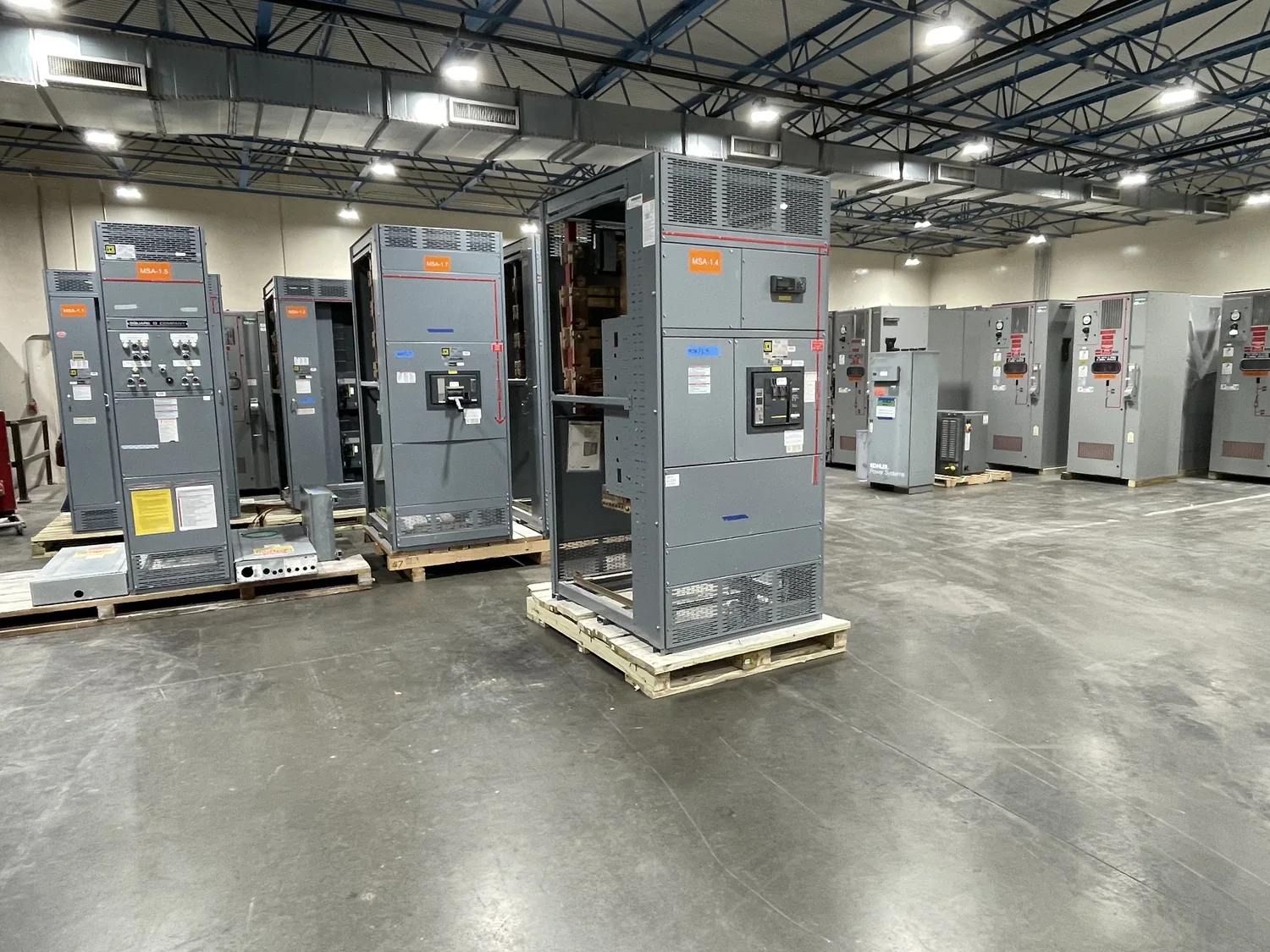
Sell Used Disconnect Switches in the Washington, DC Region
If your business, institution, or industrial facility in Washington, DC, Northern Virginia, or Maryland is planning an electrical upgrade or clearing surplus equipment, you can request an offer for used disconnect switches. We buy equipment; we do not sell it. We consider disconnect switches across all voltage classes, and the seller does not need to test the equipment before requesting a review.
A useful first step is to share clear photographs, nameplate images, approximate lineup dimensions, and a brief description of the equipment’s condition and completeness. Include the quantity, where the switches are located, and whether they are installed, staged, or already removed. These details help us understand what is being offered and identify questions to resolve before setting scope. A preliminary review is not a final price: any offer depends on the equipment information and project conditions being reviewed.
Information That Helps Shape an Offer
Photograph each disconnect from several angles, including the overall assembly, visible operating mechanisms, cabinets or sections, and any included accessories or components. Take close, legible photos of every available nameplate and identification label. If a label is damaged or unreadable, say so rather than guessing at its contents. Do not remove covers or approach energized equipment to obtain photographs; follow the facility’s access and safety rules, and have qualified personnel assist where needed.
Provide approximate lineup dimensions and note whether the equipment is a standalone switch or part of a larger lineup. Mention visible damage, missing parts, modifications, storage conditions, and whether related sections or accessories are included. The review may also depend on the equipment’s ratings and configuration as identified by its nameplate, as well as its completeness. No specific manufacturer or voltage specification should be assumed from appearance alone; the information supplied and the equipment review will guide the assessment.
Please also confirm that the seller has authority to transfer the equipment. If the disconnects are owned by a landlord, tenant, contractor, lender, or another organization, clarify who can approve the sale and removal. Ownership and authorization should be settled before removal is scheduled. These practical details help prevent avoidable delays after an offer is considered.
Site Access, Safety, and Removal Planning
Disconnect switches may be located in electrical rooms, service areas, basements, rooftops, or other restricted parts of a facility. Describe the route from the equipment to the loading area, including doorways, corridors, stairs, elevators, loading docks, gates, and any relevant height, width, weight, floor-loading, or vehicle restrictions. Photos of the equipment location and removal route can help identify constraints, but share them only in accordance with your site’s security and access policies.
Do not ask unqualified staff to disconnect, move, or handle electrical equipment. De-energization, isolation, and disconnect work must be carried out by qualified personnel in accordance with the facility’s safety requirements and outage procedures. Coordinate access, work windows, escorts, shutdown timing, and any required internal approvals with the site team. Disconnect work and removal scheduling must be agreed for the specific project; the buyer’s handling of removal logistics does not replace the facility’s electrical-safety responsibilities.
The buyer handles crane services, rigging, loading, freight, and hauling, subject to project arrangements and actual site access. Responsibilities and the planned sequence should be confirmed before removal. The removal plan may depend on equipment dimensions and weight, lifting points, available staging space, vehicle access, clearance, and whether the switch is attached to or integrated with other equipment. Identify any restrictions or site procedures early so the parties can determine whether the proposed approach is workable.
Scheduling a Sale Across DC, Northern Virginia, and Maryland
Commercial, institutional, and industrial properties in the Washington, DC region can have different access rules and work-hour requirements. Rather than assuming a standard pickup window, share the site’s available dates, permitted working hours, loading arrangements, security check-in process, and any advance coordination needed for contractors or vehicles. If removal must occur during a planned outage, construction phase, lease turnover, or asset-disposition deadline, describe the timing when you request a review.
Scheduling should account for the people responsible for the equipment, facility access, qualified electrical work, and the removal crew. A site contact should be available to confirm the equipment included in the sale and guide the agreed process. If the equipment is part of a larger lineup, clarify what may be removed and what must remain in place. Do not assume neighboring sections, conductors, enclosures, or other electrical assets are included unless the project scope expressly says so.
Because access and removal conditions vary from site to site, timing is not guaranteed until the relevant arrangements have been reviewed and confirmed. Clear information about access limitations, removal constraints, and the site’s coordination requirements helps establish a realistic plan for a facility in DC, Northern Virginia, or Maryland.
Payment and Next Steps
To begin, provide the available nameplate details, clear equipment and location photos, approximate lineup dimensions, quantity, completeness notes, ownership confirmation, and site-access information. Include the best contact for arranging a review and resolving questions. If some details cannot be obtained safely or are not available, state that directly. No seller testing is required; never energize or operate a disconnect solely to prepare it for a sale inquiry.
After the equipment and project information are reviewed, an offer may be made. A final price is not available without that review, and a request for information does not commit either party to a transaction. If an offer is accepted, payment is arranged upfront. The buyer pays the crane, rigging, loading, freight, and hauling costs, with removal responsibilities and project arrangements confirmed before the work is scheduled.
Before proceeding, make sure the sale is authorized, the equipment scope is clear, qualified personnel are assigned to any de-energization and disconnect work, and site access has been coordinated. This gives both sides a practical basis to evaluate used disconnect switches and plan a safe, organized removal across the Washington, DC region.