Warehouse Switchgear Decommissioning Buyer
Decommissioning a warehouse can involve more than clearing shelves, racks, and production equipment. Electrical switchgear may be part of the facility’s distribution system, and deciding what happens to it takes advance coordination among the owner, facility team, electrical contractor, and buyer. For businesses in Washington, DC, Northern Virginia, and Maryland, this page explains how to prepare switchgear for a purchase review and how removal responsibilities are coordinated.
We buy switchgear being dispositioned during warehouse decommissioning; we do not sell electrical equipment. We consider equipment across all voltage classes, and the seller is not required to test it. A review begins with information about the specific equipment, its ownership, condition as represented, and the practical conditions for access and removal. No final price can be set from a general description alone.
Start with an Equipment and Ownership Inventory
Before a warehouse is cleared, identify which switchgear belongs to the property owner or seller and which items may be leased, financed, shared with another tenant, or otherwise subject to third-party rights. A purchase can proceed only when the seller has authority to transfer the equipment. If ownership or title is uncertain, resolve that question with the relevant parties before arranging removal; do not assume that equipment attached to a building is automatically available for sale.
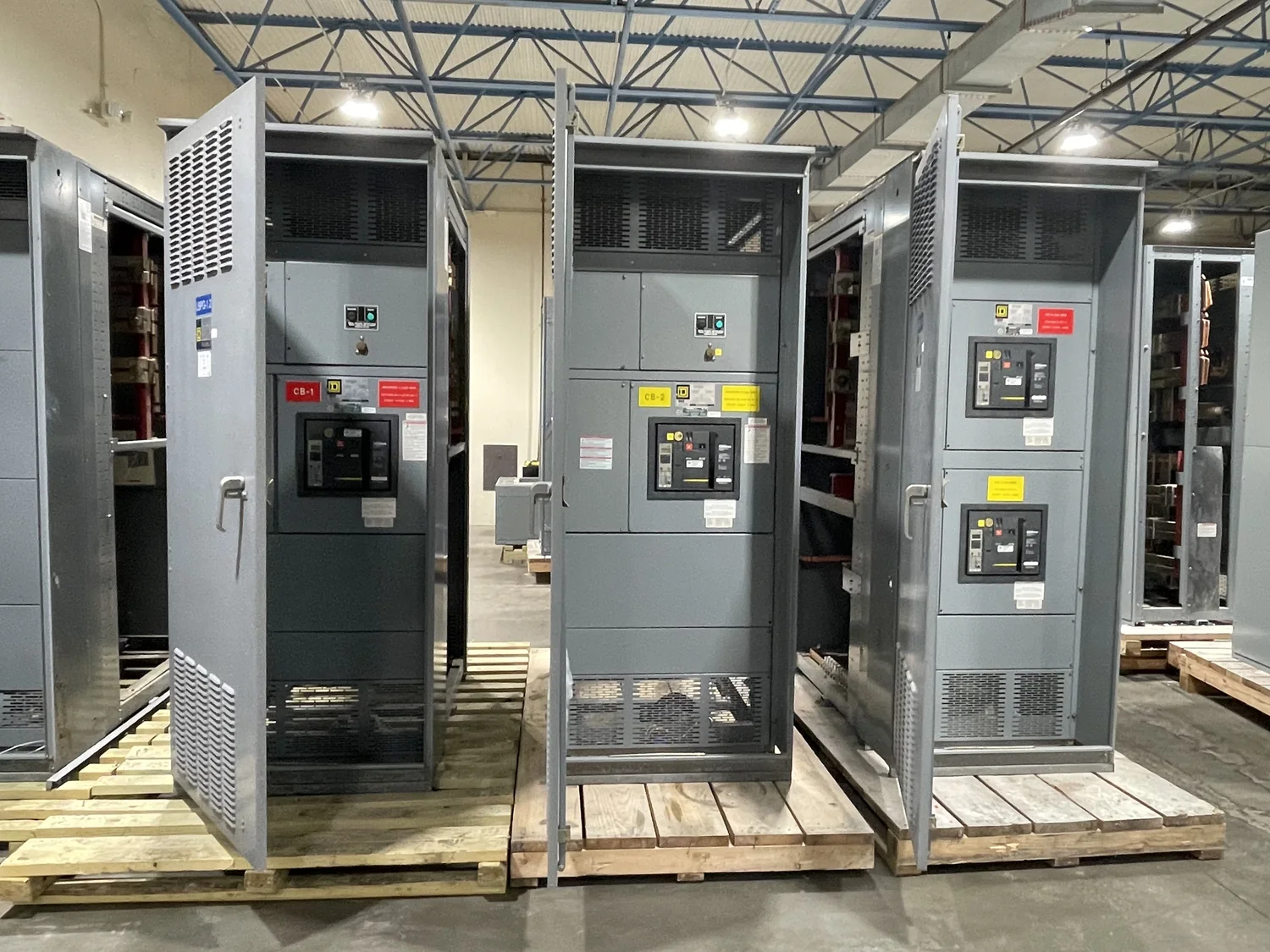
Send clear, well-lit photographs of the complete lineup and its visible sections, along with close-ups of each available nameplate. Nameplate details can help identify the equipment and its stated ratings, while wide views show how sections are arranged and where connections or obstructions may affect removal. Include lineup dimensions—overall length, height, and depth when available—and note whether the measurements are approximate or confirmed. A simple sketch or marked-up photograph can help explain the layout, particularly where the gear is installed in a narrow electrical room or near other warehouse equipment.
Describe what appears to be included in the sale, such as the lineup and any associated components the seller intends to transfer. Mention visible gaps, removed covers, missing sections, damage, or items that are not included. These details support an informed review; they do not substitute for a technical inspection or establish a guaranteed value. The buyer may ask follow-up questions or request additional photographs before deciding whether to make an offer.
Share Site Access and Removal Constraints Early
A warehouse can have practical access limits that shape the removal plan. Explain where the switchgear is located, how a crew and equipment could reach it, and whether the route includes low clearances, narrow doors, stairs, ramps, tight turns, dock restrictions, overhead obstructions, or areas that must remain available to other occupants. If the equipment is indoors, describe the path from its installed location to the proposed loading area. Photos of the room, doors, corridor, dock, and outside approach can help clarify the route without requiring a site visit as the first step.
Also share any known limits on staging, loading, vehicle access, working hours, building access, security check-in, parking, or coordination with a landlord, property manager, or neighboring tenant. In the DC region, urban sites and occupied or shared facilities may require extra scheduling and access coordination, but conditions vary by property; provide the actual site rules rather than relying on assumptions about the location. Identify deadlines tied to a lease turnover, building clearance, construction sequence, or warehouse closure, and distinguish firm dates from preferred timing.
Removal is subject to project arrangements and safe, workable site access. The buyer handles crane, rigging, loading, freight, and hauling, with responsibilities and the removal scope confirmed before work begins. Share known rigging or crane constraints, including limited setup space or restricted access, and flag equipment or building features that could affect a removal route. The buyer and site representatives can then coordinate the plan and timing before committing to a removal schedule.
Coordinate De-Energization and Disconnect Work Safely
Switchgear must not be disconnected or handled by unqualified personnel. De-energization, isolation, verification, and disconnect work must be carried out by qualified personnel under the site’s applicable safety procedures and outage controls. The facility’s authorized representatives and electrical contractor should establish what must be isolated, who will perform the work, and when the equipment can be released for removal. The buyer’s purchase review is not a substitute for the site’s electrical-safety planning.
Coordinate outage timing and access among the site, the qualified electrical personnel, and the buyer before removal is scheduled. Confirm whether the installation must remain in service until a particular date, whether the decommissioning sequence depends on other building work, and when the equipment area can be made available. Do not remove covers, expose conductors, disconnect wiring, or move equipment to prepare for an offer. If the gear is already disconnected, describe that status and identify who completed the work, without treating the description as a replacement for the site’s own records and controls.
A clear handoff plan helps prevent uncertainty about the boundary between electrical work and physical removal. Before the project is set, confirm who is responsible for making the equipment available, what the buyer may remove, what must remain in place, and how the work area will be accessed. Any disconnect or removal sequence should follow the facility’s procedures and be coordinated for the specific project.
Offer, Payment, and Buyer-Handled Logistics
After reviewing the photographs, nameplates, dimensions, equipment scope, ownership information, and site details, the buyer may make a cash offer. The offer is subject to review of the specific equipment and project conditions; an initial discussion or preliminary range is not a final price. If an offer is accepted, payment is arranged upfront. Confirm the agreed amount, payment timing, items included, and any conditions in writing before the removal is scheduled.
The buyer pays the crane, rigging, loading, freight, and hauling costs, with responsibilities confirmed for the project before removal. Share any known site charges or access rules that could affect coordination, and clarify the work area, loading point, and available removal window with the relevant site contacts. The buyer handles these removal logistics subject to the agreed scope, project arrangements, and safe site access; the seller should not assume that equipment can be removed before those details are reviewed and coordinated.
To begin, provide clear equipment photos, readable nameplates where available, lineup dimensions, an inventory of what is included, confirmation of ownership or authority to sell, and practical details about site access and removal constraints. Include the expected decommissioning schedule and the contact responsible for coordinating with qualified electrical personnel. This information gives the buyer a sound basis to evaluate the switchgear and discuss an offer and removal plan for a warehouse decommissioning project in Washington, DC, Northern Virginia, or Maryland.