Plan the disposition before the closure date
A utility substation closure or changeout can involve equipment that must be evaluated, documented, and removed within a tightly coordinated project window. If you are planning to dispose of switchgear in Washington, DC, Northern Virginia, or Maryland, begin the buyer conversation early—before outage, demolition, or site-access dates are fixed. Early review gives both sides time to identify the equipment, confirm ownership and access requirements, and agree on a practical removal scope.
This is a buying service, not a sales channel: the buyer reviews switchgear for a possible purchase and can make a cash offer after assessing the information provided. If an offer is accepted, payment is arranged upfront. The seller does not need to test the equipment for the buyer. An offer and removal plan depend on review of the specific assets and project conditions; no final price or removal commitment should be assumed before that review and agreement.
Share the planned closure or changeout timeline, the expected date equipment can be released, and any known deadlines for clearing the site. In the DC region, access and scheduling can depend on the particular facility, its operating procedures, and coordination with the project team. Do not assume a familiar route, staging area, or removal window will be available: describe the site-specific constraints and confirm timing and responsibilities before work is scheduled.
Build a clear equipment record
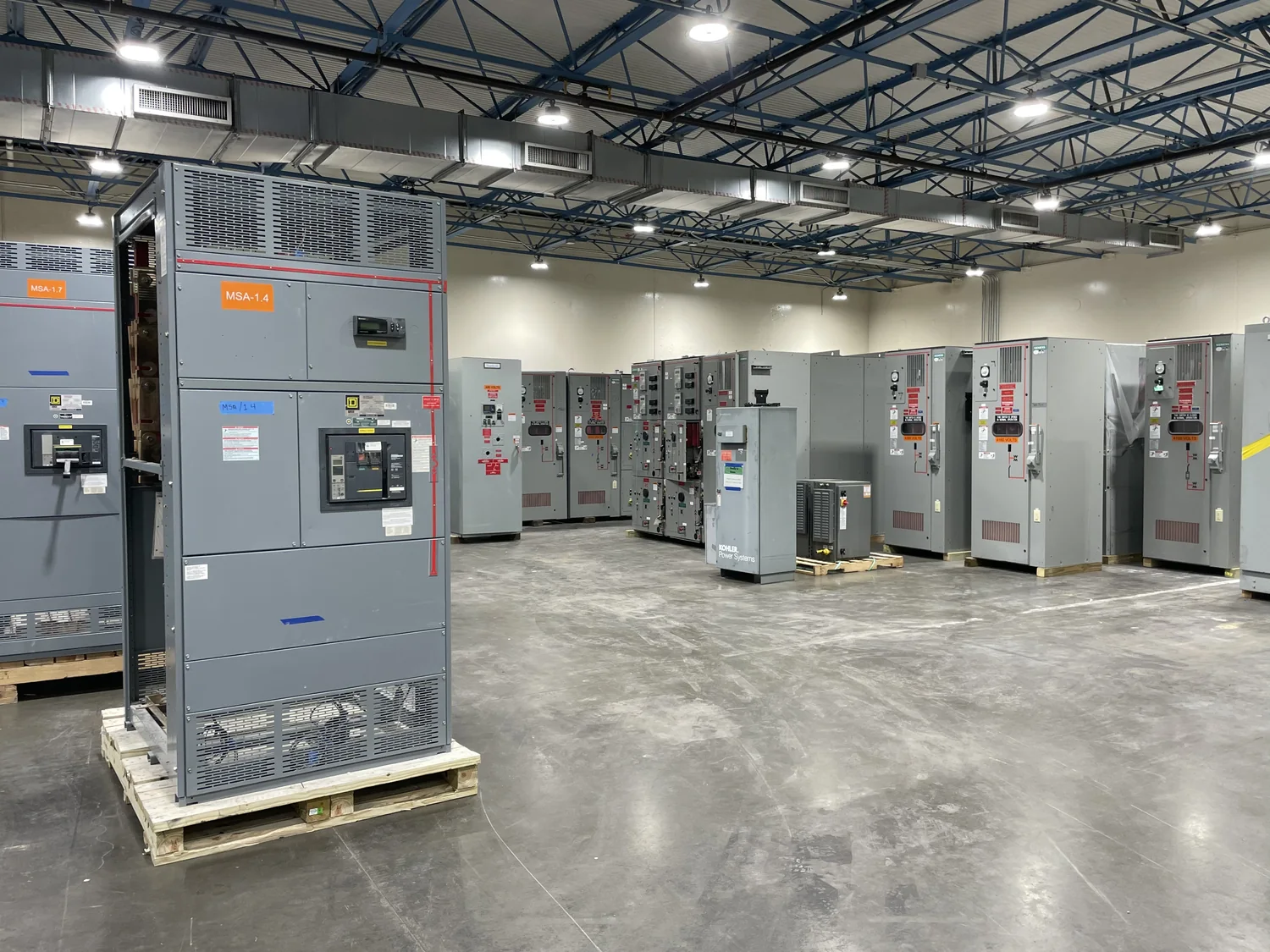
Start with clear, readable photographs of each switchgear lineup and, where practical, individual sections, nameplates, labels, and visible accessories. Include wide views that show how the lineup is arranged and close-ups that help identify the equipment. Provide nameplate details as legible images or transcribed information; do not guess at ratings or specifications when a label is unclear. The buyer considers all voltage classes, so the stated voltage class does not by itself exclude an asset from review.
Lineup dimensions help establish the likely scope and removal requirements. Share approximate overall length, height, and depth, along with the number of sections or bays if known. Note whether there are separate enclosures, bus sections, control compartments, or other components being included. If dimensions are estimates, label them as such. Measurements and photos support an initial review but do not replace an on-site confirmation when the project scope requires one.
Describe completeness and condition factually. Identify sections or components that are missing, separated, damaged, modified, or already removed, and say whether associated items are included or excluded. Do not represent unverified operating condition as a tested result. No seller testing is required, and the buyer can review the available information without asking the seller to energize or test the equipment. The amount and quality of documentation can affect how confidently the scope can be assessed, but it does not guarantee an offer or a particular value.
Confirm ownership, authority, and site access
Before setting a removal scope, establish who owns the switchgear and who is authorized to approve its sale and release. If the assets are part of a utility, contractor, property owner, or project entity’s inventory, identify the appropriate decision-maker and any internal review needed before equipment can be transferred. The buyer will need enough information to understand that the seller can authorize the disposition; do not assume that possession alone establishes authority to sell.
Explain where the equipment is located within the facility and how a removal crew and lifting equipment could reach it. Useful details include gate or entrance procedures, escort requirements, loading and staging areas, overhead or doorway clearances, floor or access limitations, restricted work zones, and any limits on truck or crane positioning. These details are particularly important when planning work across the DC, Northern Virginia, and Maryland service area, where the actual route and facility conditions must be assessed for each project rather than assumed from the region alone.
Share known site rules, required coordination steps, and the people responsible for approving access and removal. Clarify whether equipment is indoors or outdoors, whether it is elevated or located in a constrained room, and whether other work could affect the path or schedule. The buyer can review the information and discuss a proposed approach, but access, timing, and responsibilities must be confirmed for the specific site before removal is arranged.
Coordinate safe disconnection and removal
Switchgear must not be disconnected, opened, or handled by unqualified personnel for purposes of preparing it for sale or removal. De-energization, isolation, and disconnect work must be performed by qualified personnel under the site’s safety procedures and applicable outage process. The seller and buyer should coordinate the required sequence, responsible parties, access, and timing as part of the project plan. The buyer does not ask the seller to bypass site controls or make equipment available before the facility has authorized the work.
The buyer handles crane, rigging, disconnects, loading, freight, and hauling, subject to the agreed project arrangements and actual site access. Confirm those responsibilities explicitly before removal so the parties understand what work is included, what approvals or coordination are needed, and when the buyer’s crew and equipment can enter. The buyer pays the crane, rigging, loading, freight, and hauling costs; the scope and practical arrangements should still be confirmed for the specific removal.
A workable plan should account for lifting points or other removal constraints that are known, the route from the installed location to the loading area, staging space, and any sequencing requirements imposed by the closure or changeout. Provide photos of the equipment’s surroundings and access path when possible, not just the lineup itself. If a constraint is uncertain, describe it rather than treating it as resolved. Final logistics depend on the equipment, facility conditions, and agreed scope.
Request a review and written project scope
For an initial review, send the equipment photographs and nameplates, lineup dimensions, available ratings and configuration details, a description of completeness, ownership and authorization information, and site-access details. Include the closure or changeout timeline, the expected release date, and any outage or work-window coordination requirements already known. A concise, organized package helps the buyer identify follow-up questions and determine whether it can make an offer.
After reviewing the information, the buyer can discuss a cash offer and the proposed disposition plan. If the offer is accepted, payment is arranged upfront. Before removal, confirm the equipment included, the agreed payment arrangement, the work window, site access, and responsibilities for disconnection and removal logistics. An initial review is not a substitute for that project-specific confirmation, and no price should be treated as final until the buyer has reviewed the relevant details and the parties have agreed.
A closure schedule may change as operational priorities, approvals, or site conditions develop. Tell the buyer promptly if the release date, equipment scope, access route, or removal window changes. Clear communication helps keep the disposition plan aligned with the facility’s safety and outage procedures without promising that a particular schedule or outcome can be guaranteed.