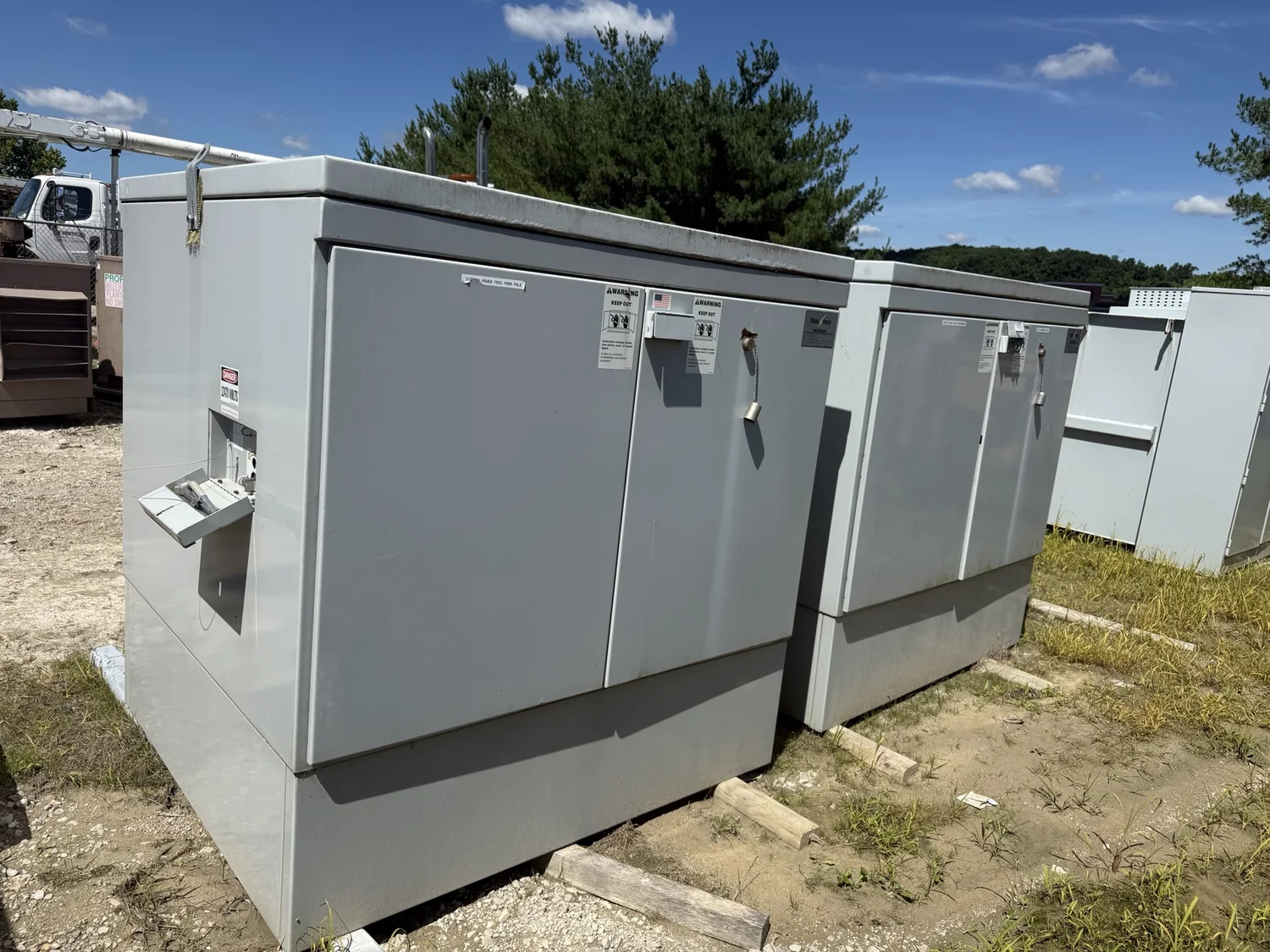
Switchgear removal responsibility: agree on the scope first
When a facility in Washington, DC, Northern Virginia, or Maryland is planning to remove switchgear, a practical first question is who is responsible for each part of the work. The answer should be documented before a removal date is set. The equipment buyer can make a cash offer and, if the offer is accepted, pays upfront. The buyer also handles crane, rigging, loading, freight, and hauling, subject to the project arrangements and the conditions at the site. No testing is required from the seller.
That does not mean every task at the facility transfers automatically to the buyer. The seller and buyer should confirm responsibilities, access, timing, and any site-specific requirements before removal. In particular, de-energization, isolation, and disconnect work must be completed by qualified personnel under the facility’s safety and outage procedures. Site staff should not assign electrical work or equipment handling to unqualified people. Clarifying these boundaries early helps the parties plan a workable handoff without assuming facts about the facility or its equipment.
Start with information that can define the equipment and offer
Before an offer or removal scope can be reviewed, share clear photographs of the switchgear and its nameplates, along with the lineup’s overall dimensions. Useful photos often include a full view of the lineup, close-ups of readable nameplates, and views that show how sections are arranged and whether accessories or related components are present. If the equipment is already separated into sections, note that in the description and photograph the pieces as they are currently staged.
Nameplate details and visible ratings can help identify what is being considered, but no particular manufacturer, design, or voltage should be assumed from the location or a partial photo. All voltage classes are considered. Include any available inventory or configuration information, but do not delay an initial conversation simply because a document is unavailable. The buyer can review what is supplied and identify any follow-up information needed before setting a scope. A final price should not be treated as established until the equipment and project details have been reviewed.
Describe completeness as accurately as possible. Mention whether the lineup appears intact or whether sections, doors, breakers, controls, bus components, or other items are missing or have been removed; report only what you can verify. If the equipment’s condition or configuration is uncertain, say so rather than estimating. Testing is not required by the seller, and photos or records should not be presented as a substitute for a requested inspection or review.
Confirm ownership, authority, and site access
A removal discussion also needs to establish that the seller owns the equipment or has authority to arrange its disposition. If ownership is held by another entity, or a landlord, tenant, lender, contractor, or other party must approve the transaction, identify the approval path before scheduling. This is a practical step for avoiding delays; it does not presume any particular legal arrangement at a facility.
Access information is equally important in the DC region, where project conditions can vary substantially between sites. Share the facility’s general location, the preferred contact for coordinating entry, available access windows, and known restrictions on vehicles, staging, loading areas, elevators, corridors, or delivery routes. Note any building rules, security procedures, site check-in steps, or coordination with other work that may affect the schedule. Do not assume a truck or crane can reach the equipment merely because it is inside the building or near an exterior entrance.
The buyer’s responsibility for crane, rigging, loading, freight, and hauling remains subject to project arrangements and site access. The parties should review the proposed route from the equipment to the loading point, the staging area, and any constraints that could affect machinery or crew access. If there are known limits on doors, turns, floor access, overhead clearance, loading-dock use, or work hours, communicate them early. These details help determine whether the planned removal approach is feasible and what coordination is still needed.
Set removal boundaries and schedule the work safely
Before removal, confirm who is coordinating the facility’s outage, de-energization, isolation, and disconnect work. Those activities must be performed by qualified personnel in accordance with the site’s procedures. The buyer’s role in arranging removal logistics does not authorize unqualified personnel to disconnect, move, or handle energized electrical equipment. The seller and buyer should agree how the equipment will be made available for removal and when the buyer’s crew and contractors may enter the work area.
Discuss the expected sequence and timing, including when the equipment will be released, when the removal crew may access the area, and whether other facility work could affect the planned window. The exact approach depends on the equipment’s configuration, its location, the route out of the building, and any restrictions identified by the site. Avoid promising a removal date or method until those details have been reviewed and the necessary site coordination is in place.
The parties should also document what is included in the transaction and what remains at the facility. Confirm which lineup sections and associated items are part of the sale, whether anything has already been removed, and whether there are components nearby that are not included. Clear boundaries reduce confusion during loading and help keep the agreed scope aligned with what is actually accessible.
Payment, costs, and a straightforward handoff
If the seller accepts the buyer’s offer, payment is arranged upfront. The buyer pays the crane, rigging, loading, freight, and hauling costs, with the details confirmed as part of the project arrangements. The offer and logistics should be reviewed together: the equipment information, ownership authority, completeness, dimensions, site access, removal constraints, and timing all inform the practical scope. No final price can be stated without reviewing the specific equipment and project details, and an offer should not be treated as a guarantee of a particular removal date or method.
To begin, send clear equipment photos and readable nameplates where available, lineup dimensions, a description of what is included and its apparent completeness, confirmation of ownership or authority to sell, and the access and scheduling details you know. Identify any removal constraints, including route limitations, site work windows, or coordination requirements. With that information, the buyer can review the opportunity, discuss a cash offer, and confirm responsibilities before removal is scheduled. The result is a more predictable handoff for sellers across Washington, DC, Northern Virginia, and Maryland—without asking the seller to perform testing or electrical disconnect work.