Plan switchgear disposition early in a hospital project
A hospital campus closure or switchgear changeout can involve more than identifying equipment to remove. Clinical operations, facilities teams, contractors, asset owners, and project schedulers may all have responsibilities that affect when a lineup can be accessed and what must happen before removal. Early planning gives the buyer time to review the equipment and logistics while the facility’s project team retains control of site safety, outage decisions, and work sequencing.
This buyer serves Washington, DC, Northern Virginia, and Maryland. It buys electrical equipment and can make a cash offer; it does not sell equipment. If an offer is accepted, payment is arranged upfront. The seller is not required to test the switchgear. The buyer considers all voltage classes, but any offer and removal plan depend on review of the specific equipment, its condition and completeness, ownership, access, and project arrangements. No final price can be determined from a general description alone.
For a campus project, start the disposition conversation while the equipment is still identifiable and before access or removal windows become fixed. Share the anticipated schedule, the site’s process for arranging access, and any known constraints on staging or truck movement. These details help establish whether the equipment can be reviewed and removed within the project’s planned sequence; they do not replace the facility’s own approvals or safety procedures.
Build a clear equipment record before scope is set
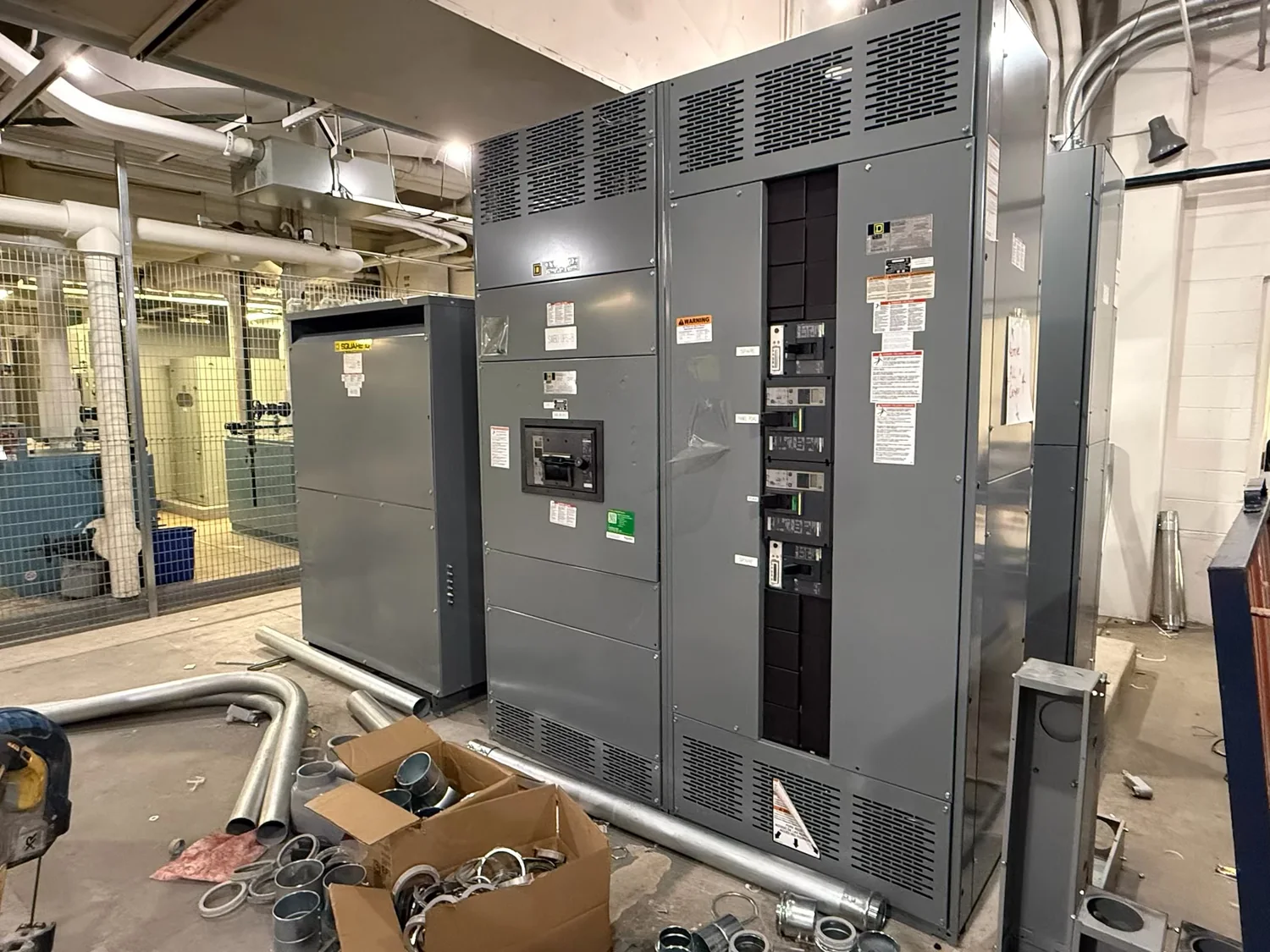
Provide clear photographs of the switchgear as installed, including the overall lineup, fronts, sides where accessible, and any visible sections or components that are part of the disposition. Close, readable nameplate photos help identify the equipment for review. Do not open energized equipment, remove covers, or enter restricted areas to obtain a photograph. Follow the facility’s access rules and use qualified personnel whenever a safe view requires work beyond ordinary observation.
Include lineup dimensions and, if available, a drawing or other record showing the arrangement and the space around it. Note the approximate overall length, height, and depth, along with the direction of removal and any narrow doorways, corridors, turns, loading docks, stairs, elevators, or level changes along the route. Dimensions are useful for preliminary planning, but the actual access path and lifting conditions must be confirmed before removal responsibilities and timing are set.
Describe what is included and what is not. A lineup may be offered as a complete assembly or as specified portions, depending on the project and what the buyer can review. Identify sections, doors, barriers, bus or connecting components, and associated items that are included in the proposed disposition, if known. Mention missing, damaged, altered, or separated parts rather than assuming they are present. Completeness and configuration can affect review, handling, and the scope of an offer. Do not remove components simply to improve the presentation; any project work should be coordinated with the facility and qualified personnel.
Share ownership information and identify who has authority to approve the sale and coordinate removal. If equipment is owned by a landlord, tenant, institution, project entity, or another party, clarify the applicable decision-maker before setting scope. The buyer needs enough information to understand what is being offered and who can authorize disposition. This is practical due diligence, not a substitute for the seller’s internal asset, contract, or legal review.
Coordinate outages, access, and safe removal
A hospital campus may have limited work windows, controlled entry, occupied buildings, restricted service routes, and competing construction or facilities activity. These are planning considerations, not assumptions about any particular site. Explain the access process, available work periods, escort or check-in requirements, vehicle restrictions, staging options, and any known limits on noise, traffic, or work near active operations. Coordinate these details with the buyer before confirming a removal plan, and avoid sharing sensitive security information through an unsecured channel.
Switchgear must not be disconnected or handled by unqualified personnel. De-energization, isolation, verification, and disconnect work must be performed by qualified personnel under the site’s safety procedures, outage controls, and authorized work plan. The facility’s responsible staff determine whether and when equipment can be made available. Coordinate timing so that disconnects, site access, lifting, loading, and departure fit the project schedule; an offer does not authorize work or establish an outage window.
The buyer handles crane, rigging, disconnects, loading, freight, and hauling, subject to project arrangements and site access. Confirm the division of responsibilities before removal, including the planned work sequence, who coordinates the required site access, and what conditions must be in place for the buyer’s work to proceed. The buyer pays the costs for crane, rigging, loading, freight, and hauling. Any equipment removal remains dependent on agreed arrangements, safe access, and the facility’s scheduling and safety requirements.
Lifting and transport feasibility depend on more than the weight or dimensions of the lineup. Door and corridor clearances, floor and loading-area conditions, turning space, overhead obstructions, staging distance, truck access, and the location where lifting can occur may all matter. Share known constraints and provide photographs of the route when permitted. The project team and buyer can then identify what needs to be confirmed before scope is finalized, without treating preliminary information as a guarantee of removability.
Request an offer with the right project details
A useful initial submission brings together equipment identification, condition and completeness, ownership, and logistics. Send readable nameplates and clear photographs, lineup dimensions, the proposed scope of equipment, and any available drawings or asset records. Add the anticipated closure or changeout schedule, site location within the DC region, access process, removal route, staging options, and known restrictions. If some details are not yet available, say so; the buyer can review what is provided and identify questions that remain before the scope is set.
The buyer considers all voltage classes, and seller testing is not required. Do not arrange energized testing or a shutdown solely to prepare an inquiry. If identification or condition is uncertain, describe that uncertainty and provide safely obtainable records and images. Any additional inspection or project coordination should be agreed in advance and conducted under the site’s requirements by the appropriate qualified people.
After reviewing the information, the buyer can make a cash offer for consideration. The offer is not a guaranteed valuation and may depend on confirming the equipment, included components, ownership, and feasible removal arrangements. If accepted, payment is arranged upfront. Before removal, confirm the agreed scope, payment arrangements, access and timing, and the responsibilities for disconnects, lifting, loading, and transport. This keeps the disposition conversation distinct from the facility’s separate operational and safety approvals.
Use a project-specific checklist before removal
Before setting a removal date, confirm that the seller has authority to transfer the equipment; the offered lineup and included components are clearly identified; and the buyer has received the available nameplate photos, general equipment photos, dimensions, and relevant access information. Reconcile any differences between the described scope and what is actually present. If the lineup has changed since the photographs were taken, provide updated images rather than relying on an outdated record.
Then align the project schedule and site arrangements. Confirm the authorized access window, the facility’s outage and safety procedures, and the work sequence for qualified personnel to de-energize, isolate, and disconnect the equipment. Confirm that the buyer’s crane, rigging, loading, freight, and hauling plan fits the actual route and site conditions, and that staging and vehicle access are available as agreed. Identify project-specific constraints early so they can be addressed before crews or transport are scheduled.
For hospital campus closures and changeouts across Washington, DC, Northern Virginia, and Maryland, a complete, carefully coordinated equipment submission is the practical first step. It gives the buyer a basis to review the switchgear and make an offer without asking the seller to test it, while allowing the facility to retain control of its safety procedures, outage decisions, and access approvals. The buyer buys equipment only, pays the stated removal and transportation costs, and arranges upfront payment if an offer is accepted; scope, timing, and removal remain subject to project review and confirmed site arrangements.