Plan a switchgear removal handoff before setting a date
A safe switchgear removal handoff begins with a clear division of responsibilities. If you are preparing equipment for disposition in Washington, DC, Northern Virginia, or Maryland, first identify who controls the site, who can authorize the sale, who will coordinate the outage and electrical work, and who will arrange the physical removal. The buyer purchases equipment only; the buyer does not sell switchgear. Cash offers are available, and when an offer is accepted, payment is arranged upfront. The seller does not need to test the equipment before requesting a review.
Removal planning is project-specific. Building rules, operating schedules, loading access, security procedures, and the route from the equipment room to the pickup point can all affect timing and scope. Share what is known early, but do not assume a particular crew, lift method, or pickup date until equipment details, site access, and responsibilities have been reviewed and confirmed. A site visit or other coordination may be needed where photographs and measurements cannot establish the removal path or constraints.
Send photos, nameplates, and lineup dimensions for review
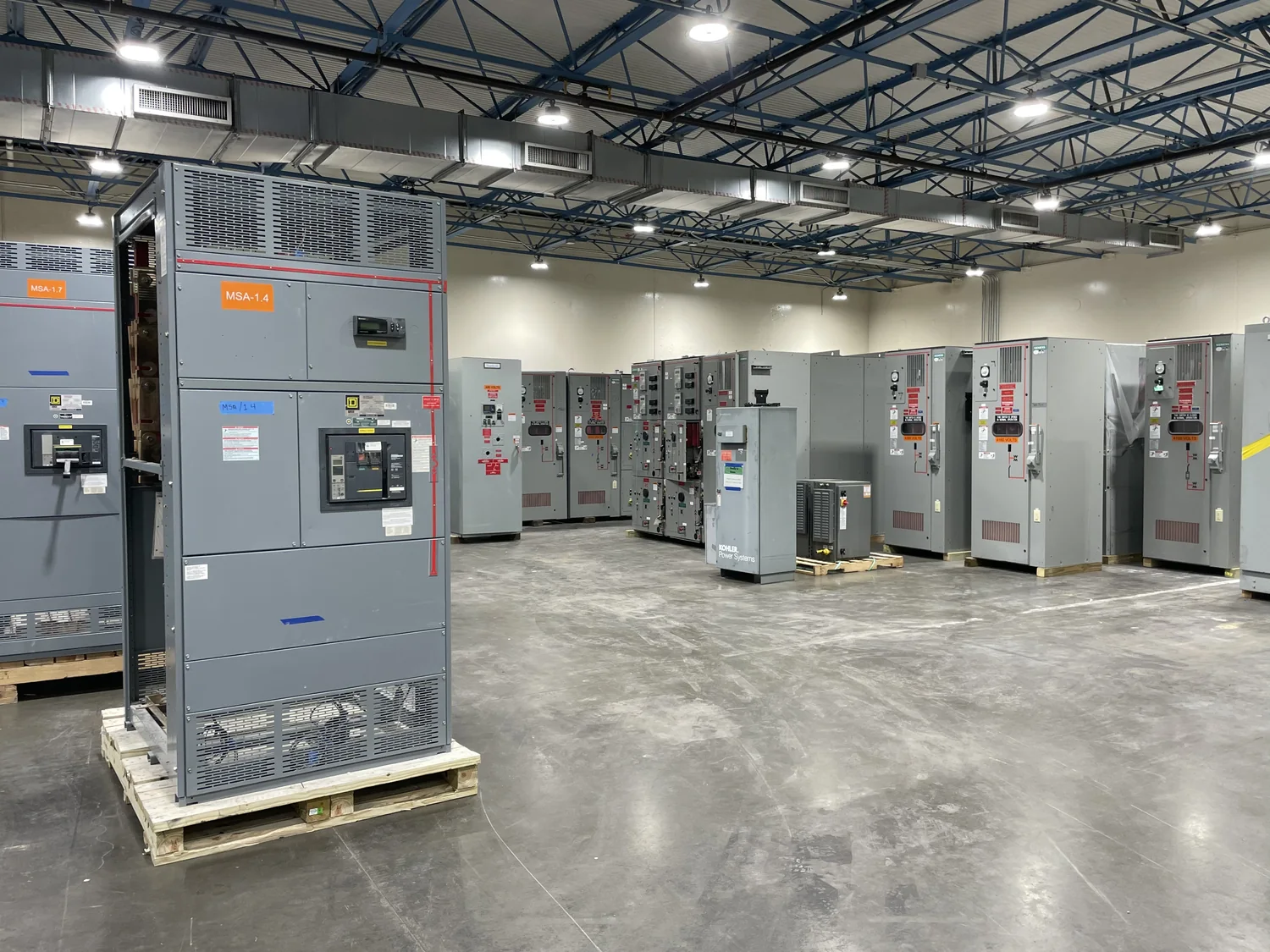
Start with clear, well-lit photographs of the complete switchgear lineup, including a wide view showing the lineup in its room and closer views of each section. Photograph visible nameplates and labels legibly, along with doors, breakers, bus or compartment details that can be safely photographed from outside. Do not remove covers or reach into equipment to get a better picture. If a nameplate is difficult to read, provide a close image and a separate wider view that shows which section it belongs to.
Include approximate overall lineup length, height, and depth, plus dimensions of individual sections if the lineup is divided or the removal route is tight. Note the number of sections, known ratings and voltage class shown on the nameplates, and any visible accessories, breakers, meters, or control components. The buyer considers all voltage classes, but the exact identifying information helps establish what is being offered. Indicate whether the lineup appears complete, whether components are missing or separated, and whether related items are included. No seller testing is required; describe known condition plainly rather than opening or energizing equipment for inspection.
Confirm ownership, authority, and what is included
Before an offer can be meaningfully reviewed, establish that the person or organization arranging the sale has authority to transfer the equipment. If the switchgear belongs to a building owner, tenant, contractor, lender, or another party, clarify who can approve the disposition and sign the transaction documents. Identify any restrictions on removing equipment, associated components, or wiring, and make clear what is included in the proposed sale versus what must remain in place.
A useful equipment list can distinguish the lineup from loose breakers, spare parts, control devices, documentation, or other associated material. Photos and a section-by-section description help prevent mismatches between the equipment reviewed and what is present at removal. If information is incomplete, say so; an initial review is not a guarantee of a final price. The offer and scope depend on the equipment presented, completeness, access, and removal conditions, all of which should be confirmed before the job is scheduled.
Coordinate electrical isolation and site safety
Switchgear disconnection is not a seller or buyer task for unqualified personnel. De-energization, isolation, verification, and disconnect work must be performed by qualified personnel under the site’s safety procedures and outage plan. The facility’s responsible personnel should determine the sequence, affected systems, authorized work window, and any required coordination with operations. Do not treat a switch position or a verbal assurance as proof that equipment is safe to work on, and do not ask removal crews to handle electrical connections that have not been properly released for the project.
Agree in advance who will complete and document electrical disconnects, when the equipment will be available, and what boundaries or restrictions apply to the removal area. The buyer handles crane, rigging, loading, freight, and hauling, subject to agreed project arrangements and actual site access. The buyer also handles removal logistics, including disconnect coordination as assigned and confirmed for the project; electrical work itself must remain with qualified personnel. Responsibilities, sequence, and handoff points should be written down before work begins so site staff and the removal team have a shared understanding.
Check the route, equipment movement, and payment handoff
The physical route can determine whether a lineup can be moved as assembled sections or needs another project-specific approach. Share door and corridor clearances, turns, floor or dock access, stairs or elevators, overhead limits, loading area constraints, and any known restrictions on bringing lifting equipment onto the property. Note whether equipment is located below grade, behind controlled-access areas, or in a space that must stay operational around the work. These details are especially useful when arranging access across the DC region, where schedules, security procedures, and site-specific delivery or loading rules may require advance coordination; no particular building condition should be assumed.
Before removal, confirm the accepted offer, payment timing, included equipment, access window, safety and outage responsibilities, and the planned handoff. Payment is arranged upfront after an offer is accepted; the buyer pays the crane, rigging, loading, freight, and hauling costs, with the exact responsibilities and arrangements confirmed for the project before removal. Share any changes in equipment condition, completeness, access, or schedule as soon as they arise. A careful handoff gives both sides a practical basis to coordinate the work without promising a price, schedule, or removal method before the relevant details have been reviewed.