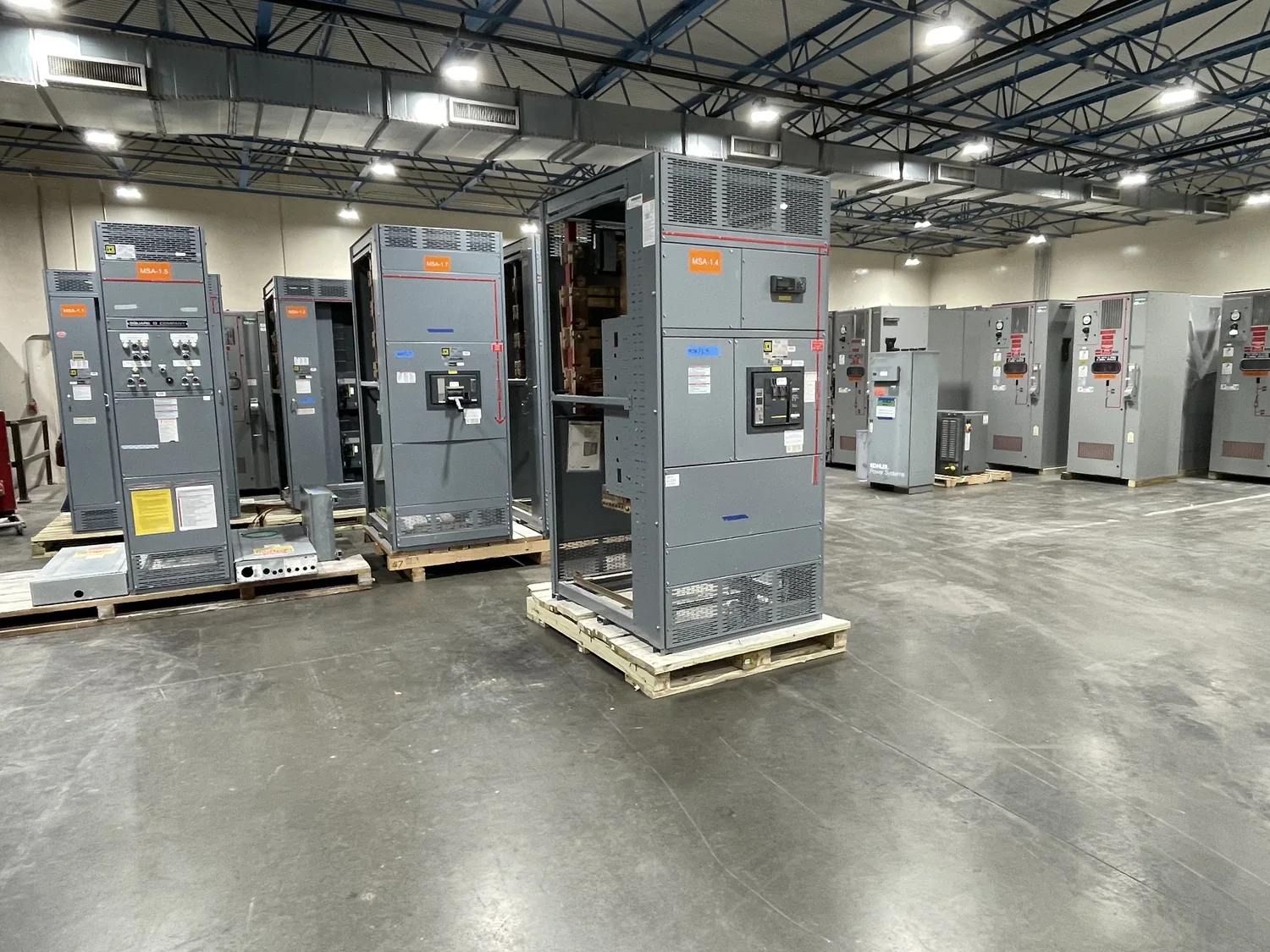
Government Campus Switchgear Decommissioning Buyer
When switchgear is being removed as part of a government campus decommissioning project, disposition needs to fit the larger project plan. Equipment may be located in an operating facility, a building being vacated, or an area with controlled access and tightly scheduled work. Those conditions can affect how assets are documented, when they can be inspected or removed, and what can be reused or recovered. A buyer can consider switchgear from projects across Washington, DC, Northern Virginia, and Maryland, but the equipment and site details must be reviewed before the scope or price is set.
This is a buying service, not a sales listing. The buyer considers switchgear across all voltage classes and can make a cash offer after reviewing the information provided. No seller testing is required. If an offer is accepted, payment is arranged upfront; payment timing and removal responsibilities should be confirmed before work is scheduled. The final offer depends on the specific equipment, its condition and completeness, ownership documentation, and the practical requirements of access and removal.
Start With Asset Records, Nameplates, and Photos
A useful first submission identifies what is present without asking the seller to perform electrical work. Send clear photos of the overall lineup, each section, visible labels, and any nameplates that can be photographed safely. Include lineup dimensions, such as approximate overall length, height, and depth, and note the number of sections if known. Nameplate details and visible ratings help the buyer understand the equipment; do not infer specifications from appearance or substitute a guessed rating when a label is missing or unreadable.
If available, share existing asset lists, equipment schedules, or other records that identify the switchgear. Include the manufacturer and model only when shown on the equipment or in reliable site records. Also describe what appears to be included with the lineup, such as associated sections or components, and flag anything that is missing, separately stored, or planned for removal by another contractor. Completeness can affect how the equipment is evaluated, so distinguish confirmed information from estimates. A missing record or unclear label does not by itself establish value or disqualify the equipment; it is a reason to clarify the scope during review.
Clarify Ownership, Site Access, and Disposition Requirements
Before an offer or removal plan is finalized, explain who owns the equipment and who is authorized to approve its disposition. Government-campus projects can involve an owner, facility operator, general contractor, electrical contractor, asset manager, or other parties with separate responsibilities. Identify the appropriate decision-maker and any internal asset-disposition process, documentation, or approval steps that apply. The buyer cannot assume that the person arranging a site visit or providing photographs has authority to transfer the equipment.
Access details matter just as much as asset details. Provide the project location at an appropriate planning stage, the building or area where the lineup sits, known access hours, check-in or escort requirements, and any restrictions on vehicles, lifting equipment, staging, or loading. Share relevant deadlines and the expected sequence for decommissioning, outage work, and building turnover. In the DC region, travel between sites does not remove the need to coordinate each facility’s own access and scheduling rules. No local office, campus procedure, or site condition should be assumed from the project’s location alone.
Plan Safe Disconnection and Removal
Any de-energization, isolation, and disconnect work must be performed by qualified personnel under the site’s safety requirements and outage procedures. Do not ask unqualified staff to open, disconnect, move, or handle electrical equipment. The facility and its qualified contractors must determine when the equipment can be made available and coordinate the required approvals, work windows, and site controls. The buyer’s review of the equipment does not replace the site’s electrical-safety process or authorize work on energized equipment.
The buyer handles crane, rigging, disconnects, loading, freight, and hauling, subject to project arrangements and site access. For planning, identify the route from the equipment to the loading area, door and corridor clearances, overhead obstructions, floor or staging constraints, and whether the lineup can be moved as a whole or must be handled in sections. Note any known stairs, narrow turns, restricted lift paths, limited loading-dock availability, or other removal constraints. These are planning details, not instructions for site staff to perform the work. Responsibilities, access, timing, and any project-specific arrangements should be confirmed before removal; an assumption that the buyer can access or lift equipment in a particular way is not a substitute for a site review.
Get a Project-Specific Offer Before Scheduling
For an initial review, send the available photos, nameplate information, lineup dimensions, equipment and component list, ownership and authorization details, site-access requirements, and removal constraints. If any item is unknown, say so; clear gaps help focus follow-up questions. Include the project’s target dates and relevant outage or turnover windows, but treat them as requested scheduling information rather than a guaranteed removal date. The buyer can then assess whether the equipment may fit the buying scope and what additional information is needed before an offer can be made.
There is no need for the seller to arrange testing as a condition of submitting the equipment for review. However, photographs and records are not a substitute for a complete understanding of condition, completeness, access, or removal requirements. A cash offer is not final until the specific equipment and project details have been reviewed. If the offer is accepted, payment is arranged upfront, and the buyer pays the crane, rigging, loading, freight, and hauling costs, with responsibilities and arrangements confirmed before removal. This approach gives campus project teams a practical starting point for switchgear disposition while keeping valuation and logistics tied to the actual assets and site conditions.