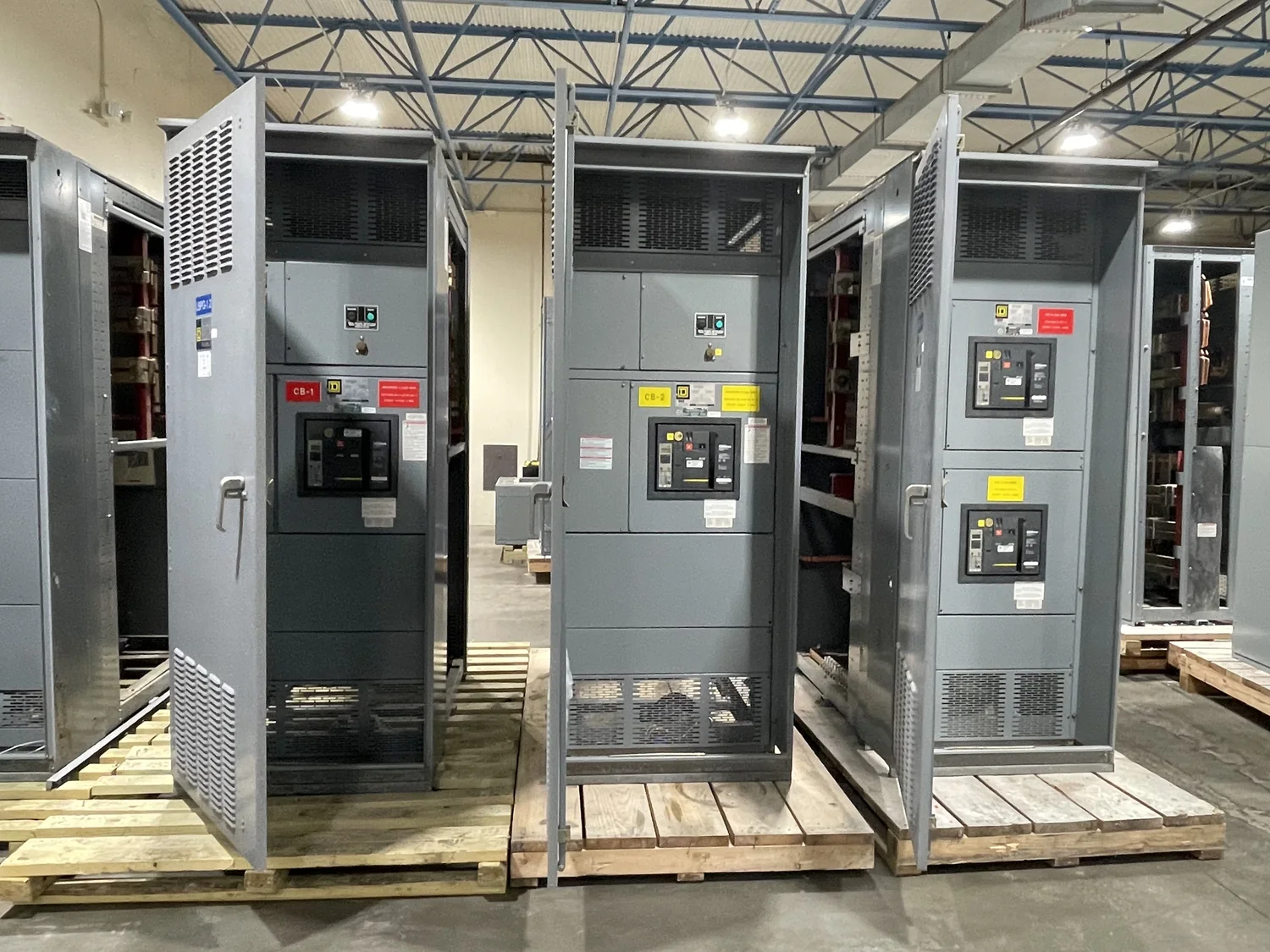
We Buy Used Switchgear in Herndon, Virginia
If your Herndon, Virginia facility has switchgear to sell, start with a clear description of what is installed and who is authorized to sell it. We buy used switchgear and can review equipment from any voltage class. We are a buyer, not a reseller offering equipment for sale. There is no requirement for the seller to test the gear before requesting a review; photographs and available records can help us understand the equipment and plan next steps.
For an initial assessment, share clear photos of the complete lineup, its surroundings, and accessible nameplates. Include lineup dimensions, known ratings, the number of sections, and information about whether the equipment appears complete. Note any missing doors, covers, breakers, or other components if known, but do not open energized equipment or enter restricted areas to obtain details. The information provided helps determine whether a site review or additional documentation is needed; it does not establish a final price or guarantee that the equipment can be removed as proposed.
Information That Helps Define the Scope
Nameplate images can help identify the equipment and its stated ratings. Photograph them legibly, along with overall views of the front, rear where safely accessible, and any visible sections or components included in the sale. If labels are difficult to read, send the best available image and transcribe any visible information rather than guessing. Share lineup length, height, and depth if available, and explain how the sections are configured. Drawings, equipment schedules, or an inventory may help clarify what is included, but they are not a substitute for confirming the actual assets at the facility.
Describe completeness as accurately as you can. For example, note whether breakers and removable components are present, whether accessories or spare parts are part of the proposed sale, and whether any sections have been altered or partially dismantled. Identify which equipment is included and which items must remain. Ownership and authority matter: confirm that the seller owns the switchgear or has authorization from the owner to arrange a sale and removal. If the equipment is subject to a lease, lien, contract, or other restriction, resolve the relevant permissions before committing to a removal date. We review the information and make an offer only after considering the specific equipment and project scope.
Coordinate Site Access and Removal Before Scheduling
A successful removal depends on coordination among the asset owner, building manager, authorized electrician, and removal crew before physical work begins. In Herndon, as elsewhere in the Washington, DC, Northern Virginia, and Maryland service area, access conditions vary from site to site. Tell us where the switchgear is located within the facility and describe the route from its installed position to the loading area. Relevant details may include door and corridor clearances, stairs or elevators, floor conditions, overhead obstructions, loading-dock arrangements, vehicle access, work-hour limits, security procedures, and any restrictions on staging or equipment movement.
Share the site’s scheduling requirements, outage windows, access rules, and any building-management approvals that apply. Removal timing must be coordinated with the facility’s operating needs and safety procedures; a proposed date should not be treated as confirmed until the parties have agreed on the scope, access, and responsibilities. If the equipment is in a constrained electrical room or must pass through a limited route, photographs and measurements can help identify questions early. The project plan should account for equipment dimensions and weight where known, the removal path, lifting points or other handling constraints, and any conditions that could affect crane or rigging access.
Safe Disconnection and Physical Removal
Do not disconnect, dismantle, or handle switchgear unless you are qualified and authorized to do so. De-energization, isolation, and disconnect work must be performed by qualified personnel under the facility’s safety and outage procedures. The site’s authorized electrician and responsible facility representatives should establish the required work sequence, confirm when the equipment may be released for removal, and coordinate access and timing with the removal crew. No unqualified person should enter restricted electrical areas or alter the equipment to prepare it for sale.
The buyer handles crane, rigging, disconnects, loading, freight, and hauling, subject to project arrangements and site access. Before work starts, confirm how each responsibility will be performed at the facility, what access is available, and whether the planned equipment and removal route fit the site’s constraints. The buyer pays these removal and transportation costs; responsibilities and arrangements should be confirmed for the specific project before removal. This coordination is especially important when the switchgear is installed, when disconnect work must fit an outage window, or when lifting and transport depend on restricted access.
Offer, Payment, and Next Steps
Once we have enough information to assess the equipment and discuss the removal scope, we can make a cash offer. No final price should be assumed from a brief description or a few images: the offer depends on review of the actual switchgear, its completeness, the proposed sale, and the project’s access and removal conditions. If an offer is accepted, payment is arranged upfront. Confirm the payment timing and agreed scope before removal is scheduled, and make sure the person accepting the offer is authorized to act for the asset owner.
To begin, send clear equipment and nameplate photos, lineup dimensions, available ratings or records, an inventory of included components, and a concise description of ownership and site access. Include the facility’s scheduling requirements and any known restrictions affecting disconnection, lifting, loading, or hauling. We can then discuss what additional information is needed, review the proposed responsibilities, and determine whether the project can be scoped. For Herndon sellers, early coordination between the owner, building manager, authorized electrician, and removal crew helps avoid preventable delays while keeping all decisions tied to the actual equipment and facility conditions.