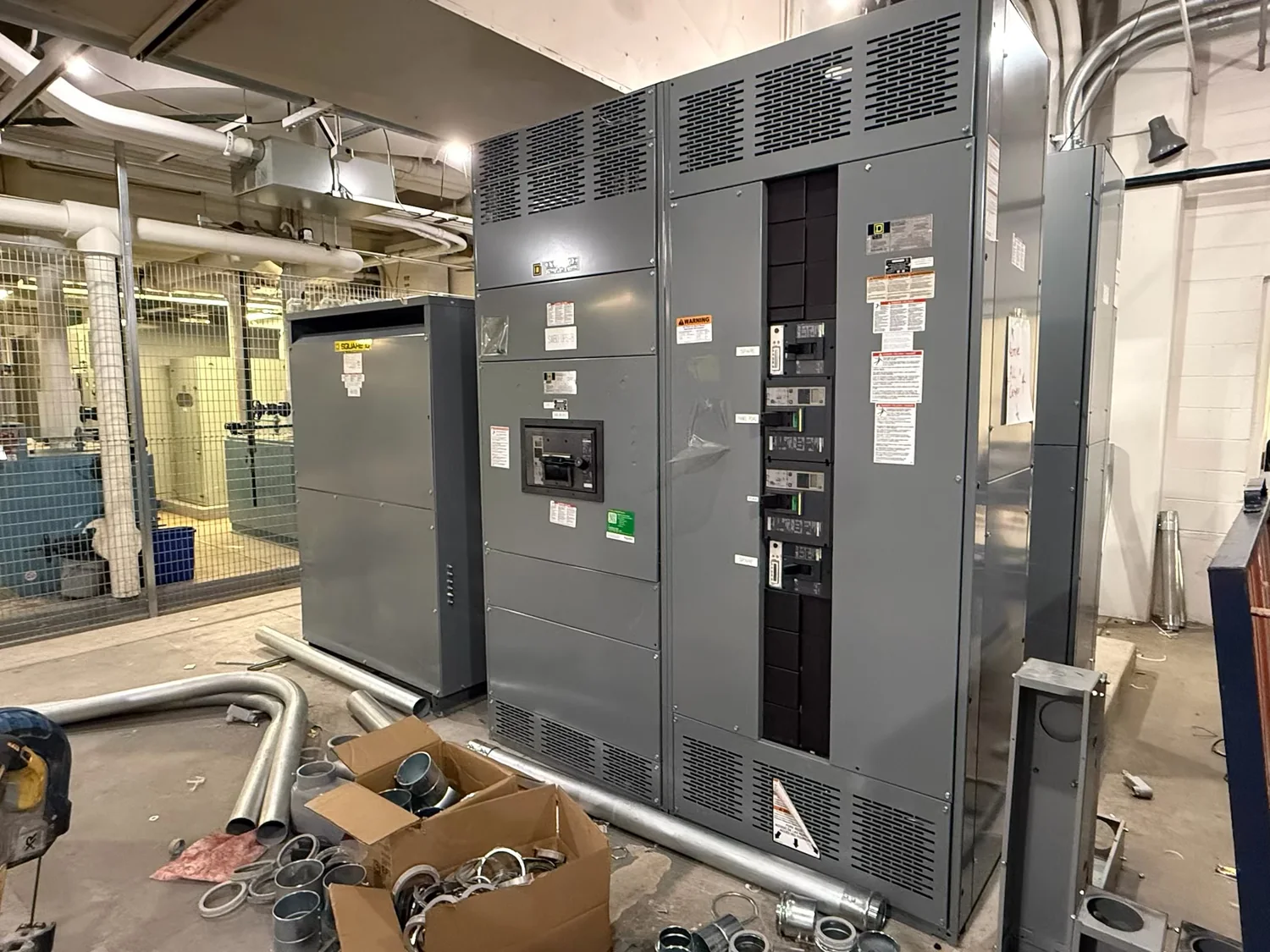
We Buy Used Switchgear in Brookland
If your facility in Brookland has switchgear it no longer needs, we can review it for purchase. We buy used switchgear; we do not sell equipment. The equipment can be in service, awaiting a planned changeout, or already set aside, but its condition, completeness, ownership, and removal requirements need to be reviewed before an offer and scope can be set.
A clear first step is to share what you know and label anything uncertain as unknown. Complete records are helpful, but incomplete nameplate information does not prevent an initial conversation. We consider all voltage classes, and the seller is not required to test the equipment. Any eventual offer depends on review of the specific lineup and the practical conditions for removal.
Start with the records and photos you have
Send readable photographs of each available nameplate, including overall and close-up views. If a plate is missing, obscured, or difficult to read, note that rather than trying to reconstruct its information. Photos of the full lineup, each section, visible bus or cable compartments, breakers, controls, and any loose or stored components can help show what is present. Include wide views that establish how the equipment sits in the room, along with detail shots that clarify condition and completeness.
If you have drawings, inventories, prior scope documents, or a list of equipment sections, share them as available; do not delay an inquiry just because records are incomplete. Add the lineup’s approximate length, height, and depth, and identify how those measurements were taken. When exact dimensions are unavailable, say so. A simple labeled photo set—such as “lineup overall,” “section 1 nameplate,” and “stored parts”—is more useful than a large unlabeled folder. Document missing or unverified details plainly instead of guessing at manufacturer, ratings, configuration, or contents.
Describe ownership, access, and removal constraints
Before scope is set, explain who owns the equipment and who is authorized to approve its sale and removal. If ownership is held by a landlord, tenant, contractor, lender, or another party, identify the decision-maker and any approval steps that may affect timing. This helps avoid arranging removal before the right party has authorized the transaction.
Brookland facilities can differ in their loading routes, interior clearances, operating schedules, and site rules, so those details should be confirmed for the specific location rather than assumed. Share the pickup address during project coordination, plus relevant access information: loading-area location, door and corridor clearances, floor or elevator limitations, parking or staging restrictions, delivery-hour rules, and any escort or check-in requirements. Note whether equipment is indoors or outdoors, whether it is assembled or already separated, and whether walls, doors, or other building elements may limit removal. Photos of the route and loading area can help identify questions early, but they do not replace a site-specific review.
Coordinate safe disconnection and project timing
Switchgear must not be disconnected or handled by unqualified personnel. De-energization, isolation, and disconnect work must be completed by qualified personnel under the facility’s safety rules and outage procedures. Coordinate required outages, access permissions, work windows, and site contacts before removal planning advances. The buyer does not ask the seller to perform testing as a condition of submitting information for review.
Removal timing depends on the equipment’s operating status, the facility’s schedule, access conditions, and the agreed scope. Identify whether the lineup is still connected or energized, if known, and whether a qualified electrical contractor or facility team is expected to perform the disconnect. If the status is unknown, report it as unknown. Confirm who controls the work area and when it can be made available; do not treat a proposed pickup date as confirmed until the parties have coordinated responsibilities and access.
Offer, payment, and removal responsibilities
After reviewing the available photos, nameplate details, dimensions, ownership information, completeness, and site conditions, we can discuss an offer and removal scope. No final price can be set from a location name or a general description alone. An offer is project-specific and may depend on what equipment and components are actually included, their condition, the information that can be verified, and the effort and constraints involved in removal.
If an offer is accepted, payment is arranged upfront. The buyer pays the crane, rigging, loading, freight, and hauling costs, with responsibilities and project arrangements confirmed before removal. The buyer handles those logistics subject to site access and the agreed scope; disconnection remains work for qualified personnel and must be coordinated with the facility. Share known restrictions, preferred scheduling windows, and any removal limits early so the parties can confirm a workable plan before committing to a date.
A straightforward Brookland inquiry
To begin, send the clearest equipment photos available, readable nameplate images where present, approximate lineup dimensions, a list of included sections and loose parts, and a concise note about what is unknown. Include ownership and authorization details, current equipment status if known, access and loading information, and any disconnect, outage, or removal constraints. That organized starting point helps us assess the opportunity without asking you to fill gaps with assumptions.
We serve businesses across Washington, DC, Northern Virginia, and Maryland, including facilities in Brookland; this does not imply a local office at your site. Each purchase and removal is reviewed on its own facts. Once the information and project conditions are understood, we can discuss an offer, upfront payment arrangements if accepted, and the logistics needed to remove the switchgear responsibly.