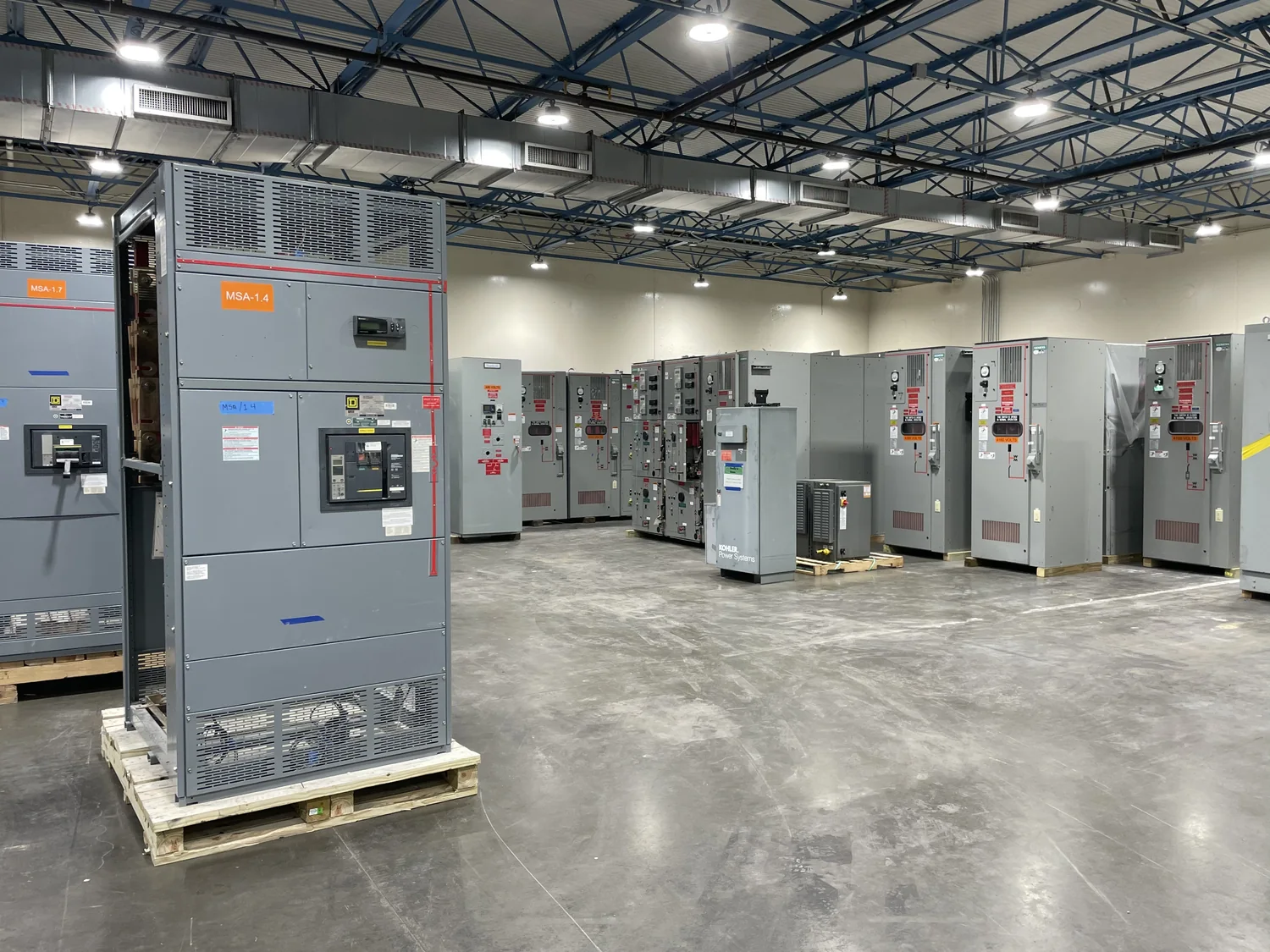
Selling Used Switchgear in Columbia Heights
If your business has used switchgear in storage at a facility in Columbia Heights, you can request a purchase review. We buy used switchgear; we do not sell equipment. We consider all voltage classes, and the seller does not need to test the gear before submitting it for review. A preliminary assessment can begin with clear photos, nameplate information, lineup dimensions, and a description of what is included. An offer is not final until the equipment and the proposed removal scope have been reviewed.
A storage asset can be worth evaluating even when it is no longer connected to a system, but its condition and completeness matter. Tell us whether the lineup is intact, partially dismantled, visibly damaged, or stored as separate sections. Note any loose doors, barriers, panels, breakers, control components, or other associated parts that may be included. Do not assume that a loose item belongs with a particular lineup: identify it in photos or an inventory when possible. The clearer the description, the more useful the initial review.
Information to Gather Before Scope Is Set
Take well-lit photographs of the equipment from several angles. Include a full view of each lineup or section, close-ups of readable nameplates, visible damage, and any loose parts intended for consideration. Nameplates can help identify the equipment and its ratings; do not guess at unreadable information. If labels are missing or obscured, say so and provide the best available photos. The review can consider equipment from any voltage class, but the specific ratings and configuration should be documented where they can be read.
Measure the lineup’s overall length, height, and depth, and provide the dimensions of individual sections if the equipment is split up. Approximate measurements are helpful for an early discussion, but note when they have not been verified. Describe how many sections are present, whether they remain assembled, and whether accessories or related components are included. Also state whether the gear is indoors or outdoors, how it is currently staged, and whether it can be reached directly for removal. These details help determine what equipment and handling plan may be appropriate; they do not by themselves establish a purchase price.
Confirm that the seller owns the equipment or is authorized to arrange its sale. If ownership or disposition authority requires internal approval, identify that early so the transaction schedule can account for it. Share the Columbia Heights facility’s access rules, available loading area, entry constraints, appointment requirements, and any limits on working hours. A site visit or removal plan should not be treated as confirmed until access, timing, equipment condition, and project responsibilities have been discussed.
Stored Condition, Completeness, and Staging
Equipment that has been in storage can vary substantially in condition. Let us know what is visible and what is known about its storage history, including exposure to moisture, dust, impact, or other conditions, without making assumptions about internal condition. Do not open compartments, energize the equipment, or attempt testing for the purpose of the sale. No seller testing is required. If the gear is already separated into sections, identify which pieces belong together and whether any hardware, covers, or associated parts are missing.
Staging can affect both the review and the removal scope. Useful details include whether the lineup is on a level floor, secured to a pallet or skid, positioned near a loading area, or obstructed by other stored material. Describe doorways, corridors, stairs, elevators, turns, overhead restrictions, and the path from the equipment to the loading point when those constraints are known. Photos of the route and staging area can help clarify access. Do not move heavy equipment or clear obstacles in a way that creates a safety risk; coordinate site preparations with the facility’s responsible personnel.
A complete, well-identified lineup may be easier to evaluate than a collection of unmarked sections and loose components, but completeness alone does not guarantee an offer. The buyer reviews the available information and the practical removal conditions together. If additional components are discovered or the equipment differs from the submitted description, the scope may need to be revisited before removal proceeds.
Safe Disconnection and Columbia Heights Site Coordination
Any de-energization, isolation, or disconnection must be handled by qualified personnel under the facility’s safety procedures and outage requirements. Do not ask unqualified staff to disconnect, dismantle, or handle switchgear. The responsible site team must coordinate the required outage window, isolation measures, approvals, and timing. The buyer’s removal planning depends on the equipment being made available under the agreed project conditions; access and timing should be confirmed rather than assumed.
For a Columbia Heights facility, provide practical access information without assuming that a particular building, loading dock, street approach, or lifting area is available. Explain how a crew and removal equipment can reach the staged gear, whether deliveries or lifting operations need advance coordination, and who at the facility can confirm site requirements. If a crane or other lifting arrangement may be needed, the plan must account for the site’s access and restrictions. The exact method and schedule depend on the equipment, route, available staging, and project arrangements.
Disconnect work is distinct from physical removal. The site’s qualified personnel handle electrical isolation and disconnection; the buyer handles crane, rigging, loading, freight, and hauling, subject to project arrangements and site access. Confirm responsibilities, boundaries, and timing before work is scheduled. This avoids confusion about who is preparing the equipment and who is responsible for moving it from its staged location.
Offer, Payment, and Removal Costs
After reviewing the information and scope, we may make a cash offer. There is no responsible way to promise a final price from a location or a short description alone: the offer depends on the equipment presented, its condition and completeness, and the confirmed removal requirements. If an offer is accepted, payment is arranged upfront. The payment details and timing should be confirmed as part of the transaction before removal is scheduled.
The buyer pays the crane, rigging, loading, freight, and hauling costs, with responsibilities confirmed before removal. These arrangements remain subject to the project scope and site access. Coordinate the removal date only after the offer is accepted, payment arrangements are understood, qualified personnel have completed the required disconnection and isolation, and the site has confirmed access and timing. If access conditions or the equipment scope change, discuss the change before proceeding.
To start a review for used switchgear in storage in Columbia Heights, send clear equipment and nameplate photos, lineup dimensions, a list or description of associated loose parts, ownership or sale-authority confirmation, and details about staging, access, and removal constraints. Include what is known about condition and whether the lineup is assembled or separated. These practical details help establish a realistic scope for a cash offer and an upfront-payment arrangement without requiring seller testing or unsupported assumptions about the equipment.