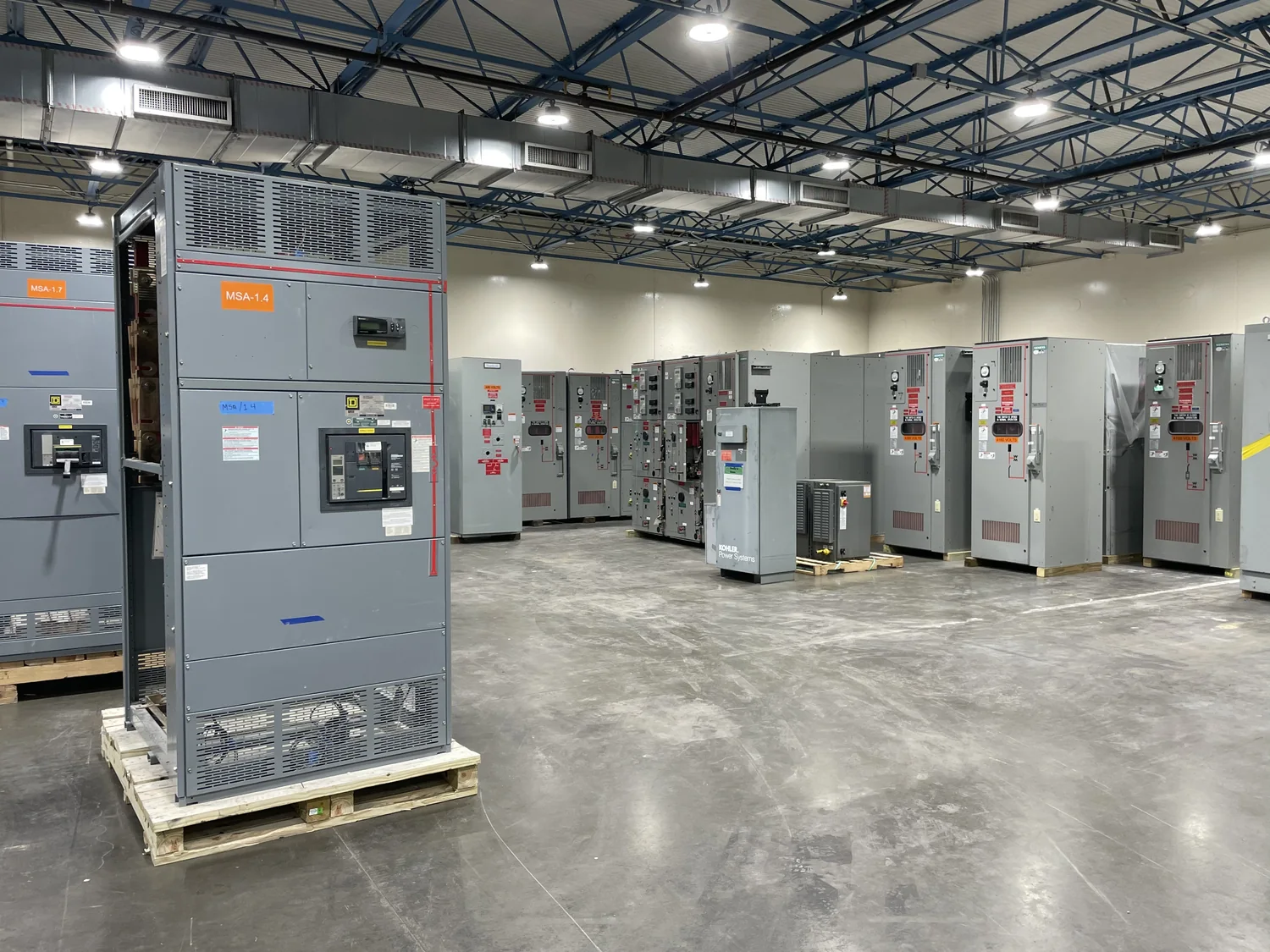
We buy used switchgear in College Park, Maryland
If your facility in College Park, Maryland, has used switchgear to dispose of, we can review it for purchase. We buy electrical equipment; we do not sell switchgear. Whether an asset is being removed as part of a renovation, replacement, or broader equipment-disposition project, the first step is to understand exactly what is on site and what removal will involve.
We consider switchgear across all voltage classes. You do not need to arrange seller testing before contacting us. We can make a cash offer after reviewing the equipment details and the project circumstances. If you accept an offer, payment is arranged upfront, with the payment and removal arrangements confirmed before work begins. A final price cannot be provided without review, and an offer depends on the equipment and the practical scope of the transaction.
Send clear photos and equipment details
Start with clear, well-lit photos of the switchgear as it is installed. Include wide views showing the full lineup and its surroundings, along with closer images of accessible nameplates, identification labels, and visible components. Nameplate information helps us identify the equipment for review; do not remove covers or enter restricted areas to obtain it. If a label is unreadable or inaccessible, say so and share what you can safely document.
Please provide approximate lineup dimensions, including overall length, height, and depth where available. Note the number of sections or cubicles and any known configuration details. Tell us what appears to be included, such as associated sections, breakers, or other components, without assuming that a visually similar item is part of the sale. Completeness can affect how the equipment is assessed, so identify anything known to be missing, separated, or planned for retention.
Describe visible damage and the equipment’s storage or exposure history as accurately as possible. For example, mention signs of weather exposure, moisture, corrosion, impact, fire, or deterioration that you have observed. These are observations for the buyer’s review—not a request to open, energize, test, or otherwise investigate the equipment. Photos and straightforward notes help us understand the asset without asking your staff to perform electrical checks.
Confirm ownership, site access, and removal constraints
Along with the equipment information, explain who owns the switchgear and who is authorized to approve its sale and removal. If the equipment is subject to a lease, lender interest, contractor agreement, or another party’s approval, flag that early. We need to understand whether the seller can transfer the equipment and coordinate access before the project scope is settled.
College Park projects can involve different facility rules, work windows, loading arrangements, and routes from the equipment room to the pickup point. Share the site contact, permitted access times, any advance check-in or escort requirements, and known restrictions on doors, corridors, elevators, loading areas, or vehicle entry. If the equipment is indoors, on an upper level, or near other operating assets, note that as part of the initial description. Do not assume a removal route or lifting plan is feasible until the site conditions have been reviewed.
Also identify any outage windows, construction schedules, neighboring work, or other timing constraints that could affect access. These details are project-specific; providing them early helps the parties coordinate a realistic plan rather than relying on assumptions about a particular College Park facility.
Disconnects and removal are coordinated for the project
The buyer handles crane service, rigging, loading, freight, and hauling, subject to the agreed project arrangements and site access. The buyer also handles disconnects as coordinated for the project. Responsibilities, scope, access, timing, and any site-specific arrangements must be confirmed before removal; lifting needs and transportation plans depend on the actual equipment and the conditions at the facility.
De-energization, isolation, and electrical disconnect work must be performed by qualified personnel under the site’s safety rules and outage procedures. Do not ask unqualified staff to disconnect, move, or handle switchgear. The facility’s authorized representatives and qualified personnel should establish the required safe work conditions and coordinate the timing with the buyer’s removal plan. No one should assume equipment is safe to handle merely because it is scheduled for pickup.
Before work is scheduled, the parties should confirm what is included in the purchase, who will perform each part of the work, how the equipment will be accessed and removed, and what conditions could change the plan. Crane and rigging needs, building access, available work time, and any restrictions on staging or loading must be addressed for the specific site.
A practical review before you commit
For an initial review, gather the nameplate and equipment photos, approximate lineup dimensions, a list of known included and missing components, and notes about visible damage or weather exposure. Add ownership and authorization details, the site contact, access information, and any anticipated removal or outage constraints. If some information is not available, explain what is unknown rather than guessing; the review can proceed with the details you can reasonably provide.
Once the equipment and project information have been reviewed, we can discuss a cash offer and the proposed removal arrangements. If you accept, payment is arranged upfront. The buyer pays the crane, rigging, loading, freight, and hauling costs, with responsibilities and site arrangements confirmed before removal. No seller testing is required. A clear description and coordinated plan help both sides assess whether the switchgear and the removal scope are a fit for a transaction in College Park.