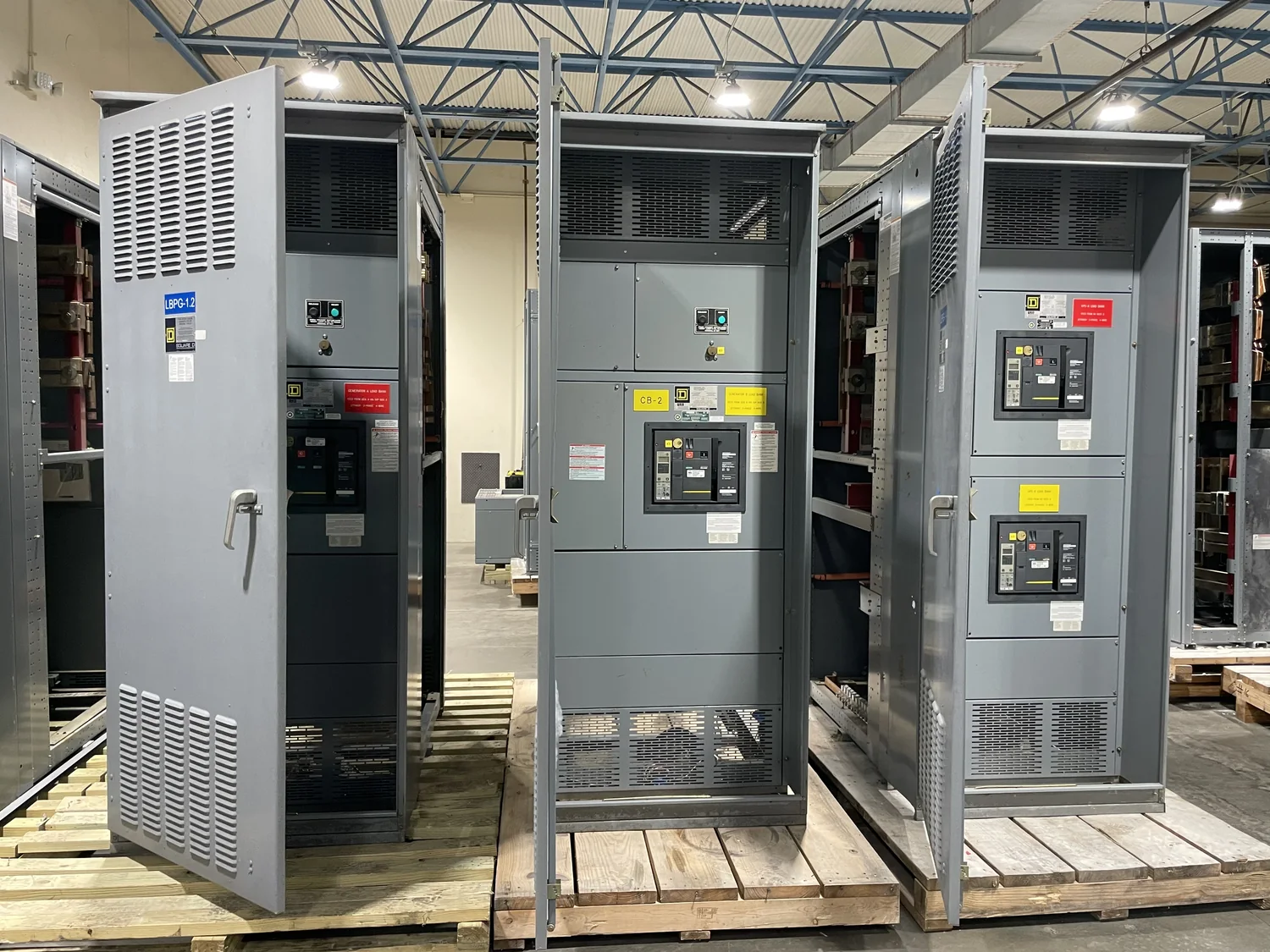
We Buy Used Switchgear in Leesburg, Virginia
If your facility in Leesburg, Virginia, has used switchgear to sell, we can review the equipment for a purchase offer. We buy electrical equipment; we do not sell it. A review can cover equipment that is ready for removal as well as surplus assets identified during a phased changeout. We consider all voltage classes, and the seller does not need to test the equipment before contacting us.
To start, share clear photographs, available nameplate information, the lineup’s approximate dimensions, and a short description of its condition and completeness. Include whether the equipment is available now or remains in service, who owns it, and any known restrictions on access or removal. These details help establish what is being offered and what site-specific work may be needed. They do not replace a project review or guarantee an offer.
Separate available equipment from equipment still serving the site
A phased replacement often leaves different assets at different stages: some switchgear may be removed and available for sale, while other equipment continues to serve the facility. Identify those groups separately. For each lineup or section, note whether it is already disconnected, awaiting a scheduled outage, or still required for current operations. If only part of a lineup is available, photographs and a simple description of the boundary between available and retained equipment can help prevent confusion about what is included.
Do not treat equipment as available merely because it is part of a planned changeout. Confirm that the seller has authority to transfer it and that the facility’s project team has approved the proposed scope and timing. Ownership, any applicable asset-disposition requirements, and the condition of the equipment should be clear before removal arrangements are finalized. A buyer can review surplus equipment, but the facility remains responsible for determining when it can safely be released from service.
Information that helps define a purchase review
Useful photographs show the full lineup, its sections, accessible sides, visible damage or missing parts, and the surrounding space that may affect removal. Provide readable nameplate photographs where safely accessible, along with any known manufacturer or model information. Do not open energized equipment or enter restricted areas to obtain a picture; have site personnel follow facility rules and use qualified staff where access requires it. If a nameplate is missing or unreadable, say so rather than guessing at the rating.
Approximate lineup dimensions, section count, and any known shipping or handling constraints help frame the removal scope. Also describe completeness: for example, whether doors, covers, breakers, or other associated components are present, absent, or being retained. These are examples of information that may matter, not a checklist that requires the seller to perform testing or dismantle equipment. We can consider equipment without seller-performed testing, but photographs and available records support a more informed review.
Share the facility location within Leesburg, the likely access route, loading-area conditions, access hours, and any known limits on truck or crane positioning. Note whether the lineup is indoors, on an upper level, behind controlled access, or near other operating equipment if those facts affect the project. Such details are relevant to planning only when confirmed by the site; they should not be assumed from the location alone.
Disconnection, access, and removal planning
All de-energization, isolation, and disconnection work must be performed by qualified personnel under the facility’s safety requirements and outage procedures. Do not ask unqualified staff to disconnect, move, or handle switchgear. The site team should establish the required outage window, isolation and verification process, work boundaries, and access permissions before removal is scheduled. Timing must be coordinated with the facility’s operations and any contractors responsible for the changeout.
The buyer handles crane, rigging, disconnects, loading, freight, and hauling, subject to project arrangements and site access. Responsibilities and the exact scope of disconnect work should be confirmed before removal, including how the site’s qualified personnel and the buyer’s removal arrangements fit together. Crane and rigging needs depend on the actual equipment, route, clearances, floor or loading conditions, and available setup area. Confirming those conditions in advance helps avoid planning around unverified assumptions.
Access and removal constraints can include door and corridor dimensions, turns, overhead clearance, stairs or elevators, floor-loading limits, restricted working hours, security procedures, and coordination with other site work. Share what is known and arrange a site review if needed to resolve uncertainties. The project plan should identify who authorizes access, when the area will be available, and which equipment is included in the removal scope.
Offer, upfront payment, and next steps
After reviewing the available equipment and project details, we can make a cash offer for consideration. No final price can be determined from the location or a brief description alone; the equipment, completeness, ownership, condition, access, and removal scope all need review. If an offer is accepted, payment is arranged upfront. The buyer pays the crane, rigging, loading, freight, and hauling costs, with responsibilities confirmed for the specific project before removal.
For a clear first review, send the photos and nameplates you can obtain safely, approximate lineup dimensions, information about what is available now versus what remains in service, confirmation of ownership, and a description of site access and removal constraints. Include the anticipated changeout or outage timing if known. We serve businesses across Washington, DC, Northern Virginia, and Maryland, including facilities in Leesburg; service-area wording does not imply a local office. A review based on accurate project information can help both sides determine whether the equipment and removal plan are a fit.