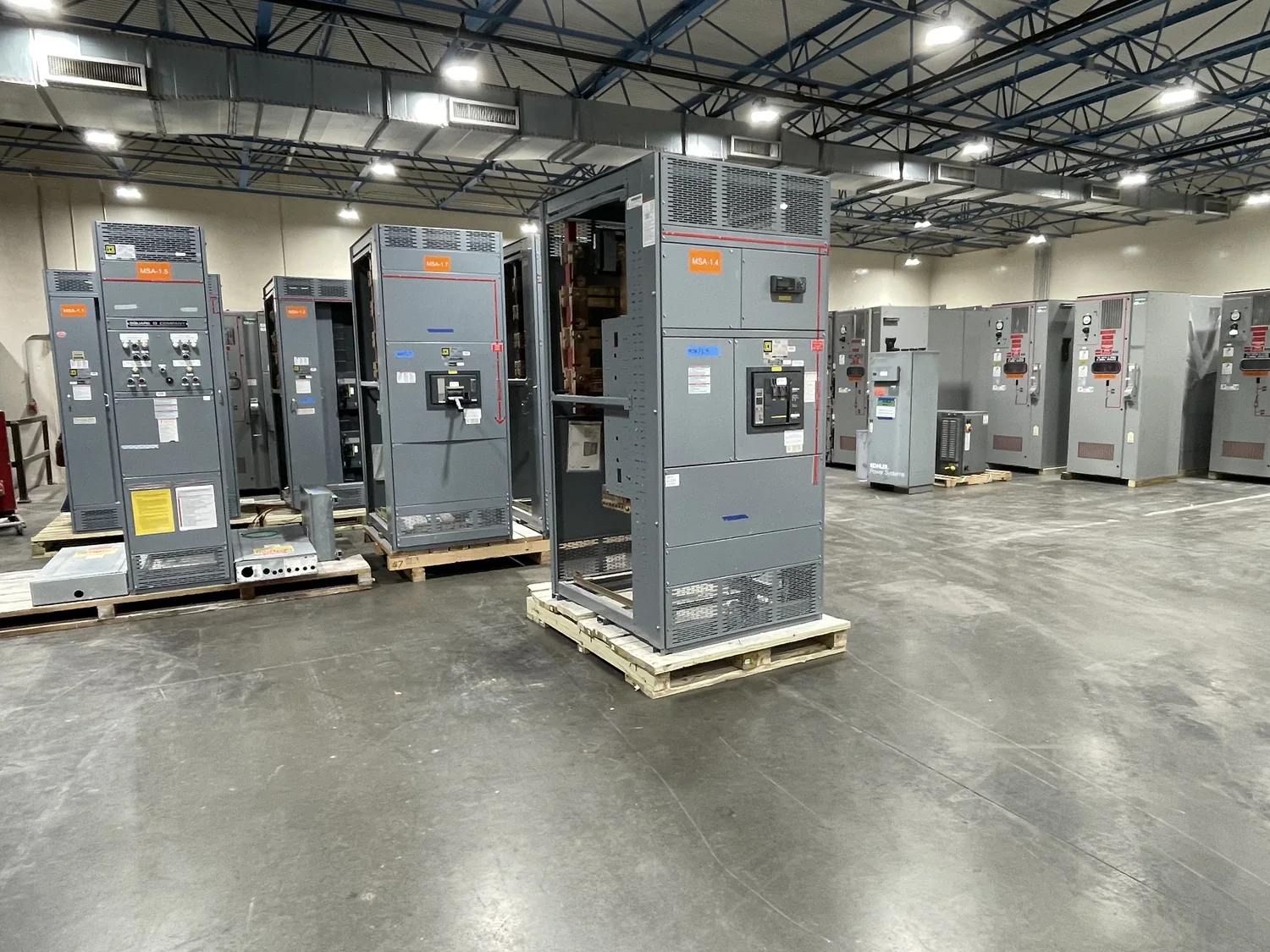
We Buy Used Switchgear in Manassas, Virginia
If your business has used switchgear at a facility in Manassas, Virginia, we can review it for purchase. We buy electrical equipment; we do not sell it. We consider all voltage classes, and you do not need to test the equipment before contacting us. A review can begin with clear photos, available nameplate information, approximate lineup dimensions, and a description of what is included. These details help establish the likely scope, but they do not replace a project-specific review or guarantee an offer.
Manassas sits within our broader Washington, DC, Northern Virginia, and Maryland service area. A facility’s location alone does not determine whether removal is straightforward: the equipment’s condition and completeness, ownership, building access, loading route, and any required outage coordination can all affect planning. Share what you know, including uncertainties, so the buyer can assess the opportunity before removal responsibilities and timing are set.
Prepare information for a buyer review
Start with photographs that show the complete lineup and its surroundings. Useful views include the front, rear where safely accessible, each lineup section, visible compartments, bus or cable entry areas, and the route from the equipment to the loading area. Do not open energized compartments or remove covers to obtain pictures. If a view cannot be captured safely, note that rather than attempting to access it.
Photograph each available nameplate and equipment label legibly, without guessing at obscured text. Record visible manufacturer and model information, serial numbers, ratings, and section or unit identifiers when available. Include lineup length, height, and depth, along with the dimensions of relevant doorways, corridors, stairs, and other tight points on the removal path. Approximate measurements are useful at the initial stage; identify them as estimates and arrange verification as needed before a removal plan is finalized.
Describe what is included and what may be missing. For example, note whether the offer would cover the full lineup or selected sections, and whether visible breakers, bus components, control equipment, barriers, or other associated items are present. Do not assume that separate components are included simply because they are nearby. If project drawings are unavailable, a buyer review can still be planned using photos, observed labels, measurements, and a written inventory of what can safely be seen. Mark unknowns clearly so they can be addressed during scope review rather than treated as confirmed facts.
Confirm ownership, access, and removal constraints
Before a purchase scope is set, explain who owns the equipment and who has authority to approve its sale and release. If the switchgear is part of a lease, shared facility, customer installation, or another arrangement with approval requirements, identify the relevant decision-maker and any restrictions. The buyer needs a clear understanding of what is being offered and whether it can be released on the proposed schedule.
Describe the site access that may affect removal: available working hours, loading-dock or vehicle access, clearances, floor or pavement constraints, security check-in, elevator use, and any limits on staging or equipment movement. Mention whether the lineup is elevated, enclosed, tightly fitted, or located where a crane or rigging setup may need special coordination. These are planning prompts, not assumptions about your Manassas facility. Photos of the route and loading area can help identify questions early.
Also flag site rules, outage windows, neighboring operations, and any restrictions on noise, lifting, vehicle size, or temporary access. The buyer and seller should confirm responsibilities, sequence, and timing for the actual project rather than relying on a general estimate. Access conditions and removal constraints may change the practical scope, so disclose known issues before an offer is accepted and before work is scheduled.
Coordinate safe disconnection and removal
Any de-energization, isolation, and disconnection must be performed by qualified personnel in accordance with the site’s safety requirements and outage procedures. Do not ask unqualified staff to disconnect, move, or handle switchgear. Coordinate the required personnel, approvals, outage timing, and handoff with the facility team before removal. The buyer’s review does not replace the site’s electrical safety process or authorize work on equipment.
For removal, the buyer handles crane, rigging, disconnects, loading, freight, and hauling, subject to project arrangements and site access. Confirm those responsibilities and any project-specific conditions before removal begins. The buyer pays the crane, rigging, loading, freight, and hauling costs; the practical method and schedule still need to be agreed for the equipment and site. Do not arrange independent lifting or electrical work on the assumption that it is included unless the project plan confirms it.
A useful handoff plan identifies who will coordinate qualified electrical personnel, when the equipment can be released, which areas must remain clear, how the lineup will reach the loading point, and what access the buyer’s crew and equipment will need. If drawings are not available, use the observed configuration and route information to shape a review, then confirm critical dimensions and conditions before the scope is finalized.
Offer review and payment
After reviewing the available information, the buyer can determine whether to make an offer and what additional details are needed. A final price should not be assumed from a few photos or from voltage class alone: configuration, visible condition, completeness, included components, access, and removal constraints may all matter. No seller testing is required for an initial review, but accurate descriptions and clear images help reduce avoidable uncertainty.
If an offer is accepted, payment is arranged upfront. Before proceeding, confirm the agreed equipment scope, payment arrangements, removal responsibilities, and project timing in writing. The offer and removal plan remain subject to review of the specific equipment and site conditions; an initial conversation is not a guarantee of purchase or a final price.
To begin, provide the equipment location in Manassas, clear photos, readable nameplates where safely visible, approximate lineup dimensions, an inventory of included sections or components, ownership and release details, and information about access and removal constraints. Mention whether drawings are available, and if they are not, share what can safely be observed instead. That gives the buyer a practical basis to review the switchgear and discuss next steps for a project in the DC, Northern Virginia, or Maryland service area.