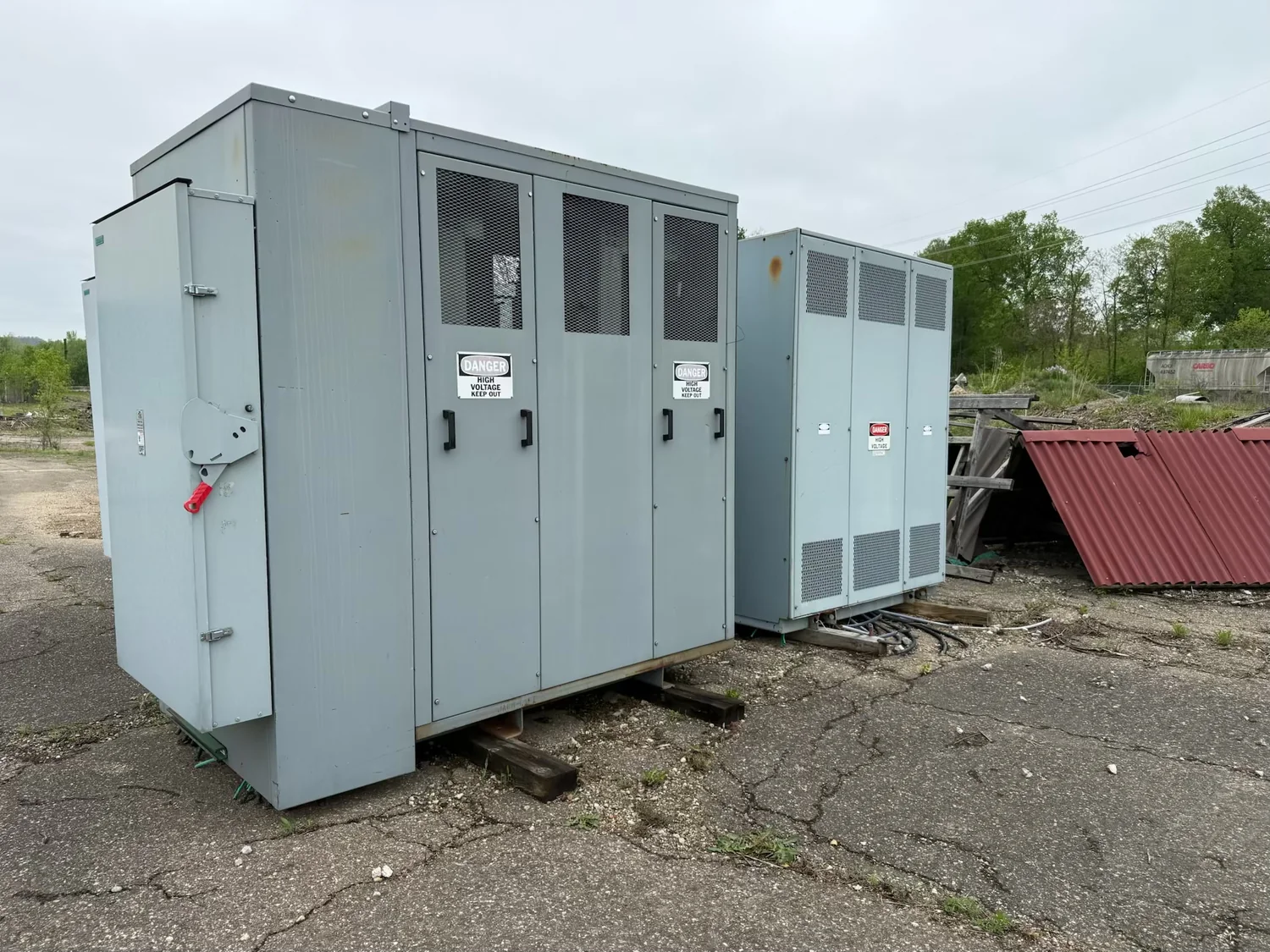
We Buy Used Switchgear in McLean, Virginia
If your facility in McLean, Virginia has surplus or retired switchgear, we can review it for purchase. We buy electrical equipment; we do not sell equipment. You can request a cash offer, and if you accept it, payment is arranged upfront. Sellers are not required to test the switchgear before requesting a review.
A useful first step is to assemble a clear, traceable record of the equipment. Send photos of the cabinets and loose breakers, readable nameplate images, approximate lineup dimensions, and a short inventory. Include the equipment’s voltage class where it can be identified, but we consider all voltage classes. An initial review is not a final price: the offer and removal scope depend on the equipment information, completeness, ownership, access, and project conditions.
Build a clear inventory of cabinets and breakers
When cabinets and loose breakers are being offered together, document them as one proposed lot while keeping each item identifiable. Give cabinets and breakers simple reference numbers, then use the same labels in the inventory, photo filenames, and any site notes. For example, a cabinet can be “C-01,” with loose breakers recorded as “B-01” and “B-02.” If a breaker belongs with a particular cabinet, note that relationship rather than relying on appearance alone.
For each cabinet, record the lineup’s approximate overall length, height, and depth, plus the number of sections if known. Note visible gaps, attached compartments, bus connections, or items that may need to remain in place. For loose breakers, record the visible identification, quantity, and whether accessories or parts are included. Do not assume that a component is included simply because it appears beside a lineup in a photograph; list what is included and what is excluded.
Completeness can affect how a lot is evaluated and how removal is planned. Identify missing doors, covers, barriers, breaker elements, control components, or other parts when known. Do not dismantle equipment to create an inventory. Photograph it as it currently stands and describe uncertainties so the review can account for them.
Photos and nameplates that help scope the project
Take well-lit, in-focus photographs from several angles. A practical photo set includes the full lineup from the front, the ends where accessible, a wider view showing surrounding space, and close-ups of each readable nameplate. Photograph loose breakers separately, including their visible labels and overall condition. If the nameplate is hard to read, provide both a close-up and a wider image that identifies which cabinet or breaker it belongs to. Avoid removing covers or entering restricted areas to get a picture.
Share the nameplate information that is visible, along with lineup dimensions and the item references used in your inventory. Photos help establish what is present, but they do not replace a site review or confirm that every internal component is complete or functional. No seller testing is required. Do not energize, operate, or open equipment solely to improve the photo set; follow facility procedures and ask qualified site personnel to obtain any information that requires access or intervention.
A concise note about ownership and sale authority is important. Confirm who owns the equipment and who is authorized to approve its sale. If the equipment is subject to a lease, lien, project hold, or other restriction, explain that before an offer or removal plan is set.
Plan access, disconnection, and removal together
McLean projects may involve facility-specific access rules, reserved work periods, loading constraints, security coordination, or limited space around the equipment. Do not assume that a truck, crane, or rigging crew can reach the lineup based on a street address alone. Share the site access process, available staging or loading areas, the route from equipment to pickup point, relevant door or corridor dimensions, overhead or floor constraints, and any known restrictions on work hours. Where those details are not yet confirmed, say so; the removal plan can be refined with the project arrangements.
The buyer handles the crane, rigging, disconnects, loading, freight, and hauling, subject to the project arrangements and site access. Responsibilities and the removal scope should be confirmed before work begins. De-energization, isolation, and disconnect work must be handled by qualified personnel in accordance with the site’s safety procedures and outage requirements. Coordinate the responsible personnel, required approvals, timing, and work boundaries before scheduling removal. Do not ask unqualified staff to disconnect, move, or handle electrical equipment.
Share known removal constraints, such as adjacent equipment that must remain, limited clearance, difficult turns, stairs, restricted lifting points, or a requirement to preserve cabinets and loose breakers as a single lot. The buyer can review the information and coordinate equipment and logistics for the project, but access, timing, and removal arrangements remain subject to the actual site conditions.
Offer, payment, and next steps
To begin, send the inventory, clear photos, nameplate images, approximate lineup dimensions, ownership confirmation, and details about access and removal constraints. If cabinets and loose breakers are being sold together, keep the item references consistent across every file and note which components belong in the lot. This helps avoid confusion during review and makes it easier to compare the documented inventory with what is present at the facility.
After reviewing the information, we can discuss a cash offer and the proposed removal scope. No final price can be set from a general description alone; the offer depends on the equipment and project details provided and may require clarification before terms are confirmed. If you accept an offer, payment is arranged upfront. The buyer pays the crane, rigging, loading, freight, and hauling costs, with the specific responsibilities and schedule confirmed for the project before removal.
This process is available to sellers in McLean and across the Washington, DC, Northern Virginia, and Maryland service area. Sharing accurate equipment records and practical site information early gives both sides a clearer basis for evaluating the lot, arranging payment, and coordinating a safe, workable removal plan.