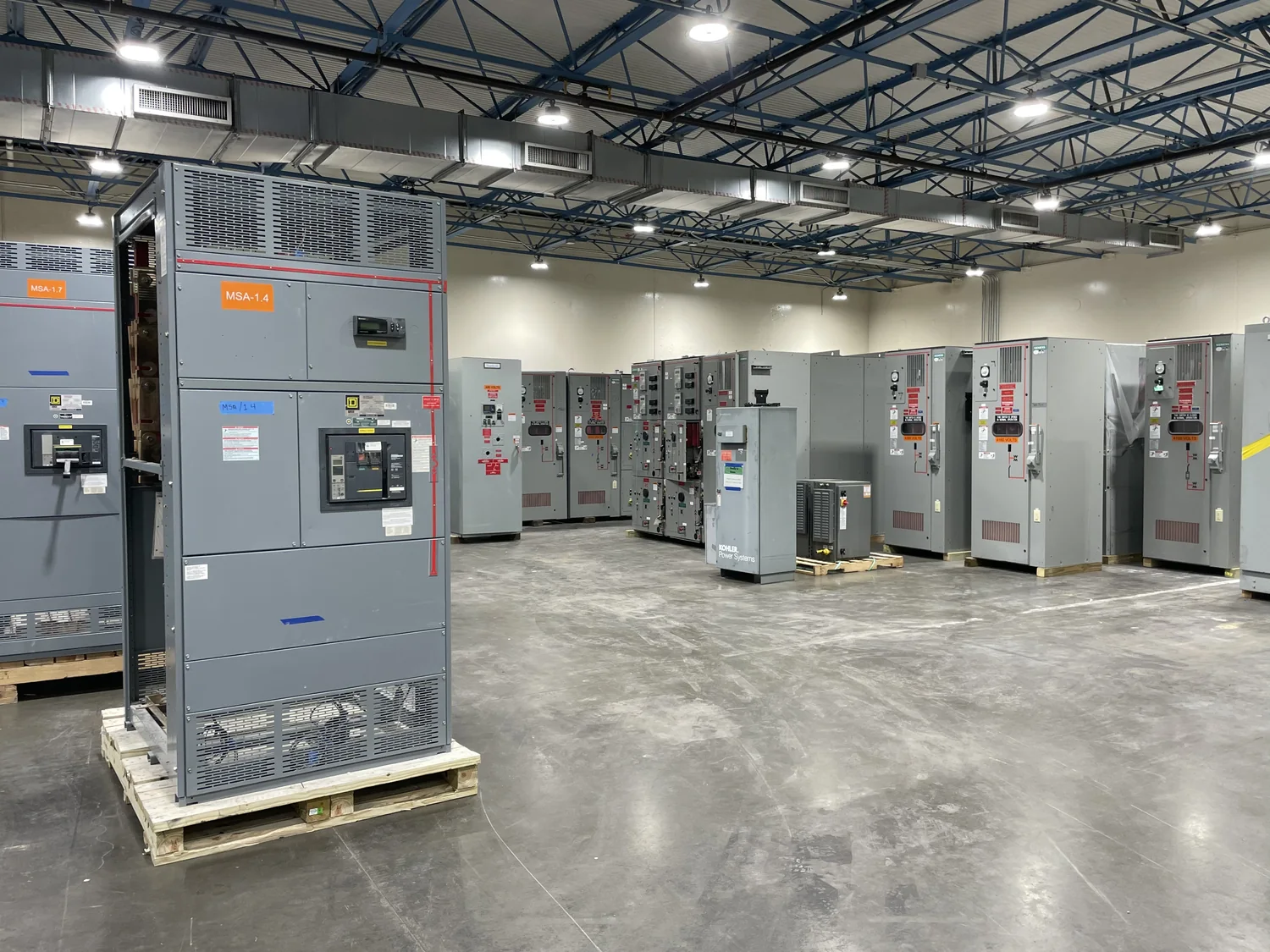
Motor starter removal planning for DC-area sellers
If your facility is replacing, consolidating, or clearing motor starters, a well-planned review can make equipment disposition easier to coordinate. This guide is for businesses in Washington, DC, Northern Virginia, and Maryland that want to offer motor starters for purchase and need to plan the information, access, and removal arrangements. The buyer purchases equipment; it does not sell motor starters. The equipment is reviewed before any offer is finalized, and all voltage classes are considered.
Removal is not a one-size-fits-all task. A starter may be part of a larger lineup, connected to other equipment, installed in a constrained room, or subject to an outage schedule and facility-specific safety procedures. Sharing accurate details early helps the buyer assess the equipment and discuss a practical project scope. It does not replace the seller’s responsibility to arrange qualified personnel for electrical work or to follow site rules.
Start with clear identification and condition information
Send clear, well-lit photos of the motor starter and its surroundings. Useful views include the front of the equipment, open doors where site rules permit, visible interior components, the sides and rear if accessible, and the broader lineup or room. Do not open energized equipment or enter restricted areas to take photographs. If a nameplate is safely visible, include a sharp, readable image rather than relying on a typed description alone.
Nameplate details can help identify the equipment for review. Capture the manufacturer, model or catalog information, serial number, ratings, and other markings that are present and legible; do not infer or fill in details that cannot be confirmed. Include photos of labels and any visible indications of configuration or condition. If the starter is incomplete, has missing parts, shows damage, or has been modified, describe that plainly. No testing is required from the seller as part of the initial review.
Provide approximate lineup dimensions and, when possible, the dimensions of the individual section or enclosure being offered. Note the number of sections, whether the starter is offered alone or as part of a larger lineup, and what associated components are included or excluded. A simple inventory can distinguish the equipment being offered from adjacent gear that is not part of the sale. Dimensions and photographs help establish handling and access needs, but a review may require follow-up before the project scope or offer can be confirmed.
Confirm ownership, boundaries, and site access
Before arranging a purchase, identify who owns the motor starters and who has authority to approve their disposition. If equipment is leased, financed, controlled by another party, or subject to internal asset-disposition approval, resolve the relevant permissions before committing to removal. Clarify exactly which sections are included, what remains in place, and whether the equipment is connected to shared enclosures, bus, wiring, controls, or other systems. This avoids treating adjacent or integrated equipment as included without authorization.
Describe the site access and scheduling context without assuming that every DC-area facility has the same constraints. Relevant details may include the delivery or loading entrance, distance to the removal point, stairs or elevators, door and corridor clearances, loading-dock availability, parking or staging limitations, restricted work hours, security check-in, and whether advance coordination is required. For a site in Washington, DC, Northern Virginia, or Maryland, traffic, building access, and available staging can affect timing, but the actual arrangements depend on the specific facility and project. Share known restrictions and the preferred work window so the parties can discuss a workable plan.
Also flag conditions that could constrain removal: narrow turns, low ceilings, overhead obstructions, limited floor loading information, occupied work areas, weather exposure, or equipment that must be moved through other operational spaces. Do not assume a starter can be removed as one piece. Its dimensions, weight, construction, connections, and route out of the building may determine whether sectional handling or other arrangements need review. Site access and removal methods must be confirmed for the actual project.
Coordinate safe disconnection and removal responsibilities
Any de-energization, isolation, verification, and disconnect work must be performed by qualified personnel under the facility’s safety procedures, applicable requirements, and outage plan. Do not ask unqualified staff to disconnect, dismantle, lift, or handle electrical equipment. Coordinate the work window with the people responsible for electrical operations, affected processes, and site safety. The buyer’s review does not authorize work on energized equipment or replace the facility’s required controls.
For logistics, the buyer handles crane, rigging, disconnects, loading, freight, and hauling, subject to project arrangements and site access. Confirm responsibilities, sequence, timing, and any site-specific coordination before removal. In particular, clarify what disconnect work is included in the agreed scope and how it fits with the facility’s qualified personnel, outage procedures, and access requirements. The buyer’s responsibility for these logistics does not eliminate the need to plan around site rules, safe isolation, or constraints that may affect the work.
Discuss how equipment will be moved from its installed position to the loading area, what route is available, and whether the route can accommodate the equipment and handling plan. Identify any lift, rigging, or staging constraints early. If site access changes, required approvals are not ready, or the planned work window shifts, the parties should revisit the schedule and arrangements before work proceeds. Avoid setting a removal date until access, scope, coordination, and responsibilities have been reviewed.
Purchase review, offer, and payment
Once the buyer has the available photos, nameplate information, dimensions, completeness details, ownership confirmation, and access notes, it can review the motor starters and discuss the project. Additional information or clarification may be needed; an initial description is not a final valuation. No final price should be assumed before the equipment and relevant logistics have been reviewed, and an offer is not guaranteed solely because a starter is a particular type or voltage class.
The buyer can make a cash offer, and payment is arranged upfront when an offer is accepted. Confirm the offer, the equipment included, payment arrangements, and removal responsibilities before scheduling the work. The buyer pays crane, rigging, loading, freight, and hauling costs, with responsibilities and project arrangements confirmed before removal. The seller does not need to perform testing for the review.
A concise information package is often the most useful first step: clear equipment and nameplate photos, lineup and section dimensions, a description of what is complete or missing, confirmation of ownership and sale authority, and practical details about access and removal constraints. With those details, a business in the Washington, DC region can begin a grounded purchase discussion without making assumptions about the facility, the equipment, or the work required.