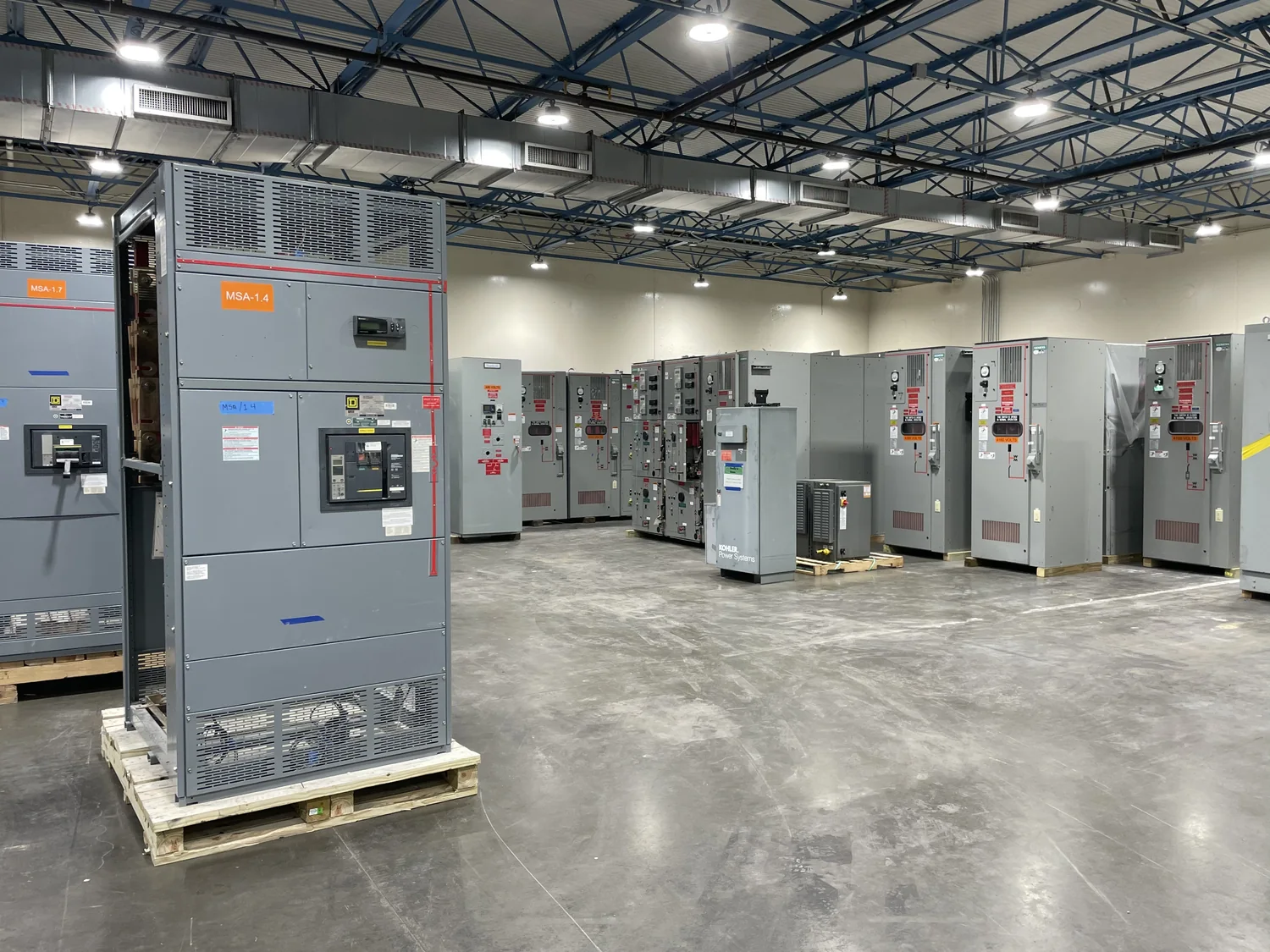
We Buy Used Switchgear in Alexandria, Virginia
If your facility in Alexandria has used switchgear to disposition, we buy electrical equipment and can make a cash offer after reviewing the specific assets and removal plan. We buy only; we do not sell switchgear. We consider all voltage classes, and the seller does not need to test the equipment before requesting a review. An offer is not final until the equipment details, ownership, site conditions, and logistics have been considered.
Switchgear removal in an occupied building takes more coordination than arranging a pickup. Electrical service may need to remain available to other parts of the facility, and tenants, building staff, and project teams may share limited access windows. Start with clear information about the equipment and site so the proposed scope can account for safe release, timing, and access. We serve the Washington, DC, Northern Virginia, and Maryland area; this page does not imply a local Alexandria office.
Send equipment details before setting the scope
Begin with readable photos of the complete lineup, including its front, sides, rear where safely accessible, and any visible sections or components included in the sale. Close-up images of each nameplate help identify the equipment and its stated ratings. Please do not remove covers or enter restricted areas to take pictures. If a nameplate is obscured or unreadable, note that rather than guessing at its information.
Provide the lineup’s approximate overall dimensions—height, width, and depth—and indicate how many sections are included. If known, share relevant ratings and configuration information shown on the equipment labels or available records. Also describe what is included with the lineup and what will remain in place. Completeness can affect review: mention missing sections, removed components, accessories, or attached equipment that is not part of the proposed sale. These details help clarify what is being offered, but they do not replace an on-site assessment if one is needed to define removal.
Confirm that you have authority to sell or release the equipment, or identify who must approve the disposition. Include the facility’s location, the best contact for site coordination, the building’s access requirements, and any known removal restrictions. This information supports a practical review; it does not guarantee an offer or establish a final price.
Coordinate occupied-building access and electrical release
In an occupied Alexandria facility, removal planning should account for tenants, building operations, and any electrical service that must be retained. Identify the equipment proposed for removal and explain what nearby or connected equipment must remain energized. Share known access windows, building rules, loading-area arrangements, and any required coordination with property management or facility personnel. Site access, timing, and the removal route need to be confirmed for the particular project rather than assumed from the address alone.
De-energization, isolation, and disconnect work must be performed by qualified personnel under the site’s safety procedures and outage plan. Do not ask unqualified staff to disconnect, move, or handle electrical equipment. Coordinate the release of the lineup with the people responsible for electrical operations and with anyone managing tenant notifications or service continuity. The buyer can plan removal around the agreed project arrangements, but the site controls its safety procedures, electrical authorization, and access.
Before removal, confirm how the equipment will be separated from systems that must remain, when the work can occur, and what conditions must be met before the buyer’s crew can enter the work area. If an outage or restricted access window is required, raise it early. A clear sequence can help avoid conflicts between equipment removal, ongoing building use, and other scheduled work.
Removal, loading, and transportation responsibilities
The buyer handles crane, rigging, disconnects, loading, freight, and hauling, subject to project arrangements and actual site access. The buyer pays those costs, with responsibilities and the planned scope confirmed before removal. The seller does not need to arrange transportation or provide testing, but the parties should settle the work sequence and access conditions before a crew is scheduled. Any disconnect work remains subject to qualified personnel and the facility’s safety and outage requirements.
Tell us about constraints that could affect the removal method or timing: narrow doors or corridors, stairs, elevators, low overhead clearance, limited turning space, restricted loading areas, equipment-room access, or rules governing when materials may move through shared spaces. Share available doorway, route, and loading-area dimensions where practical. Note whether a crane or other lifting arrangement may be needed, along with any known restrictions on positioning or access. These details are for planning; they are not a substitute for confirming site conditions and the project-specific removal plan.
A lineup’s size, weight, configuration, and condition can affect rigging, access, and transport planning. If weights are available from records or markings, provide them; do not estimate where that information is unknown. Photographs of the route and loading area can be useful if they can be taken safely and with permission. The buyer and site representatives should confirm how the equipment will be accessed and removed before work begins.
Offer review and payment
Once we have the equipment photos, nameplate information, lineup dimensions, completeness details, ownership confirmation, and access and removal notes, we can review the proposed sale and make a cash offer if appropriate. We consider all voltage classes, and no seller testing is required. The information supplied helps determine whether the equipment and project conditions fit the proposed scope; it does not establish a price without review.
If you accept an offer, payment is arranged upfront. The removal schedule and site responsibilities are coordinated separately, with access, timing, disconnect arrangements, and the buyer’s removal costs confirmed before work is planned. There is no universal price for used switchgear, and a final offer depends on reviewing the specific equipment and project details. To begin, send clear photos, nameplates, lineup dimensions, and a concise description of ownership, access, retained service, and removal constraints.