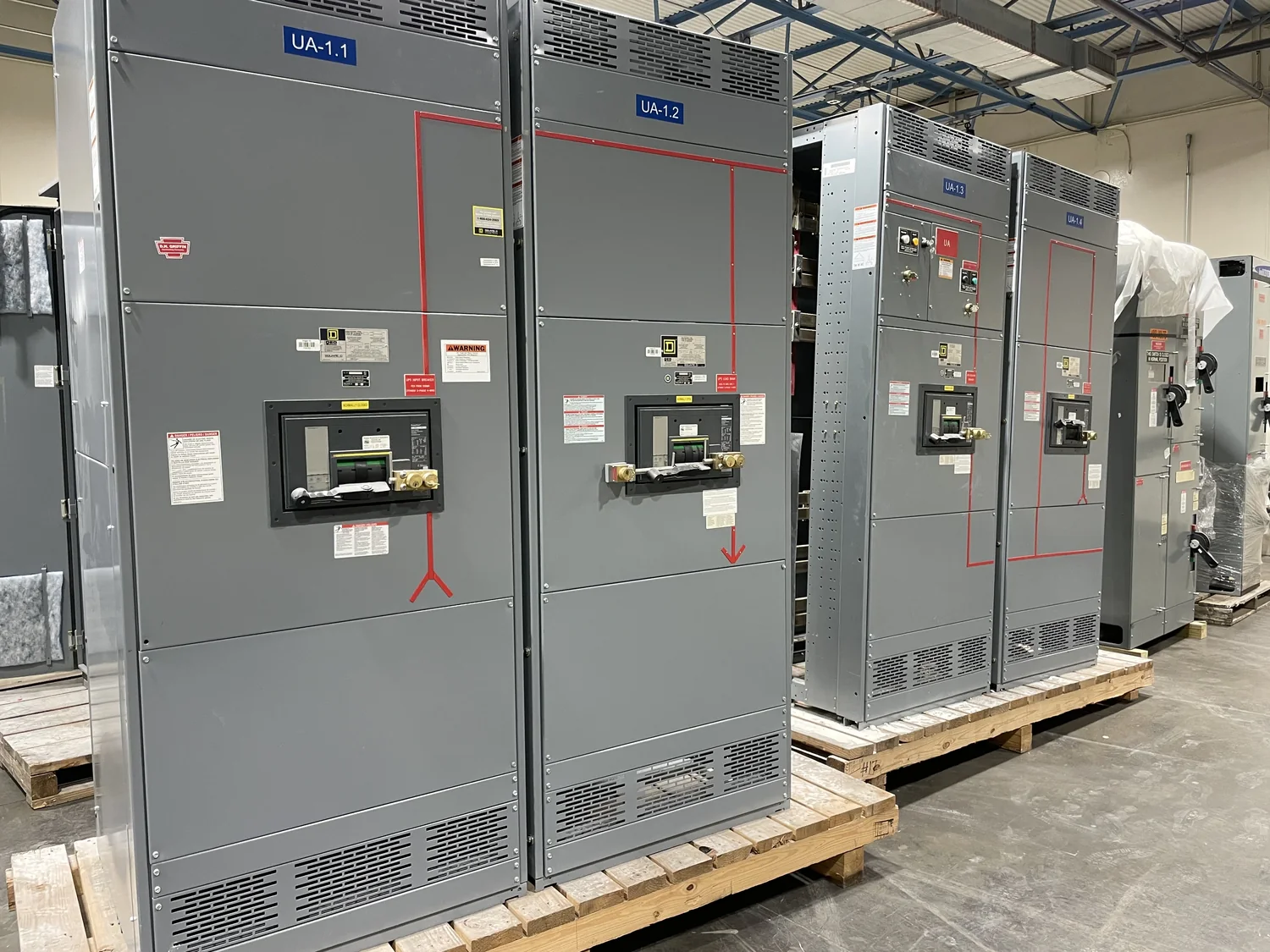
Selling surplus switchgear in Howard County, Maryland
Surplus switchgear can become a significant space and disposition issue when a facility changes, equipment is replaced, or a project leaves usable electrical assets unneeded. If you are considering selling switchgear in Howard County, the first step is not to arrange a lift or disconnect work. It is to assemble enough information for a buyer to understand what is available, its condition, and whether removal can be planned safely at the site.
We buy surplus switchgear and can make a cash offer after reviewing the equipment and project details. If you accept the offer, payment is arranged upfront. The seller does not need to conduct electrical testing for us to consider the equipment. We consider all voltage classes, but an evaluation and any offer depend on the specific assets, their completeness and condition, and the removal requirements. No final price can be responsibly set from a brief description alone.
This page is for sellers in Howard County and the wider Washington, DC, Northern Virginia, and Maryland service area. It does not imply a local office or a particular facility route. Access, scheduling, removal scope, and transportation are confirmed for the actual project rather than assumed from the county name.
Start with photos, nameplates, and lineup dimensions
Clear documentation helps identify the equipment and establish an initial scope. Send overview photos showing the complete lineup and its surroundings, along with closer images of individual sections, visible labels, and any apparent damage or missing parts. Photograph nameplates so the text is legible; useful details may include manufacturer and model identifiers, ratings, and other information shown on the equipment. These details help distinguish assets and guide review, but do not assume a particular brand, configuration, or voltage is eligible based on a general description.
Provide the lineup’s approximate overall dimensions, including length, height, and depth where available. Note the number of sections and whether breakers, relays, meters, doors, covers, or other components appear to be missing. If you know that parts have been removed, identify them rather than presenting the lineup as complete. Include visible corrosion, impact damage, water staining, outdoor storage, or other weather exposure in your description and photographs. These are observations for review—not a request to open equipment, perform tests, or expose anyone to electrical hazards.
If labels are unreadable or dimensions are only estimates, say so. Do not remove covers, reach into equipment, or attempt to inspect energized or potentially energized components to improve a photo. Photos should be taken only from a safe, authorized location and in line with the facility’s rules. A buyer may request clarification or additional views before defining a removal scope.
Clarify ownership, access, and site conditions
Before an offer is considered, identify who owns the switchgear and who is authorized to approve its sale and removal. If it is held by a property owner, tenant, contractor, lender, or another party, make sure the appropriate decision-makers are involved. Share the site location within Howard County, the best project contact, and any conditions that affect access or scheduling. This allows the parties to discuss the actual project without assuming facility details that have not been provided.
Describe how a removal crew and equipment could reach the lineup. Relevant information may include entry and loading-area constraints, travel distance from the equipment to the loading point, overhead or doorway clearance, stairs or elevation changes, restricted work areas, and whether a truck or crane can be positioned where needed. If the equipment is indoors, on an upper level, behind other machinery, or in a controlled-access area, explain that early. These details can affect the sequence, crew, equipment, timing, and cost responsibilities, so they should be confirmed before removal is scheduled.
Also note any site rules for visitor access, check-in, work hours, insurance documentation, escorts, loading, or coordination with facility operations. Do not assume that a crane can be placed or that a particular removal path is available. The project plan must reflect the site’s actual conditions and any restrictions identified by the facility.
Coordinate de-energization and removal safely
The buyer handles crane, rigging, disconnects, loading, freight, and hauling, subject to the agreed project arrangements and site access. The buyer pays the costs for those services, with responsibilities and scope confirmed before removal. That does not mean unqualified personnel should disconnect equipment or prepare it for lifting. De-energization, isolation, and disconnect work must be performed by qualified personnel under the site’s safety procedures, outage requirements, and authorization process.
Coordinate the project’s timing with the people responsible for electrical operations and site safety. The parties should establish who will perform and authorize electrical isolation and disconnect work, when the equipment can be made available, and what conditions must be met before rigging begins. A planned outage, other work in the area, restricted access, or a limited loading window may affect the schedule. Do not treat an accepted offer as permission to interrupt service or begin removal without the site’s required approvals.
The removal plan also depends on how the lineup is assembled and secured, its dimensions and weight information if available, the route from its installed position to the loading point, and whether sections can be moved as intended. Share known restrictions and do not dismantle, cut, or move equipment unless that work has been specifically coordinated with the qualified people responsible for the project. Final methods and timing are determined from the equipment and site conditions, not from a generic checklist.
Review the offer and confirm the scope before pickup
Once the equipment information and site details have been reviewed, the buyer can discuss an offer and the practical scope. If you accept, payment is arranged upfront. Confirm the payment arrangement, the assets included, the agreed removal responsibilities, access requirements, and the scheduling process before work is set. The buyer pays crane, rigging, loading, freight, and hauling costs; project responsibilities should still be stated clearly so both parties understand what is included and what site coordination is required.
A useful submission includes the Howard County site location, clear lineup and nameplate photos, approximate dimensions, a condition summary, and an itemized note of known missing components or visible damage. Add ownership and authorization status, access and loading details, available scheduling windows, and any removal constraints. No seller testing is required. If the information is incomplete, provide what can be gathered safely and identify what remains unknown.
A documented, coordinated review makes it easier to determine whether surplus switchgear can be purchased and how removal might work. It also helps avoid assumptions about condition, completeness, access, or outage timing. The next step is to share the available information for review; any offer, schedule, and final scope remain subject to the equipment details and project-specific arrangements.