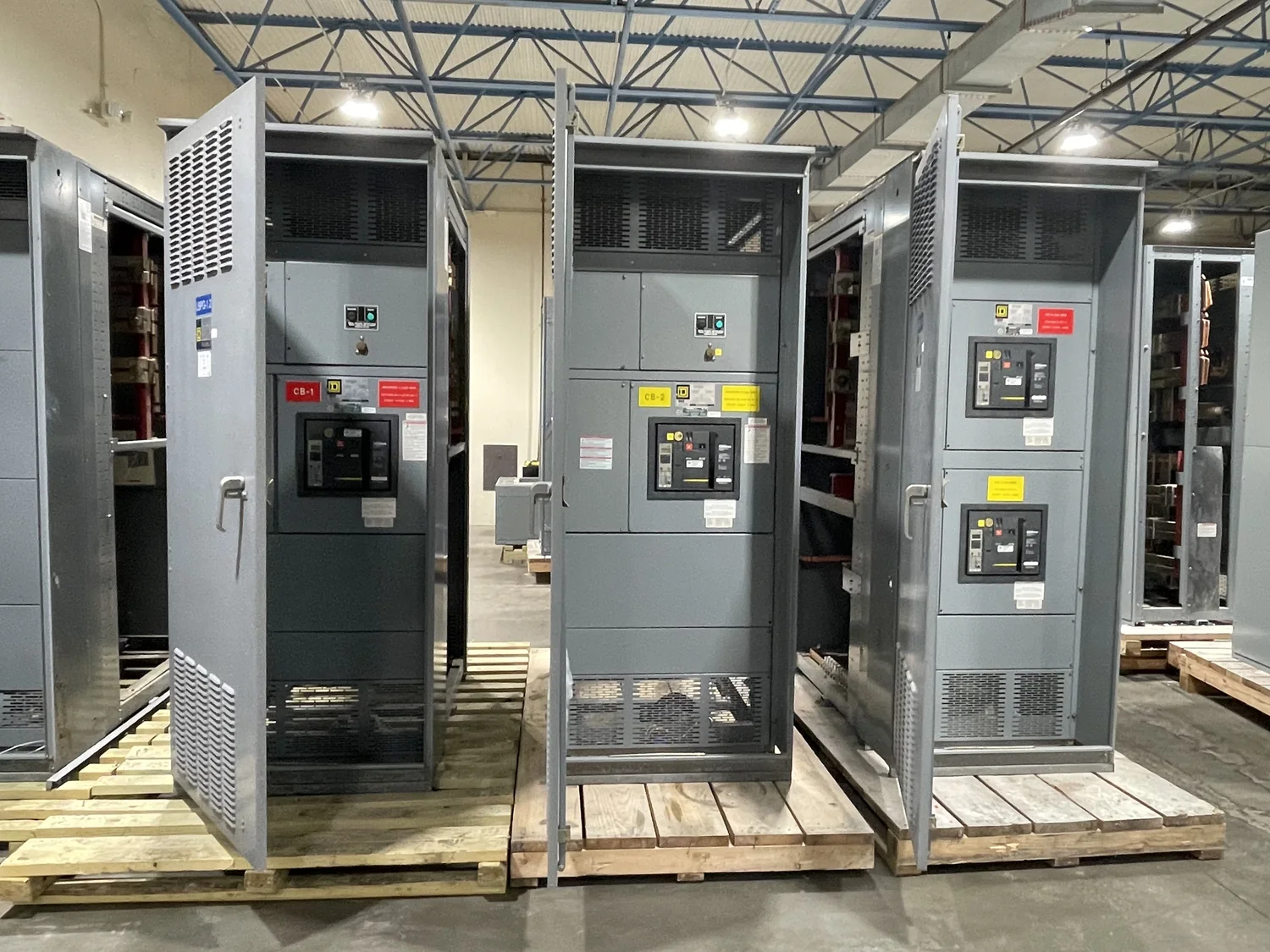
Sell Surplus Switchgear in Anne Arundel County, Maryland
If your business has surplus switchgear in Anne Arundel County, Maryland, a clear equipment and site review is the practical first step toward a sale. Share what the equipment is, where it is located, whether it is complete, who owns it, and what must happen before it can be removed. These details help establish whether the gear may be a fit and what pickup arrangements need to be discussed.
We buy surplus switchgear; we do not sell equipment. We consider all voltage classes, and sellers do not need to test equipment before requesting an offer. A cash offer can be made after review, and payment is arranged upfront if the offer is accepted. The final offer and removal scope depend on the equipment information, condition and completeness, ownership, access, and project requirements. No price should be treated as final before that review.
Start with Photos, Nameplates, and Dimensions
Send clear, well-lit photographs that show the overall lineup, each section, visible damage or missing parts, and the surrounding space. Include close-up images of available nameplates so identifying information and ratings can be read. Do not remove covers or approach exposed electrical parts to obtain photographs; use only views that can be taken safely from an accessible area. If the gear is energized or the nameplate cannot be reached safely, provide the information only when qualified site personnel can do so under the facility’s procedures.
Provide the lineup’s overall length, height, and depth, plus the dimensions of individual sections if the equipment will be separated. Note the approximate weight if it is documented, but do not estimate by handling or dismantling the gear. Helpful details may include the number of sections, whether breakers or other components are present, whether doors and internal parts are included, and whether the lineup is intact, partially dismantled, or stored separately. These facts help the buyer understand the asset and the space and handling requirements without assuming a particular manufacturer or configuration.
Confirm Ownership and Project Scope
Before an offer is considered, clarify who has authority to sell the switchgear and whether any ownership, lease, financing, or other restrictions apply. Identify the facility or site area where it is located and who can approve access and coordinate removal. If the equipment belongs to a customer, landlord, contractor, or another party, confirm that the seller has the necessary authorization before arranging a transaction.
Describe what is included in the proposed sale and what is not. For example, explain whether the equipment remains assembled, whether components have been removed, and whether loose parts, documentation, or accessories are available. Share known condition information accurately; testing is not required from the seller, and unknown condition should be described as unknown rather than guessed. The review can then account for the information provided and identify questions that need resolution before a pickup window or removal scope is set.
Plan Access, Approvals, and Qualified Disconnect Work
Removal planning should account for site access and the schedules of facility staff, contractors, and other work taking place in the same area. Share access approval requirements, site orientation or check-in steps, available work hours, delivery or loading restrictions, and any dates when the area cannot be reached. Flag competing contractor schedules early so the parties can discuss a realistic pickup window instead of assuming equipment can be removed on demand.
The buyer handles crane, rigging, disconnects, loading, freight, and hauling, subject to project arrangements and site access. Responsibilities, timing, and the work area must be confirmed for the specific project before removal. De-energization, isolation, and disconnect work must be performed by qualified personnel under the site’s safety and outage procedures. Do not ask unqualified staff to disconnect, move, or handle electrical equipment. Coordinate required outages and access with the people authorized to manage the facility’s electrical systems.
Coordinate a Realistic Pickup Window
A pickup window should be based on the equipment’s dimensions and completeness, the route from its installed or stored position to the loading area, and the available access for removal and transport. Note narrow corridors, door or ceiling clearances, stairs, elevators, changes in floor level, overhead obstructions, and any limits on staging or vehicle access. Where a crane or rigging may be needed, describe the available setup area and any known restrictions; the removal plan remains subject to site review and agreed arrangements.
Share the preferred timing, required advance notice, approval lead time, and any blackout dates. If other contractors must finish work first, identify that dependency when requesting an offer. A site contact should be available to confirm access and coordinate the agreed schedule. The buyer pays the crane, rigging, loading, freight, and hauling costs, with responsibilities confirmed before removal. Payment is arranged upfront once an offer is accepted; the equipment is not removed until the parties have confirmed the transaction and practical project arrangements.
Request an Offer for Anne Arundel County Switchgear
To begin, provide the best available photos, readable nameplate images, lineup and section dimensions, details about included components and completeness, ownership authorization, site access information, and your preferred timing. Include known constraints on disconnects, staging, loading, or removal and identify any approvals or contractor coordination that could affect the schedule. Complete information can help the buyer assess the opportunity and discuss next steps, but it does not guarantee an offer or a particular pickup date.
This process is intended for businesses disposing of surplus switchgear in Anne Arundel County and across the broader Washington, DC, Northern Virginia, and Maryland service area. Each transaction is reviewed on its own facts. If an offer is made and accepted, payment is arranged upfront, and removal responsibilities and timing are confirmed for the project before equipment is taken from the site.