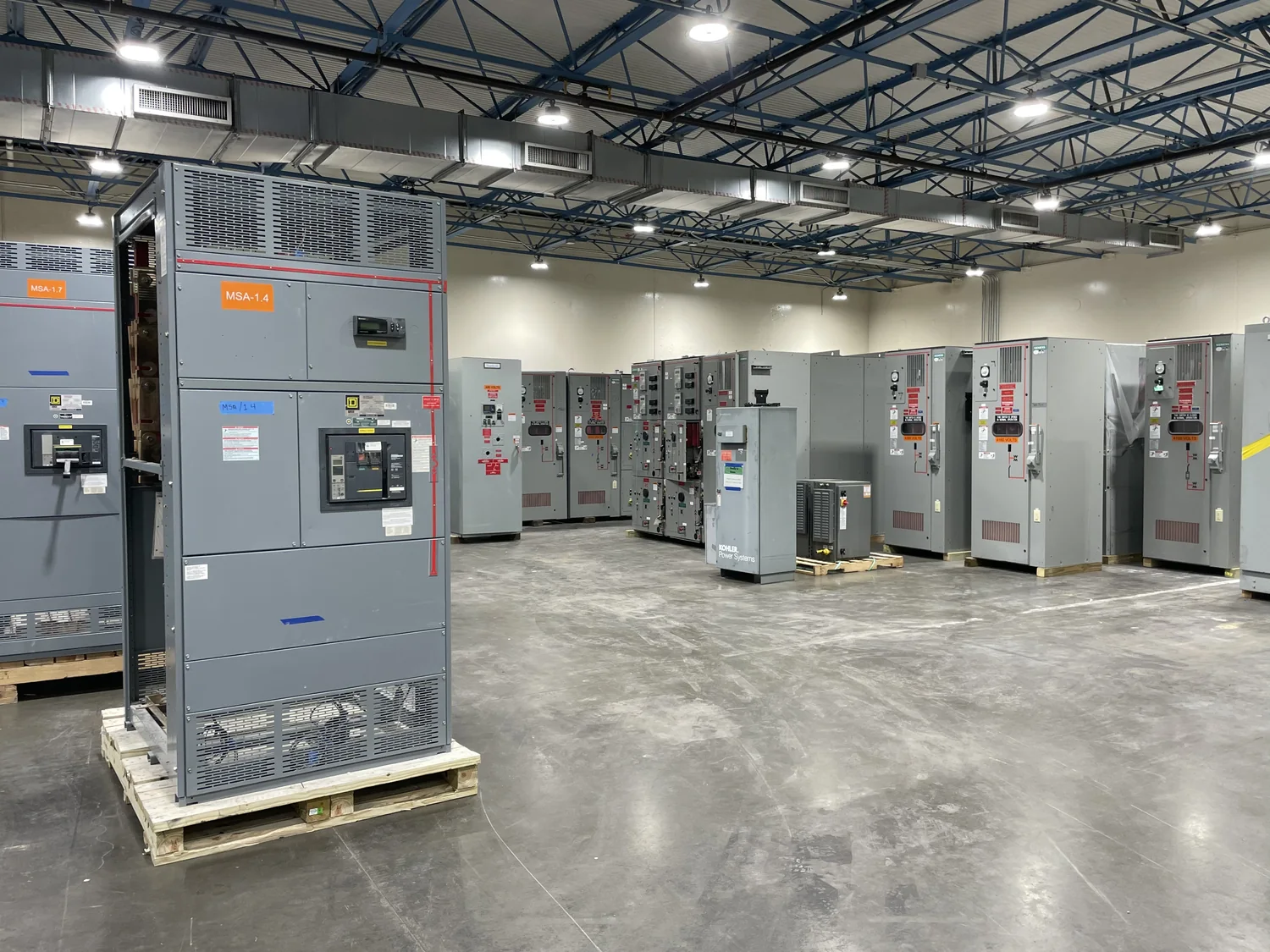
Sell Surplus Switchgear in Falls Church City, Virginia
If a facility in Falls Church City has surplus switchgear, a clear inventory and a coordinated removal plan can make the disposition process easier to assess. This guide is for owners and authorized representatives considering a sale of cabinets and loose breakers together. The buyer purchases equipment; it does not sell switchgear. Cash offers are available, and payment is arranged upfront after an offer is accepted. No seller testing is required, and all voltage classes may be considered, subject to review of the equipment and project details.
Start by identifying what is included and where it is located. A switchgear lineup may consist of several connected sections, while loose breakers may be stored separately or intended to remain with particular cabinets. A buyer will need to understand the proposed package—not just the most visible cabinet—before deciding whether it can make an offer and how removal might be arranged. A review of the available information is not a final price or a guarantee of purchase; the offer and scope depend on the specific equipment and logistics.
Build a Traceable Inventory and Photo Set
Make a simple inventory that links each cabinet and loose breaker to its photographs. Assign each item a label or reference number, then use that same identifier in a list and in the photo filenames or captions. For cabinets, record the number of sections, any visible section labels, and whether doors, covers, and other components appear to be present. For loose breakers, note visible identifiers and the cabinet or lineup they are associated with, if known. Mark uncertain associations as unknown rather than guessing.
Take clear overall photographs showing the lineup’s arrangement, followed by closer images of each section and its nameplate. Photograph loose breakers individually and include enough context to distinguish similar items. Make sure identifying plates and labels are legible; do not remove covers or enter restricted areas to obtain a picture. If labels are obscured or unreadable, say so and provide the clearest available image instead. Consistent references help prevent a cabinet, breaker, or accessory from being confused with another item when the proposed package is reviewed.
Include lineup dimensions where they can be measured safely and accurately: overall length, height, and depth are useful starting points. Note whether the measurement includes protruding parts or only the main enclosure, and identify any gaps or separate sections. Photos with a tape measure can help explain dimensions, but they do not replace written measurements. If dimensions are approximate, label them as such. These details help the buyer consider how the equipment may be moved, staged, and transported without assuming that every section can be handled as one piece.
Share Ratings, Completeness, and Ownership Details
Provide the nameplate information that is visible, such as manufacturer and model identification, rated voltage, current or other listed ratings, and any lineup or breaker identifiers. Do not infer a rating from the facility’s system or from a neighboring cabinet. The buyer considers all voltage classes, but the actual nameplate data and equipment configuration still matter to an item-specific review. The seller does not need to conduct electrical testing to submit information for consideration.
Describe completeness plainly. Indicate whether the package includes cabinets and loose breakers together, and list any known missing breakers, panels, covers, operating parts, or accessories. If the status of an item is uncertain, say so. Photos and a written inventory should tell the same story; if something changes after the initial submission, update both the list and the relevant images. Accurate information supports a clearer scope and helps avoid disagreement about what is included when removal is planned.
The person submitting the equipment should be able to confirm ownership or authority to sell it. Include the seller’s role and any relevant ownership or authorization details, along with the facility’s general access arrangements. Do not share sensitive site information unnecessarily; coordinate any additional access or documentation requests through the appropriate facility contact. A buyer’s review of photographs and records is not a substitute for the seller’s authority to transfer the equipment.
Plan Falls Church City Access and Removal
Falls Church City sits within the broader Northern Virginia service area, where an equipment-removal plan may need to account for the actual site, route, schedule, and available staging space. Do not assume that a truck, crane, or rigging crew can reach the equipment simply because it is inside a building or visible from a loading area. Share practical access details: the equipment’s floor or room, door and corridor constraints, loading-area location, stairs or other level changes, exterior route limitations, and any site scheduling or check-in requirements that affect the project.
The buyer handles crane, rigging, disconnects, loading, freight, and hauling, subject to project arrangements and site access. The buyer pays those costs, with responsibilities and scope confirmed before removal. This does not mean every removal method or schedule is available at every site. The plan depends on the equipment’s size and configuration, the route out, lifting and staging conditions, and coordination with the facility. Provide known restrictions early, including limited access windows, loading-area conflicts, or constraints on where a vehicle can wait or position.
Any de-energization, isolation, and disconnect work must be performed by qualified personnel under the site’s safety procedures and outage requirements. Do not ask unqualified staff to disconnect, move, or handle electrical equipment. Coordinate the required work, timing, and access with the facility’s responsible personnel before removal is scheduled. The buyer and seller should confirm how disconnect responsibilities will be handled for the specific project and what must be completed before lifting or loading begins.
Request an Offer Before Committing to Removal
To begin, send the traceable inventory, clear equipment and nameplate photos, lineup dimensions, completeness notes, ownership or authorization information, and practical access details. Identify which cabinets and loose breakers are being offered together, and flag any uncertainty about their condition, contents, or association. The more consistent the list and photo references are, the easier it is to review the intended scope and identify questions before logistics are set.
After reviewing the information, the buyer can make a cash offer if the equipment and project details are suitable. Payment is arranged upfront when the offer is accepted. No testing by the seller is required. Do not treat an initial discussion or photo review as a guaranteed purchase, final valuation, or confirmed removal date; the offer, included items, payment arrangements, and removal responsibilities should be confirmed for the particular project before work is scheduled.
Before proceeding, both sides should agree on the equipment included, any exclusions, the accepted offer, payment timing, access and schedule, and the removal plan. Confirm that the buyer’s crane, rigging, loading, freight, and hauling arrangements fit the site, while qualified personnel handle required disconnect and isolation work in accordance with facility procedures. A complete scope protects the inventory record, keeps the cabinet-and-breaker package traceable, and gives the Falls Church City seller a practical basis for moving forward.