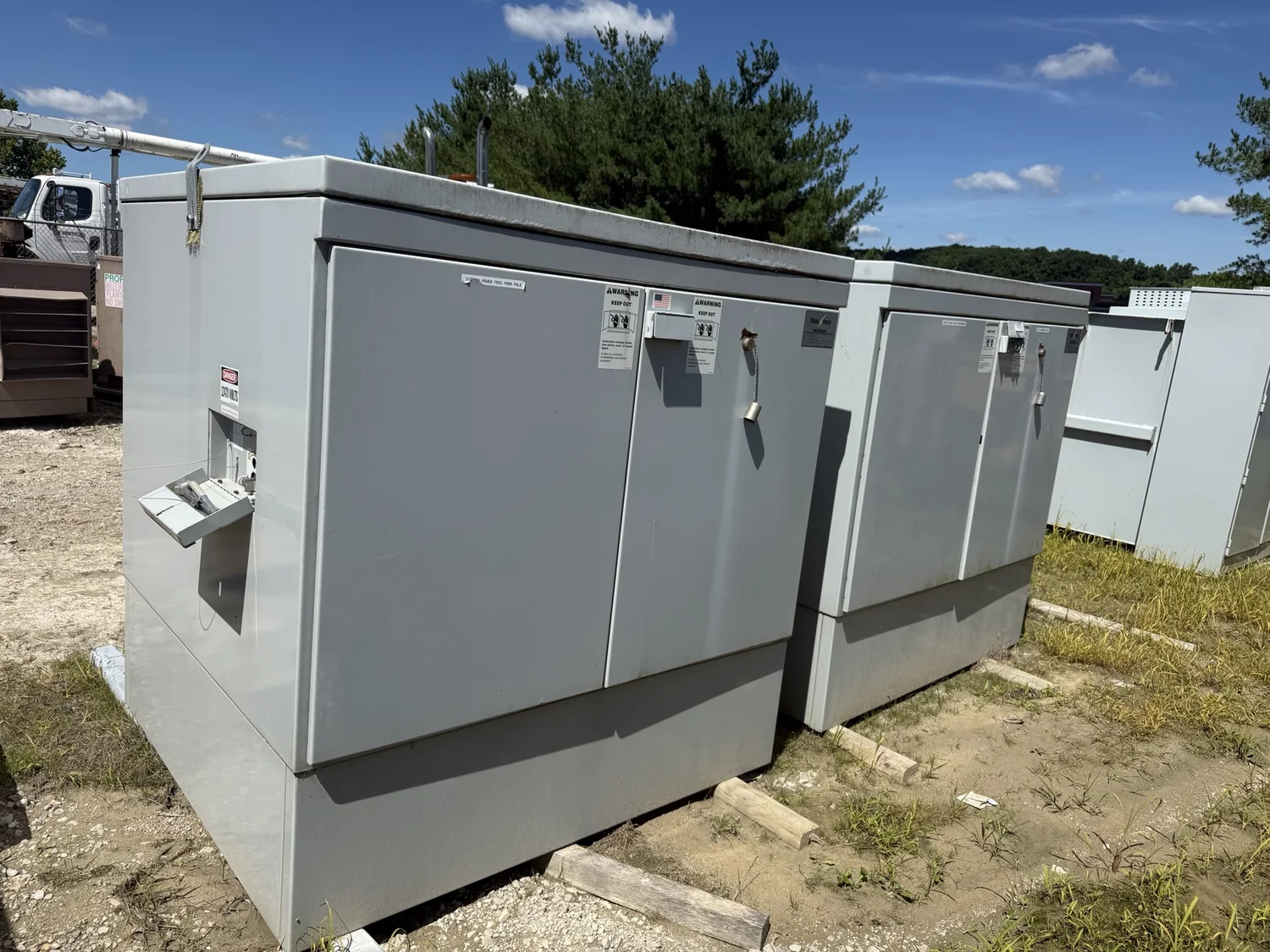
Selling surplus switchgear in Prince George’s County
If your facility in Prince George’s County, Maryland, has switchgear that is no longer needed, a buyer can review it for purchase as part of a planned disposition. This may include a large lineup or equipment being removed during a renovation, system change, or facility transition. The buyer buys surplus equipment only; it does not sell replacement gear or perform electrical work.
Start with the information that helps establish what is present and whether removal can be coordinated: clear photographs, readable nameplates, lineup dimensions, ownership details, and a description of site access. The buyer considers all voltage classes, but that does not establish that a particular lineup is suitable for purchase. Scope and any offer depend on review of the actual equipment and project conditions. No final price should be expected from a general description alone.
What to send for an initial review
Photograph the front and rear of the lineup where safely accessible, along with its overall arrangement, visible sections, and any detached or separately stored components. Close, legible nameplate images help identify the equipment and ratings. If labels are damaged, obstructed, or missing, note that rather than guessing at the information. Photos should be taken without opening energized equipment or entering restricted areas; follow the site’s access and safety rules.
Include approximate overall lineup dimensions, the number and arrangement of sections if known, and whether the equipment appears complete. Note any missing doors, covers, breakers, internal components, bus or accessories, as well as items stored separately that may belong with the lineup. Explain whether the gear is installed, staged, or already removed. These details help the buyer understand the asset being considered, but they do not replace an in-person review if one is needed to set the project scope.
Also identify who owns the equipment and who is authorized to approve its sale. Share the site location within Prince George’s County, the proposed timing, access restrictions, and the best site contact for coordinating next steps. If your organization has requirements for documenting surplus disposition, clarify those before an offer is accepted.
Plan access and removal as a site-specific project
Large switchgear lineups can be difficult to remove because of their size, weight, configuration, and route from the equipment room to the loading area. Useful details include door and corridor clearances, stairways or level changes, elevator limits where applicable, turning space, overhead obstructions, floor or loading-area constraints, and the distance to the pickup point. Share known limits on truck access, staging, working hours, security check-in, and any restrictions on equipment movement. Do not assume a lineup can be removed as one piece; how it can be handled depends on its construction and the site route.
The buyer handles crane, rigging, disconnects, loading, freight, and hauling, subject to the project arrangements and site access. Responsibilities, sequence, and timing should be confirmed before removal. The site team can describe access limitations and loading arrangements, but should not perform a lift or attempt to rig, move, or load the equipment. A crane or other handling method is not assumed until the equipment and conditions have been reviewed and the plan coordinated.
Any de-energization, isolation, and disconnect work must be performed by qualified personnel under the facility’s safety requirements and outage procedures. Coordinate required shutdown windows, approvals, site escorts, and access with the appropriate facility team. Do not have unqualified staff disconnect or handle electrical equipment. The buyer’s responsibility for coordinating and handling removal logistics does not replace the site’s safety controls or authorization process.
Ownership, completeness, and timing matter
Before setting a removal date, confirm that the equipment is available for sale and that the person approving the transaction has authority to do so. If the lineup is part of a larger project, clarify what is included in the proposed sale and what must remain in place. Identify loose components, documentation, or accessories that are included, and distinguish them from equipment belonging to another system or owner. Clear boundaries help prevent misunderstandings when the lineup is prepared for pickup.
Scheduling should account for the site’s operating needs, required outage procedures, removal access, and any restrictions on when a crew or vehicle may be on the property. For facilities serving active operations, timing may need to align with work windows established by the site. Share known deadlines early, but treat dates as planning targets until scope, access, and responsibilities have been confirmed. Conditions on site can affect the practical removal plan, so avoid making the equipment available for movement before the coordinated arrangements are in place.
Offer and payment process
After reviewing the available equipment information and project details, the buyer can determine whether it is interested and make an offer for consideration. The offer is not a guaranteed valuation and may depend on the lineup’s identity, condition, completeness, ownership, and removal constraints. Clear photos and accurate dimensions can reduce avoidable follow-up, but the buyer may need additional information before setting scope or confirming an offer.
The buyer can make a cash offer, and payment is arranged upfront when an offer is accepted. Confirm the payment arrangement and the removal responsibilities before work is scheduled. The buyer pays the crane, rigging, loading, freight, and hauling costs, with the specific arrangements confirmed for the project. Sellers are not required to test the switchgear. Do not conduct testing or open equipment for the purpose of the sale unless that work is separately authorized and performed under the site’s applicable safety procedures.
For a Prince George’s County disposition, a practical first submission is a concise equipment summary, clear photos and nameplates, approximate lineup dimensions, confirmation of ownership authority, and a description of access, loading conditions, removal constraints, and scheduling needs. That information gives the buyer a useful basis for review while leaving technical scope, offer terms, and the removal plan to be confirmed for the specific site.