Sell Surplus Switchgear in Montgomery County, Maryland
When switchgear is no longer needed, selling it can be a practical part of a facility change, equipment upgrade, or property disposition. The first step is not removal: it is establishing what equipment is available, who has authority to release it, and what the site will require for a safe, coordinated handoff. This buyer serves businesses across Washington, DC, Northern Virginia, and Maryland, including Montgomery County. It buys surplus switchgear; it does not sell equipment.
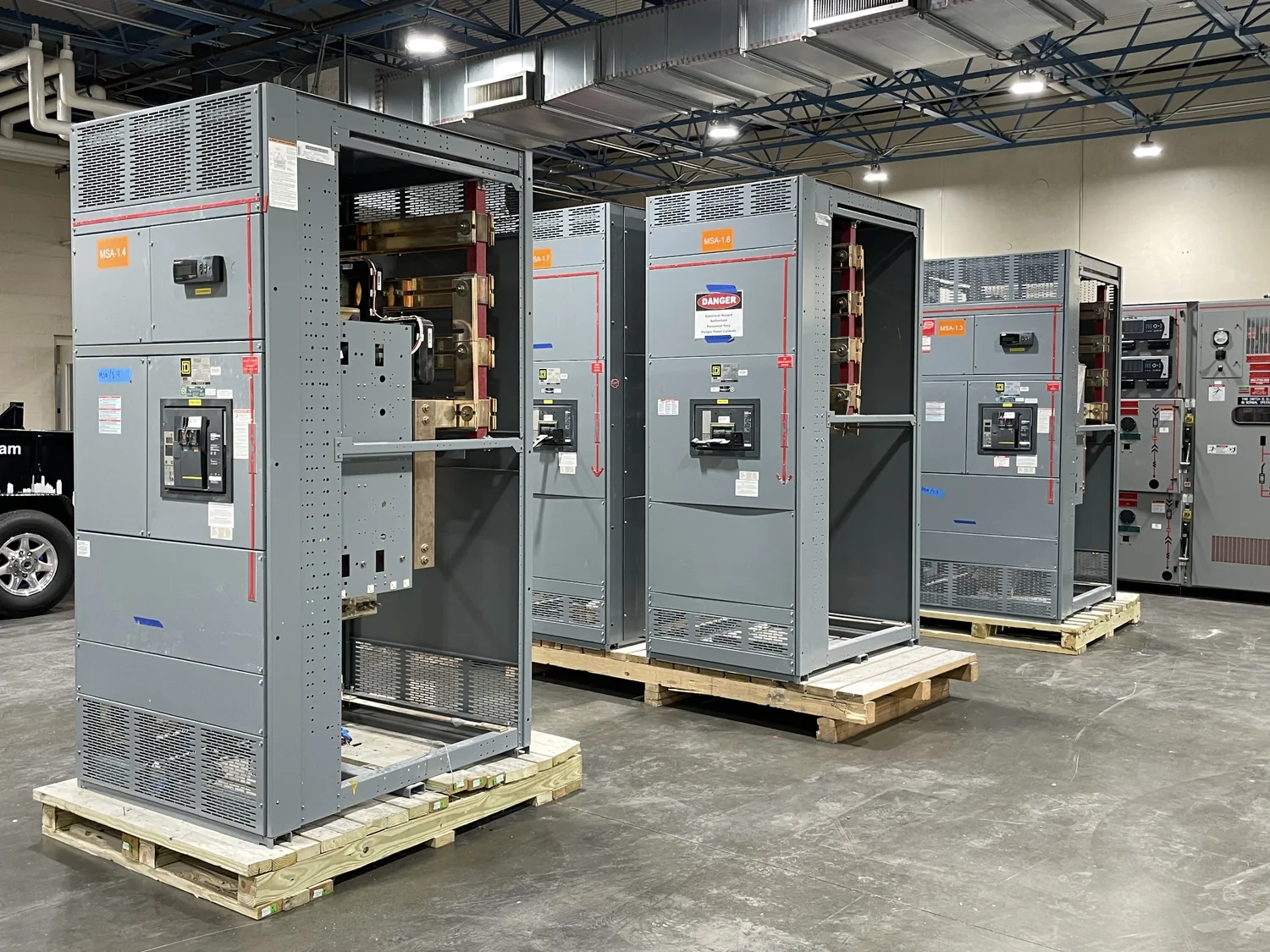
A preliminary review can begin with clear photographs, nameplate information, approximate lineup dimensions, and a description of the equipment’s condition and completeness. These details help the buyer understand the scope and decide what additional information is needed before making an offer. The buyer considers all voltage classes, and the seller is not required to test the equipment. A review of available information is not a substitute for site-specific engineering, safety, or removal planning.
Establish Ownership and Release Authority
Before requesting an offer, confirm that the business or property owner has the right to sell the switchgear and can authorize its release. This is especially important in leased or shared-use buildings, where equipment may belong to a landlord, tenant, utility, contractor, or another party—or where a lease, service agreement, or facilities arrangement may affect who can approve removal. Do not assume that occupying the space, maintaining the equipment, or paying for an upgrade automatically establishes ownership.
Gather any available records that help clarify ownership and authority, such as purchase or asset records, lease language, project closeout documents, or written approval from the party responsible for the equipment. The exact documentation needed depends on the circumstances. Identify the person authorized to approve the sale and the person responsible for coordinating access and removal. If ownership or release authority is unclear, resolve that question before scheduling removal or representing the equipment as available for sale.
Prepare Equipment Information for Review
Provide readable photographs of the complete lineup and individual sections, including the front, rear where safely accessible, sides, and visible nameplates. Images of the nameplates can help identify the equipment and its ratings; photographs should be sharp enough to read rather than relying on a transcription alone. Include the lineup’s approximate overall length, height, and depth, along with the dimensions of any sections that may need to pass through doors, corridors, loading areas, or other constrained routes. Note whether the lineup is indoors or outdoors and whether it remains installed or has already been removed.
Describe what is included in the sale, such as associated sections, breakers, doors, covers, or other components, but do not assume that every item is present or that an incomplete lineup is unsuitable. Record visible damage, missing parts, prior changes, or uncertainty about condition. Be accurate about what is known and identify anything that has not been verified. No seller testing is required. Do not open energized equipment, remove covers, or approach exposed electrical hazards to obtain information; photographs and inspection should be limited to what can be gathered safely under the site’s procedures.
Coordinate Safe Removal and Site Access
Switchgear removal is a project activity, not a routine pickup. De-energization, isolation, and disconnect work must be performed by qualified personnel in accordance with the site’s safety procedures and outage requirements. Do not ask unqualified staff to disconnect, dismantle, or handle electrical equipment. The timing for outages and disconnect work should be coordinated with the facility and the responsible qualified personnel before a removal date is set.
The buyer handles the crane, rigging, disconnects, loading, freight, and hauling, subject to project arrangements and site access. Responsibilities and scope should be confirmed before removal. Share practical access details early: the building’s receiving or loading arrangements, available working space, route from the lineup to the pickup point, access restrictions, scheduling windows, and any known limits affecting equipment movement or lifting. In Montgomery County, as elsewhere in the DC, Northern Virginia, and Maryland service area, site conditions vary by property; do not assume a particular facility layout, access route, or removal method. The project team must confirm what can be accommodated at the actual site.
Also explain any removal constraints that could affect planning, including limited clearances, stairs, narrow turns, restricted loading access, operating-area restrictions, or requirements to coordinate with a landlord or other building users. These details are not reasons to guess at a removal plan; they help the buyer and site representatives determine what needs to be reviewed and agreed before work is scheduled. Site access, responsibilities, and timing should be settled with the appropriate parties rather than left until the removal crew arrives.
Review the Offer and Agree on the Handoff
After reviewing the available equipment and project information, the buyer can make an offer. A final price should not be assumed from a brief description or a few photographs; it depends on review of the specific switchgear, its completeness, available identifying information, and the practical removal scope. If important details change—for example, the equipment differs from the photos, components are missing, or access constraints are different—those changes should be discussed before the parties proceed.
If an offer is accepted, payment is arranged upfront, and the buyer pays for crane, rigging, loading, freight, and hauling, with responsibilities confirmed before removal. Coordinate the payment arrangement, release authority, access plan, outage timing, and handoff details in advance. Keeping the sale approval and removal coordination aligned can help prevent avoidable delays, particularly where a tenant, property owner, facilities team, or other party must authorize access.
A useful initial inquiry includes clear equipment and nameplate photographs, approximate lineup dimensions, a description of included components and known condition, confirmation of ownership or release authority, and a contact who can explain access and scheduling requirements. Include any known disconnect or removal constraints, while leaving electrical work to qualified personnel. With those basics available, the buyer can review the opportunity and identify what additional information is needed before an offer or removal plan is finalized.