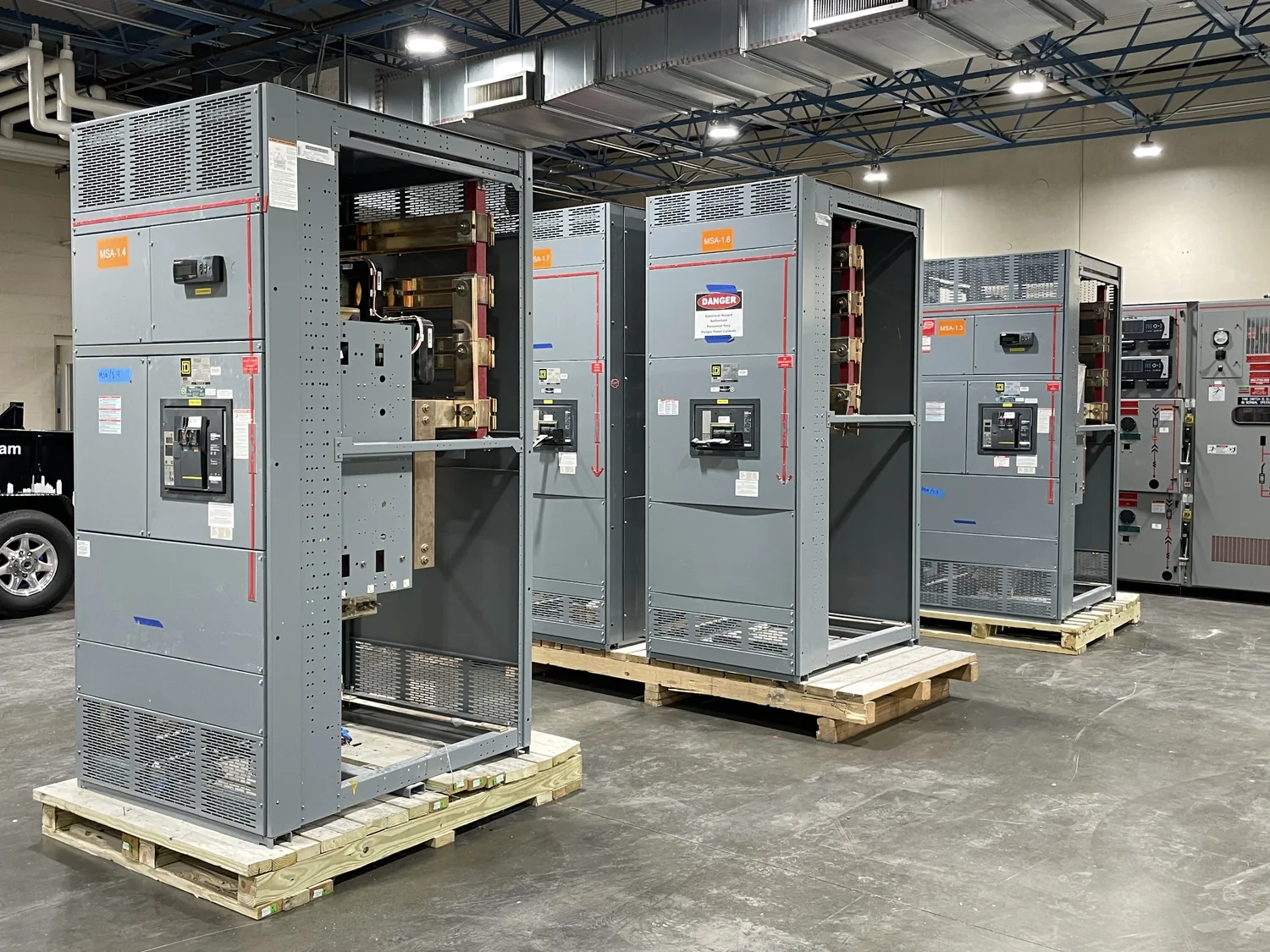
Sell Used Distribution Panels in the DC Region
If your organization is planning an electrical upgrade, renovating a building, consolidating equipment, or clearing space, a used distribution panel may still have resale value. We buy used distribution panels from commercial, institutional, and industrial sites across Washington, DC, Northern Virginia, and Maryland. We are a buyer, not a seller: the process starts with a review of the equipment and project details, followed by an offer for your consideration.
A useful first step is to identify the specific panel or lineup you want to sell and confirm that your organization has authority to transfer it. Distribution equipment can be part of a larger electrical system, so ownership, intended removal, and any restrictions on the equipment should be clear before the project is scoped. You do not need to test the panel for us. We consider equipment across all voltage classes, but a purchase offer depends on review of the particular equipment, its condition and completeness, and the practical requirements for removal.
Prepare Photos, Nameplates, and Lineup Information
Clear documentation helps us understand what is being offered and what information is still needed. Please send overall photos that show the panel or lineup in its setting, along with close views of visible nameplates and labels. Include the lineup’s approximate overall dimensions—height, width, and depth—and, where practical, photos that show how sections are arranged and connected. If the equipment is a group of panels or sections, indicate which pieces are included rather than assuming the entire lineup is available.
Nameplate details and readable labels can help identify the equipment and its ratings. Photograph them without opening energized equipment or entering restricted areas; site safety rules always take priority. You can also note whether doors, covers, breakers, internal components, or other associated pieces are present, and identify anything already removed or known to be missing. Completeness matters because a panel offered as a full assembly may need to be assessed differently from a partial lineup. If a label is damaged, obscured, or unavailable, say so rather than guessing at the rating or manufacturer details.
A short written inventory can make the initial review more efficient. List the number of panels or sections, any known dimensions, visible identifying information, and what is included in the sale. Photos do not need to establish every technical detail, and sellers are not expected to perform testing. They give us a basis to ask focused follow-up questions and determine whether an offer can be made after review.
Share Ownership, Access, and Removal Constraints
The site and equipment details are as important as the nameplate. Tell us where the panel is located within the facility, whether it is indoors or outdoors, and what route equipment would need to travel to reach a loading area. Note relevant access constraints such as door openings, corridors, stairs, elevators, floor-level changes, overhead obstructions, limited staging space, security procedures, or restricted delivery and removal windows. For the Washington, DC region, access and scheduling can vary substantially from one facility to another; the actual building and site conditions, not assumptions about the area, determine the removal plan.
Please also describe the equipment’s installation and removal constraints. Useful details can include approximate weight if known, whether sections are separated or joined, anchoring or mounting conditions, nearby equipment, and any limits on where lifting or staging can occur. Do not estimate or disturb equipment if doing so would put people or the site at risk. A site visit or additional information may be needed to confirm scope, access, and timing before removal responsibilities are finalized.
Confirm that the organization owns the equipment or is authorized to sell it, and identify any approval steps that could affect the schedule. For institutional, commercial, and industrial properties, asset-disposition review, tenant or landlord coordination, security access, outage planning, and contractor scheduling may all require time. Share the appropriate project contact and any site rules that the buyer’s team must follow. We can coordinate arrangements for the project, but access permissions, timing, and removal conditions need to be confirmed rather than presumed.
Coordinate Qualified Disconnects and Safe Removal
Electrical distribution panels must not be disconnected or handled by unqualified personnel. De-energization, isolation, and disconnect work must be performed by qualified personnel under the site’s safety requirements and outage procedures. The seller should coordinate those activities with its qualified electrical personnel and site representatives; do not open, move, or alter equipment simply to prepare photographs or make it easier to inspect.
Before removal, agree on who is responsible for each project step and when that work will take place. The buyer handles crane, rigging, disconnects, loading, freight, and hauling, subject to project arrangements and site access. The specific sequence, equipment, and timing must be coordinated for the facility, including any required outage window and any restrictions on lifting, staging, or truck access. These responsibilities should be confirmed before removal so the parties have a shared understanding of the work and the site conditions on the scheduled date.
Removal feasibility depends on the particular lineup and the route out of the building. Dimensions, weight, section configuration, available clearances, loading access, and the location of the equipment can affect the plan. If conditions differ from what was described or shown, the project may need to be reassessed before work proceeds. No one should assume that a panel can be removed intact, that a particular lifting method will work, or that a proposed schedule is available until the relevant arrangements have been reviewed.
Review an Offer and Arrange Payment Upfront
Once we have reviewed the available equipment information and the proposed removal scope, we can make a cash offer for consideration. There is no requirement for the seller to test the equipment. An offer is not a guaranteed value or a final price before review: it depends on the specific panels offered, the information available, and the project’s practical removal arrangements. If important details are missing, we may need clearer photos, additional dimensions, or clarification about what is included before we can complete that review.
If you accept an offer, payment is arranged upfront. The buyer pays the crane, rigging, loading, freight, and hauling costs, with responsibilities and project arrangements confirmed before removal. This gives both sides a chance to align on the included equipment, payment, access, qualified disconnect work, scheduling, and removal scope before the job is put on the calendar.
To start, send clear equipment photos, readable nameplate images where available, approximate lineup dimensions, a description of what is included, confirmation of ownership or authority to sell, and details about site access and removal constraints. Add any known scheduling limits or outage procedures that could affect the work. With those basics, we can review the opportunity and discuss next steps for a used distribution-panel purchase in Washington, DC, Northern Virginia, or Maryland—without requiring the seller to test the equipment or assume responsibility for the buyer’s hauling costs.