Sell Surplus Switchgear in Calvert County, Maryland
If your business has surplus switchgear in Calvert County, Maryland, you can request a purchase offer by sharing basic information about the equipment and the conditions for its release. This buyer purchases electrical equipment; it does not sell equipment. A useful first step is to assemble clear photos, nameplate information, approximate lineup dimensions, and details about ownership, site access, and removal constraints. That information helps determine whether the equipment and the proposed removal scope can be reviewed for an offer.
Switchgear disposition in an occupied building calls for more than identifying equipment that is no longer needed. The site may need to retain electrical service, keep other equipment in operation, coordinate tenant access, and limit work to an approved access window. Describe those requirements early. The buyer can make a cash offer, and payment is arranged upfront if the offer is accepted. No testing is required from the seller. The buyer handles crane, rigging, disconnects, loading, freight, and hauling, subject to project arrangements and site access. Confirm responsibilities and timing before removal begins.
Prepare Equipment Information for Review
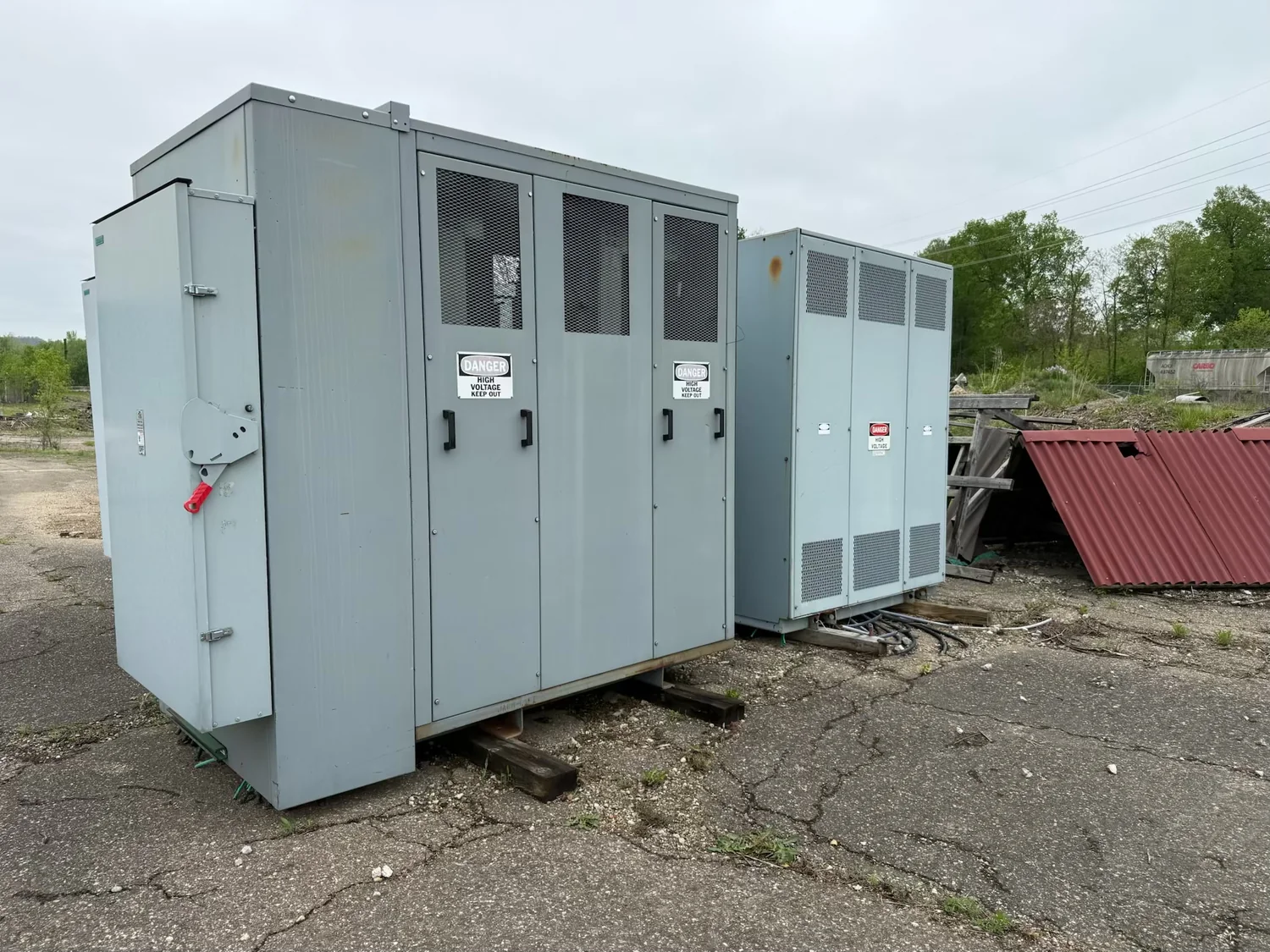
Photograph the equipment from several useful angles: the full lineup, each section, visible doors and compartments, and any apparent damage or missing components. Take readable photos of nameplates and labels where they can be photographed safely. Do not open energized compartments or remove barriers to obtain a photo. If labels are obscured or unavailable, note that rather than guessing at ratings or configuration.
Nameplate details can help identify the equipment and inform a review, but do not assume that a brand name or a single rating tells the whole story. The buyer considers all voltage classes; provide whatever legible ratings and identification details are available without attempting to verify them yourself. Include approximate overall lineup length, height, and depth, and note whether sections appear connected as a lineup or have already been separated. If exact measurements would require entering a restricted area or approaching electrical hazards, arrange for qualified site personnel to obtain them under the facility’s procedures.
Describe completeness as accurately as possible. Note whether doors, covers, breakers, protective devices, bus components, control elements, or accessories are present, removed, damaged, or unknown. These details can affect how an asset is reviewed and what work may be needed to prepare it for removal. Do not represent uncertain components as present or working. Seller testing is not required, and no one should energize, operate, dismantle, or inspect equipment in a way that conflicts with site safety rules just to support the inquiry.
Establish Ownership and Release Authority
Before setting scope, identify who owns the switchgear and who has authority to approve its sale and release. If the equipment belongs to a landlord, tenant, operator, contractor, or another entity, clarify who can authorize the transaction and removal. Make known any ownership documentation, internal approval steps, or restrictions on transferring the equipment. The buyer will need enough information to understand that the seller is authorized to offer the asset; the inquiry should not presume that a particular document or approval is sufficient.
Also explain how the switchgear relates to retained electrical service. Is the equipment being removed after replacement, held as a spare, or made surplus as part of a planned change? What equipment and circuits must remain in service, and what parts of the building must remain accessible? These are project questions for the responsible facility team and qualified electrical personnel—not assumptions to settle from photos alone. Sharing the intended sequence and known constraints helps the parties discuss a practical removal plan without implying that the asset is safe to disconnect or ready to move.
Plan Access, Disconnects, and Removal
For an occupied building, coordinate the proposed work with facility operations, tenants, building management, and any other parties whose access or services could be affected. Identify permitted work windows, loading-area availability, route from the equipment to the pickup point, elevator or doorway limits, floor and turning constraints, and any restrictions on staging or vehicle access. In Calvert County, as elsewhere in the DC, Northern Virginia, and Maryland service area, the actual route and site conditions must be confirmed for the specific project; do not assume a particular building layout, road approach, or lifting arrangement.
De-energization, isolation, and disconnect work must be performed by qualified personnel under the site’s safety and outage procedures. Do not ask unqualified staff to disconnect, open, move, or handle electrical equipment. Coordinate the required outage approvals, boundaries, timing, and responsibility for disconnects with the facility’s qualified electrical team. The buyer handles disconnects as part of the agreed project arrangements, but that does not replace site authorization, qualified work, or coordination with the people responsible for electrical safety and retained service.
The buyer also handles crane and rigging, loading, freight, and hauling, subject to access and project arrangements. Before scope is set, disclose obstacles such as narrow corridors, stairs, limited door clearance, overhead restrictions, long carries, weight or floor-loading concerns, restricted loading zones, or limits on crane placement. Provide approximate dimensions and, if available, equipment or section weights from reliable records. Do not estimate a lift plan or assume equipment can be removed intact; the appropriate approach depends on the equipment, site, access, and approved work plan. Confirm responsibilities, access, timing, and removal conditions with the buyer before work is scheduled.
Request an Offer Without Guessing at Price
Send the available photos, readable nameplate details, lineup dimensions, completeness notes, ownership and authorization information, and a clear description of access and removal constraints. Include the facility’s requirements for tenant coordination, retained service, outage windows, and loading access. If information is incomplete, say what is unknown. A review may require follow-up questions or additional documentation before the equipment and removal scope can be evaluated.
There is no need for the seller to arrange testing to begin the conversation. The buyer may make a cash offer after reviewing the equipment information and project conditions. No final price can be responsibly stated from the location or a brief description alone; condition, identification, completeness, scope, and logistics all matter. If an offer is accepted, payment is arranged upfront. The buyer pays the crane, rigging, loading, freight, and hauling costs, with the exact responsibilities and project arrangements confirmed before removal. This gives the seller a practical path to discuss surplus switchgear while keeping safety, access, and continued building service at the center of the plan.