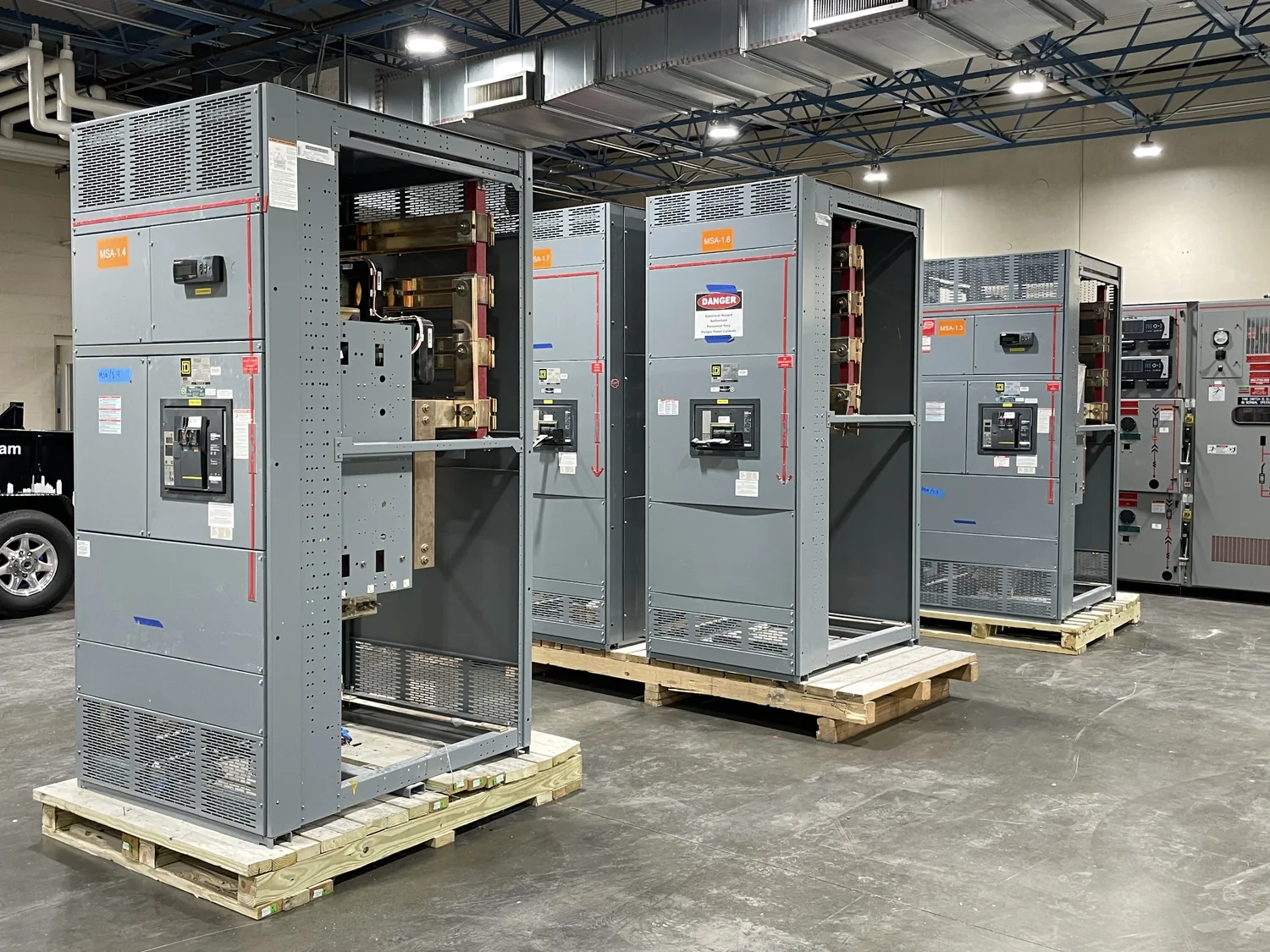
We Buy Used Switchgear in Frederick, Maryland
If your facility in Frederick has surplus switchgear, we can review it for purchase. We buy used switchgear; we do not sell equipment. We consider all voltage classes, and sellers do not need to test equipment before requesting a review. You can send clear photos, nameplate information, lineup dimensions, and basic details about ownership and site access so we can understand what is available and what removal may involve.
The Frederick area is part of our DC, Northern Virginia, and Maryland service area. That does not mean every site has the same access, approval process, or pickup conditions. A purchase and removal plan must be based on the actual equipment, the facility’s requirements, and the schedules of the people responsible for the site. We do not provide a final price based only on a location or a brief description; an offer depends on reviewing the available information and confirming the project scope.
Information to Gather Before Scope Is Set
Start with photographs of the full lineup from the front and, where safely and practically possible, from other useful angles. Include clear close-ups of each available nameplate and any labels that help identify sections, ratings, or configuration. Do not remove covers or enter restricted areas to obtain photos. If equipment is energized or access is controlled, have the site’s qualified personnel determine what can be photographed safely and when.
Measure the lineup’s overall length, height, and depth, and note how it is divided into sections if that is known. Dimensions help assess whether equipment can pass through doors, corridors, loading areas, or other parts of the planned removal route. Share available information about ratings, completeness, and condition, including whether sections, doors, bus components, or other associated parts are present or missing. Do not assume that a lineup is complete—or that a particular component is included—without confirming it in the photos or description.
Please also clarify who owns the equipment and who is authorized to approve its sale and release. If ownership is held by another entity, or the asset is subject to internal disposition controls, establish who can provide authorization before a pickup is scheduled. Describe the proposed access route, loading area, any access approvals or escorts, site hours, and known restrictions. These details are preliminary planning information, not a substitute for a site walk-through or final coordination when project conditions require one.
Coordinate Disconnection, Contractors, and Site Access
Switchgear removal depends on more than the buyer’s pickup availability. A facility may need to coordinate an outage, qualified electrical personnel, other contractors, internal approvals, security or access procedures, and the receiving or loading area. Identify schedule conflicts early, especially when multiple contractors need the same work area or when removal depends on an agreed sequence of work. Share the site’s realistic timing constraints rather than assuming that equipment can be removed as soon as an offer is accepted.
Any de-energization, isolation, and disconnect work must be performed by qualified personnel in accordance with the site’s safety requirements and outage procedures. Sellers should not attempt electrical disconnects or equipment handling unless they are qualified and authorized to do so. The buyer’s removal plan must be coordinated with the people responsible for the equipment and the facility. Confirm who is responsible for each project task, when the area will be available, and what approvals are required before removal begins.
Access conditions can shape the schedule and method of removal. Useful details include the route from the equipment to the loading point, clearances and obstructions, floor or ground conditions, overhead constraints, and any restrictions on vehicle or lifting equipment access. These details should be verified with the site rather than inferred from the Frederick location. If information changes—such as the available outage window, access route, or contractor sequence—raise it before pickup arrangements are finalized.
Removal Logistics and Payment
Subject to project arrangements and site access, the buyer handles the crane, rigging, loading, freight, and hauling for the purchased equipment. The parties should confirm responsibilities and the removal scope before work is scheduled, including what equipment is included, where it is located, how the site will provide access, and what conditions could affect the planned pickup. The buyer’s responsibility for removal logistics does not authorize anyone to bypass facility safety controls or perform work outside the agreed scope.
Pickup timing is set around the equipment, site readiness, access approvals, qualified personnel, and other project schedules. A realistic pickup window is more useful than a date that has not been checked against those dependencies. Before confirming a window, align the relevant site contacts and contractors on the expected sequence, loading access, and any requirements for entering or working in the area. If a planned date becomes impractical, communicate promptly so the parties can reassess the schedule.
We can make a cash offer after reviewing the equipment and relevant project details. When an offer is accepted, payment is arranged upfront. No seller testing is required. The offer and payment arrangements should be confirmed with the agreed scope before removal; a final price cannot be responsibly stated without review. The buyer pays the crane, rigging, loading, freight, and hauling costs, with project responsibilities confirmed before removal.
A Practical Next Step for Frederick Sellers
To begin, send clear equipment photos, legible nameplates, lineup dimensions, information about ratings and completeness, and a short description of ownership and access. Include the facility’s preferred timing, known approval steps, and any removal constraints or contractor scheduling conflicts. If a detail is unknown, say so; it is better to flag an open question than to guess about equipment configuration or site conditions.
That information gives us a basis to review the switchgear, discuss a possible cash offer, and identify what needs to be coordinated before a pickup window can be confirmed. The removal plan remains subject to project arrangements, site access, and the facility’s safety and outage procedures. With responsibilities, approvals, and schedules addressed in advance, Frederick-area sellers can evaluate surplus switchgear for purchase without relying on unsupported assumptions about the equipment or the site.