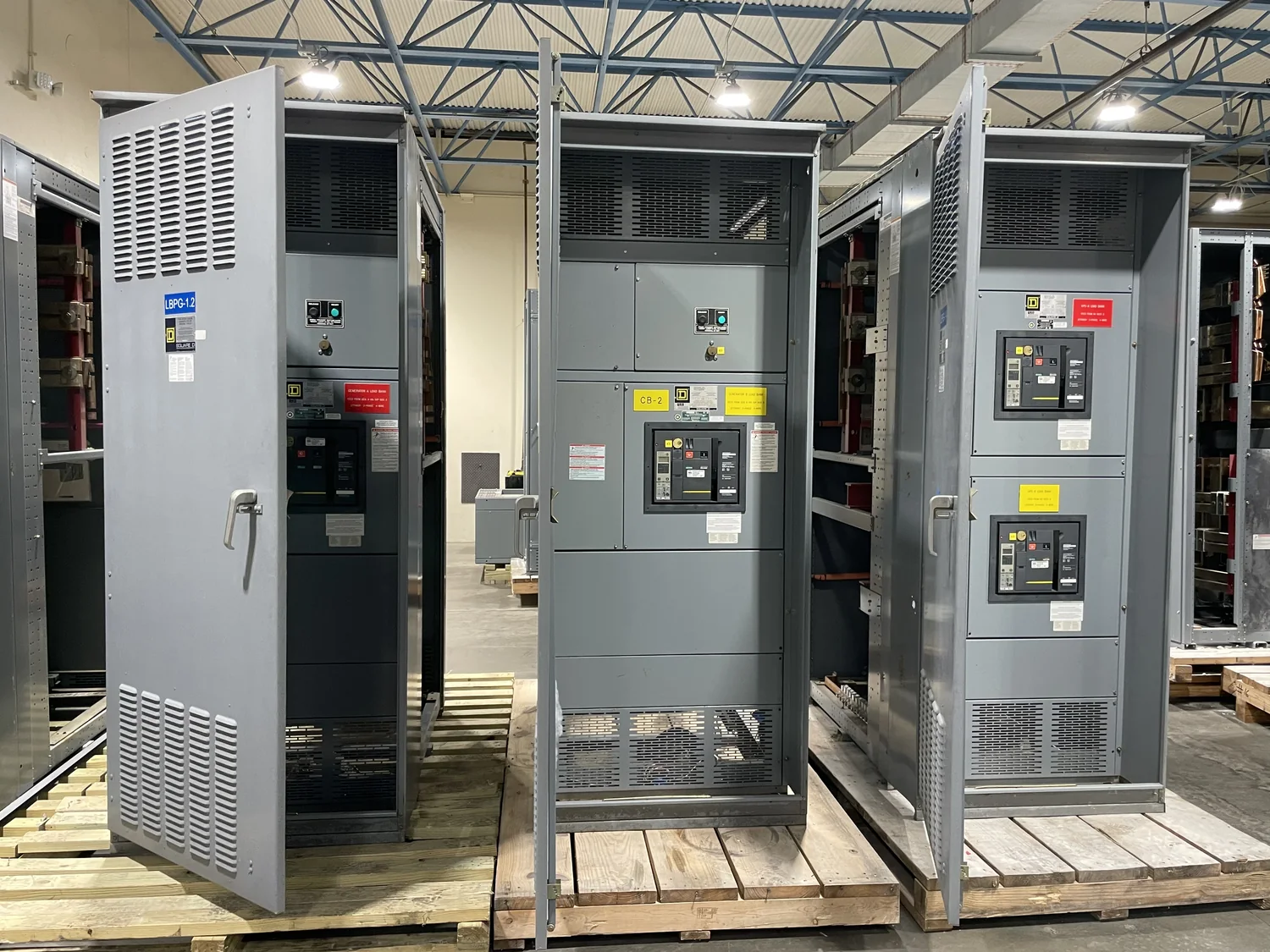
Sell Surplus Switchgear in Carroll County, Maryland
If your business has surplus switchgear in Carroll County, Maryland, you can submit it for buyer review without first arranging a sale listing or conducting seller-run testing. The buyer purchases equipment only; it does not sell switchgear. All voltage classes are considered, and a preliminary review can begin with clear photographs, nameplate information, lineup dimensions, and basic details about ownership and site access. The equipment may remain in a restricted electrical room while you gather and share that information.
A review is not a final price or a guarantee of purchase. Any offer depends on the equipment and project details available for evaluation. If an offer is accepted, payment is arranged upfront. The buyer handles crane, rigging, loading, freight, and hauling, with responsibilities and arrangements confirmed for the specific removal. No seller testing is required. Keep the equipment in place until the parties have agreed on scope, timing, access, and the steps needed to prepare it for removal.
What to document while the equipment stays in place
You can provide useful information without opening energized compartments, entering restricted areas without authorization, or moving equipment. Start with exterior photos that show each lineup and its overall condition. If site rules allow, take additional pictures of visible labels, lineup ends, doors, and any obvious damage or missing sections. Avoid removing covers or reaching into equipment to improve a photograph. Follow facility rules for photography, restricted-room access, and handling of business-sensitive information.
Share legible nameplate photographs where they can be taken safely and with permission. Include the manufacturer and model details, ratings, and other visible identification as shown; do not guess at unreadable fields. Photos of labels can help the buyer understand what is present, but they do not replace a review of the full equipment and project scope. If labels are inaccessible, say so rather than asking unqualified staff to approach or handle the gear.
Provide approximate overall lineup dimensions, including length, height, and depth if available, and note whether measurements cover the complete lineup or only a section. Existing drawings, equipment schedules, inventories, and prior disposition records can help clarify the configuration and completeness. Describe whether the switchgear appears to include all sections and doors, or whether breakers, panels, accessories, or other components are absent or have been removed. Record known damage or modifications plainly. A careful account of what is visible is more useful than an unsupported assumption about condition or value.
Ownership, access, and removal constraints
Before scope is set, confirm that your organization owns the equipment or has authority to sell it. If the switchgear is part of a lease, financing arrangement, customer-owned installation, or another party’s property, clarify who can authorize the transaction. The buyer may need the seller’s legal business name and a clear point of contact for the equipment and site. Sharing these details early can prevent avoidable delays in review and scheduling.
Describe where the lineup is located within the facility and what restrictions apply to reaching it. Useful details include whether the electrical room is controlled or access-limited, available entry hours, escort requirements, security check-in, photography rules, and any restrictions on vehicles or contractors. Explain the route from the room to a loading area, including doors, corridors, stairs, elevators, thresholds, overhead clearance, turning space, and any other known pinch points. If information is uncertain, identify it as unconfirmed rather than treating an estimate as a verified measurement.
Removal feasibility depends on the actual equipment and site conditions. The buyer handles crane, rigging, loading, freight, and hauling, subject to project arrangements and safe site access. Before work is scheduled, confirm who is responsible for each scope item, how the equipment can be moved from its installed location, and what access the crew and equipment will need. Crane or rigging needs cannot be determined from the county location alone; they depend on the lineup, building, removal path, and available staging area. The parties should resolve these details before committing to a removal date.
Coordinate qualified disconnects and site scheduling
Any required de-energization, isolation, and disconnect work must be completed by qualified personnel under the facility’s safety rules and outage procedures. Do not ask unqualified employees to disconnect, move, or handle electrical equipment. The seller should coordinate the appropriate site personnel, approvals, work windows, and outage requirements with the buyer before removal. The timing of this work and the buyer’s loading and hauling activities should be planned together, while respecting the site’s operating priorities and access controls.
For a restricted electrical room, the seller can support planning by sharing permitted photos and records, identifying who controls room access, and explaining which site procedures apply. Establish in advance how access will be granted, when the room may be entered, what escort or check-in is needed, and whether removal activity must fit a particular window. If a route survey or additional site review is needed, arrange it through authorized facility contacts. Do not rely on a photo alone to settle clearance, handling, or rigging questions.
Submit details for a project-specific review
A useful first submission can include clear exterior and nameplate photos, approximate lineup dimensions, available drawings or inventory records, a description of visible completeness and condition, ownership confirmation, and the site contact responsible for access. Add the Carroll County facility’s applicable access hours, security or escort requirements, removal route information, staging limitations, and known scheduling constraints. You can note which details are confirmed and which still require a site check. This helps the buyer identify follow-up questions without requiring you to disturb equipment in a restricted room.
The buyer will review the information and determine whether it can make an offer; a final price cannot be responsibly stated without review. If an offer is made and accepted, payment is arranged upfront, and the parties confirm project responsibilities and removal arrangements before work proceeds. The buyer pays for crane, rigging, loading, freight, and hauling, with the specific plan subject to site access and agreed project scope. No testing is required from the seller. For businesses in Carroll County and the broader Maryland, Northern Virginia, and Washington, DC service area, a clear record of the equipment and its site constraints is the practical starting point for discussing surplus switchgear disposition.