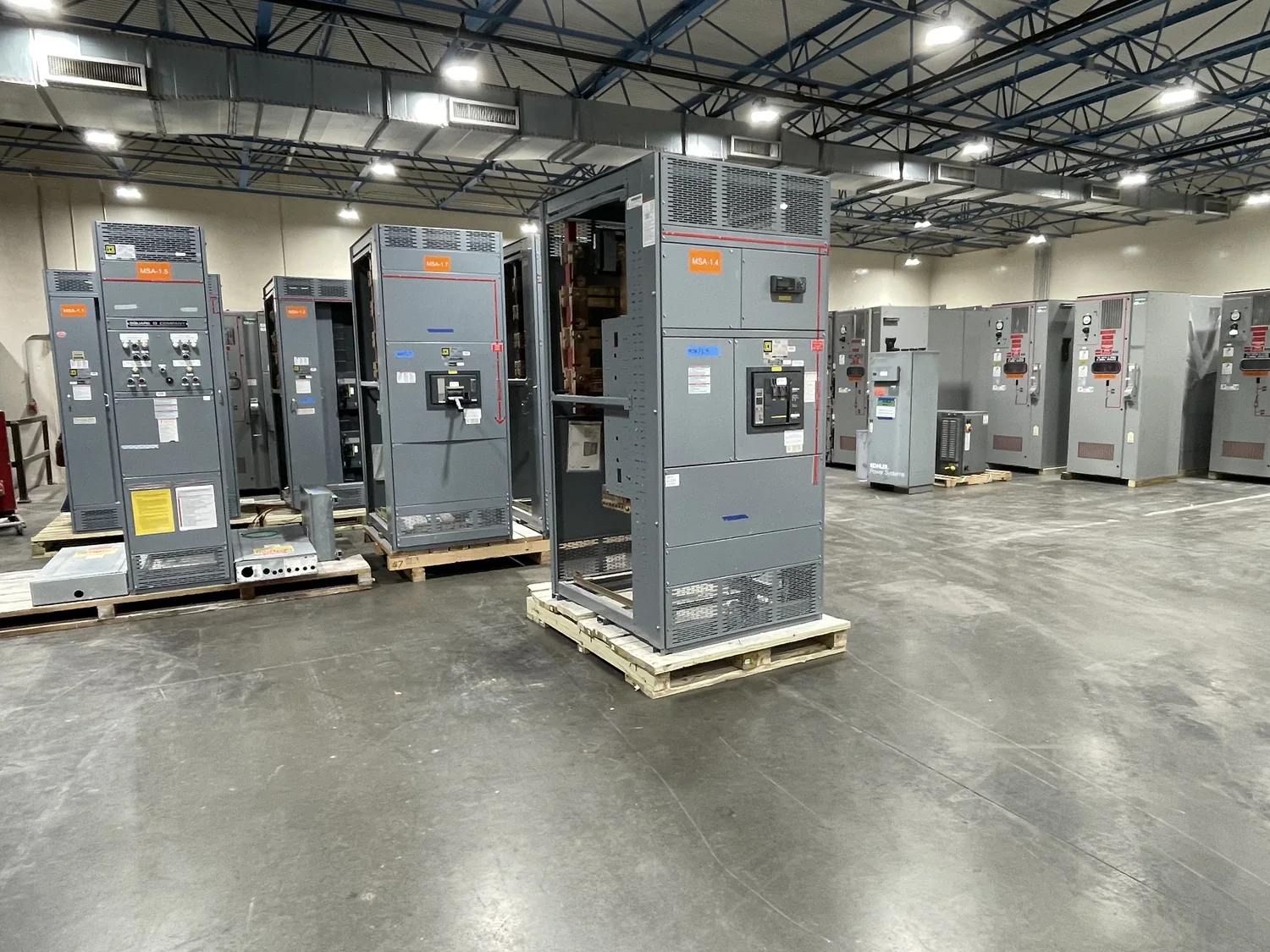
Sell Surplus Switchgear in Charles County, Maryland
If your business has surplus switchgear in Charles County, Maryland, a clear disposition plan starts with understanding exactly what is available and what must remain in service. A buyer can review surplus equipment and make a cash offer, but the offer depends on the specific assets, their condition and completeness, ownership, and the practical scope of removal. The buyer buys equipment only; it does not sell switchgear.
This guide is intended for facility owners, contractors, and other authorized parties coordinating equipment disposition in Charles County and the broader Washington, DC, Northern Virginia, and Maryland service area. It does not assume a particular facility layout, manufacturer, voltage, or site condition. All voltage classes may be considered, and seller-performed testing is not required. The first useful step is to provide enough information to identify the equipment and define what can be removed without affecting retained gear or operations.
Document the Lineup and Set Clear Scope Boundaries
Mixed lineups need especially careful documentation when some sections are surplus and others must remain. Before arranging a review, identify each section under consideration and distinguish it from sections that are to stay. A lineup overview photo, supplemented by clear photos of the individual sections, can help show their order, visible connections, doors, barriers, and the physical boundary between included and excluded equipment. Marking a copy of the overview photo can be useful, but written descriptions should make the intended scope clear as well.
Provide legible nameplate photos for the equipment being offered, along with any available identification labels and relevant drawings or schedules. Share the lineup’s overall length, height, and depth, and note whether those dimensions include items that may affect removal or transport. Information about ratings and configuration may help identify what is present, but do not guess at specifications when the plate or records are unclear. A buyer may request additional photos or details after an initial review; photographs alone do not establish a final valuation or confirm that equipment can be removed.
Put the scope in writing before removal is scheduled. List the included sections, identify retained sections and any components that are excluded, and clarify responsibility for accessories, loose parts, or material stored separately. For a connected lineup, also document the agreed physical separation point and any interfaces or connections that could affect retained equipment. The parties should confirm these boundaries with the appropriate site representatives before work begins. No equipment should be treated as included merely because it appears beside the surplus lineup in a photo.
Share Ownership, Access, and Removal Information
An early review also needs basic ownership and authority information. Confirm that the person arranging the sale is authorized to offer the switchgear and identify any ownership, lease, contractor, or other approval issues that must be resolved before disposition. The buyer may need enough documentation to establish what is being offered and who can approve removal. Do not assume that possession of equipment alone establishes authority to sell it.
Describe access in practical terms: the location of the lineup on site, the route from its current position to the loading point, applicable building or site access procedures, and any known restrictions that could affect equipment movement. Share available doorway, corridor, overhead-clearance, turning, and loading-area dimensions when relevant. Note stairs, limited maneuvering space, restricted work windows, site traffic requirements, or other constraints that the project team should assess. These details help determine whether the proposed removal approach is feasible; they do not replace a site-specific review.
Charles County projects may require coordination among the seller, facility operations, qualified electrical personnel, and the teams responsible for removal and transport. Do not assume a particular local access route, facility rule, or schedule. Instead, provide the project location and the site’s actual access requirements so timing, arrival, staging, and loading can be coordinated for that project. The buyer’s ability to arrange removal remains subject to site access, the agreed scope, and workable project arrangements.
Coordinate Safe Disconnection and Removal
Any de-energization, isolation, and disconnection must be handled by qualified personnel under the site’s safety procedures and outage requirements. Do not ask unqualified staff to disconnect, move, or handle electrical equipment. The seller and site team should establish which qualified personnel are responsible for electrical work and confirm that required approvals, outage windows, and safe conditions are in place before removal activity is scheduled.
The buyer handles crane, rigging, disconnects, loading, freight, and hauling, with responsibilities and arrangements confirmed for the project before removal. That coordination must account for the agreed scope and the site’s access conditions. In a mixed lineup, clarify in advance how the surplus sections will be separated from retained equipment, who is responsible for work affecting connected or adjacent gear, and what protections or sequencing the site requires. These details are project-specific and should be resolved with qualified personnel and the relevant site representatives; they should not be inferred from photographs or left to the day of pickup.
Removal planning may also depend on equipment dimensions, weight information if available, lifting points or other handling information, the loading location, and any constraints on staging or vehicle access. Provide existing records where available, but do not invent missing figures. The buyer can review the information and coordinate the required equipment and logistics, subject to confirmed scope, site conditions, and project arrangements.
Request an Offer and Confirm Payment Before Pickup
To request a review, send clear photos of the full lineup and the sections being offered, legible nameplates, lineup dimensions, and a concise written scope. Include the equipment’s known ratings or configuration only where supported by labels or records. Add ownership and authorization details, site location and access requirements, relevant scheduling constraints, and any removal limitations. State plainly which sections are removable and which must remain, and obtain written approval of those boundaries from the appropriate parties before work is planned.
No seller testing is required. The buyer considers all voltage classes, but the equipment still needs to be identified and reviewed before an offer can be made. An initial discussion or photo review is not a final price or a guarantee that the equipment will be accepted. A cash offer can be made after review of the available information and project scope; ask for the offer and payment arrangements to be confirmed before proceeding. If the offer is accepted, payment is arranged upfront, with the timing and method confirmed between the parties before removal.
The buyer pays the crane, rigging, loading, freight, and hauling costs, and handles disconnects subject to the project’s confirmed arrangements and site requirements. Confirm responsibilities, scope, access, schedule, and payment details before removal begins. A written record of included and retained sections, approvals, and logistics helps avoid misunderstandings and gives the site team a clear basis for coordinating safe, orderly disposition in Charles County.