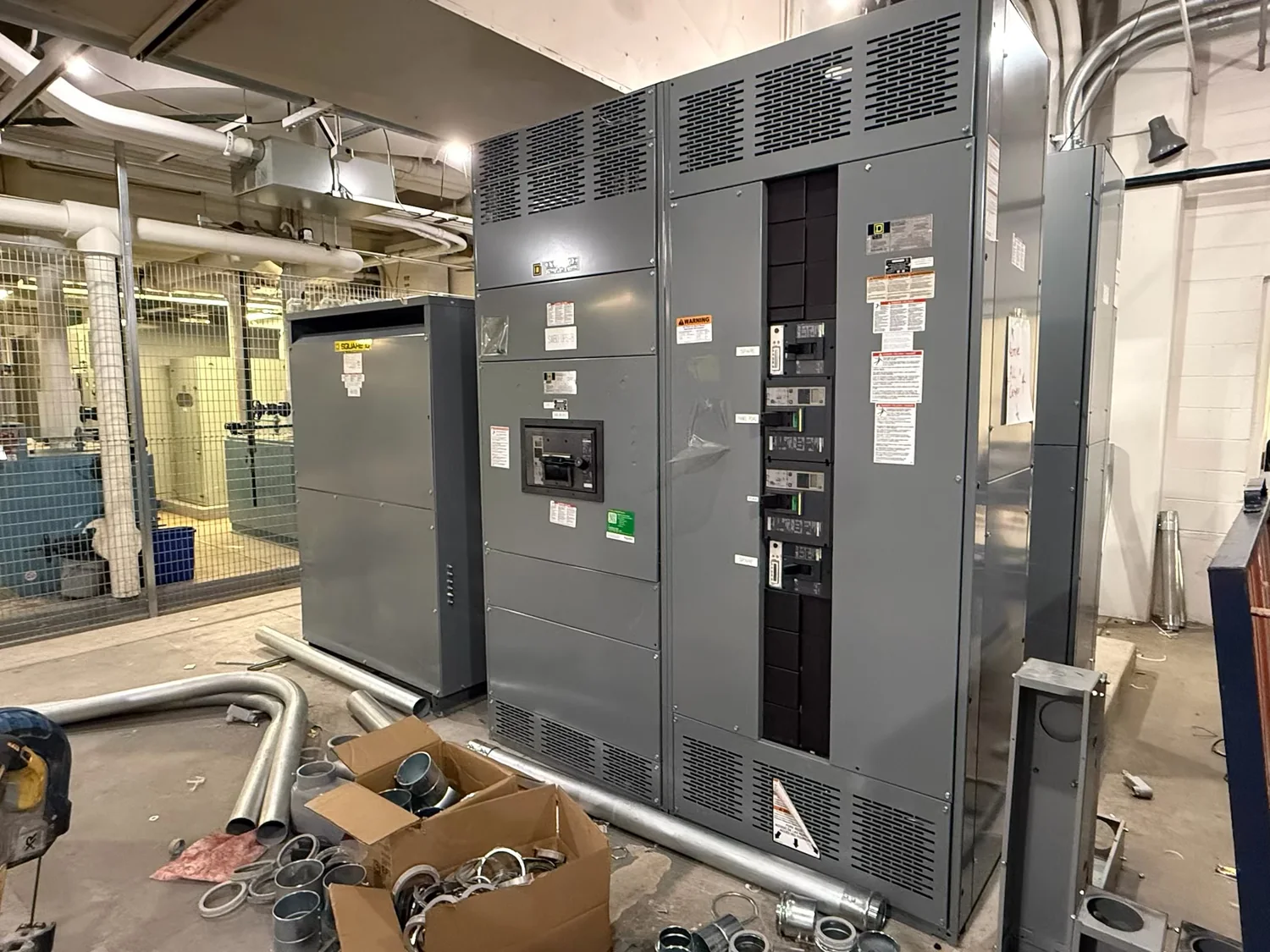
Sell Surplus Switchgear in Washington County, Maryland
If your business has surplus switchgear in Washington County, Maryland, a practical first step is to assemble the information available and request a review. Equipment may be considered even when records are incomplete; missing details are a reason to document what is unknown, not to guess. The buyer considers all voltage classes, and the seller does not need to test the equipment before submitting it for consideration.
This is a buying service: the business buys surplus electrical equipment and does not sell it. It can make a cash offer, and payment is arranged upfront if you accept the offer. A price is not final until the equipment, ownership, project scope, and removal logistics have been reviewed. Washington County is served as part of the broader Washington, DC, Northern Virginia, and Maryland service area; this does not imply a local office or a particular site arrangement.
Start with photos and whatever records you have
Clear, well-organized photographs help the buyer understand the equipment before discussing scope. If safe access is available, take wide views showing the full lineup and its surroundings, followed by closer views of each section, visible nameplates, labels, meters, breakers, and other identifiable components. Include the front and rear only where those areas can be reached safely and without interfering with equipment or site operations. Avoid removing covers or entering restricted areas to get a better picture.
Send any available nameplate images and records, but do not fill gaps by inferring a rating, manufacturer, model, date, or configuration. If a plate is missing, damaged, unreadable, or obscured, say so and provide a photo that shows the issue. Notes such as “not visible,” “record unavailable,” or “not confirmed” are more useful than an unsupported estimate. If a photo is blurry, label it that way rather than presenting a partial reading as certain.
When available, provide lineup dimensions, including approximate overall length, height, and depth, and identify whether measurements are confirmed or estimated. Note the number of sections if known, along with any visible gaps, removed components, or separately stored items. A simple photo list—such as “front, left section,” “nameplate, section 2,” or “rear view, access limited”—helps connect images to the equipment and makes follow-up questions easier to resolve.
Describe condition and completeness without testing
The seller is not required to test switchgear for an initial review. Instead, report what is known from existing records and ordinary visual observations made by authorized personnel. Mention whether the equipment is represented as complete, partially dismantled, or of unknown completeness. Identify components believed to be missing, removed, stored separately, or not included in the proposed sale. If completeness has not been checked, state that clearly.
Where available, share maintenance or asset records, prior inventory details, drawings, and documentation that identify the lineup or its sections. These materials can help clarify scope, but they should not be treated as confirmation if they conflict with visible labels or the actual equipment. Note discrepancies and unknowns for review. Do not energize, operate, open, or test equipment solely to prepare a sales inquiry; follow the facility’s established safety requirements and use qualified personnel for any work requiring it.
Ownership and sale authority also matter. Explain whether the equipment belongs to the business, whether another party has an interest in it, and who is authorized to approve its disposition. If the asset is subject to internal approval or a project schedule, identify that process and the expected decision timing. Clear scope and ownership information can prevent avoidable delays when an offer and removal plan are being considered.
Plan access, disconnection, and removal as a project
Removal planning depends on the actual site, equipment dimensions and weight information when available, the route out of the building, and the access conditions at the time of work. Share practical details such as doorway or corridor limits, stairs, elevators, turning space, loading-area access, site hours, security or check-in requirements, and any known restrictions on vehicle or lifting-equipment access. Do not assume that a lineup can be removed in one piece; the buyer must review the equipment and site conditions before the removal scope is settled.
The buyer handles crane, rigging, disconnects, loading, freight, and hauling, subject to project arrangements and site access. The parties should confirm the division of responsibilities, work sequence, access, timing, and removal constraints before work is scheduled. Site conditions or scope may affect the plan, so no removal method or schedule should be treated as guaranteed before review.
All de-energization, isolation, and disconnect work must be performed by qualified personnel under the site’s safety and outage procedures. Do not ask unqualified staff to disconnect, move, or handle switchgear. Coordinate any required outage, access window, permits or internal approvals, and site supervision through the responsible facility personnel. The timing should be agreed for the specific project rather than assumed from the initial inquiry.
Request an offer with a clear record of unknowns
For an initial review, send the available photos and nameplates, lineup dimensions, known ratings or records, completeness notes, ownership and sale-authority information, and site access details. Include the Washington County site location at an appropriate level for planning and explain any limits on when or how the equipment can be viewed or removed. If information is unavailable, list it as unknown and identify who may be able to confirm it; do not guess to make the submission appear complete.
After review, the buyer can make a cash offer if the equipment and project scope are suitable. If you accept, payment is arranged upfront. The buyer also pays the crane, rigging, loading, freight, and hauling costs, with the project responsibilities and removal arrangements confirmed before removal. The offer and schedule remain subject to review of the equipment, ownership, access, and agreed scope; submitting photos or requesting a review does not establish a final price or guarantee a purchase.
A concise, accurate submission is often more useful than a polished inventory with unsupported details. Organize what you know, distinguish confirmed facts from estimates, and make unknowns visible. That gives both parties a sound basis to discuss whether the surplus switchgear can be purchased and how a safe, coordinated removal could work at the Washington County site.