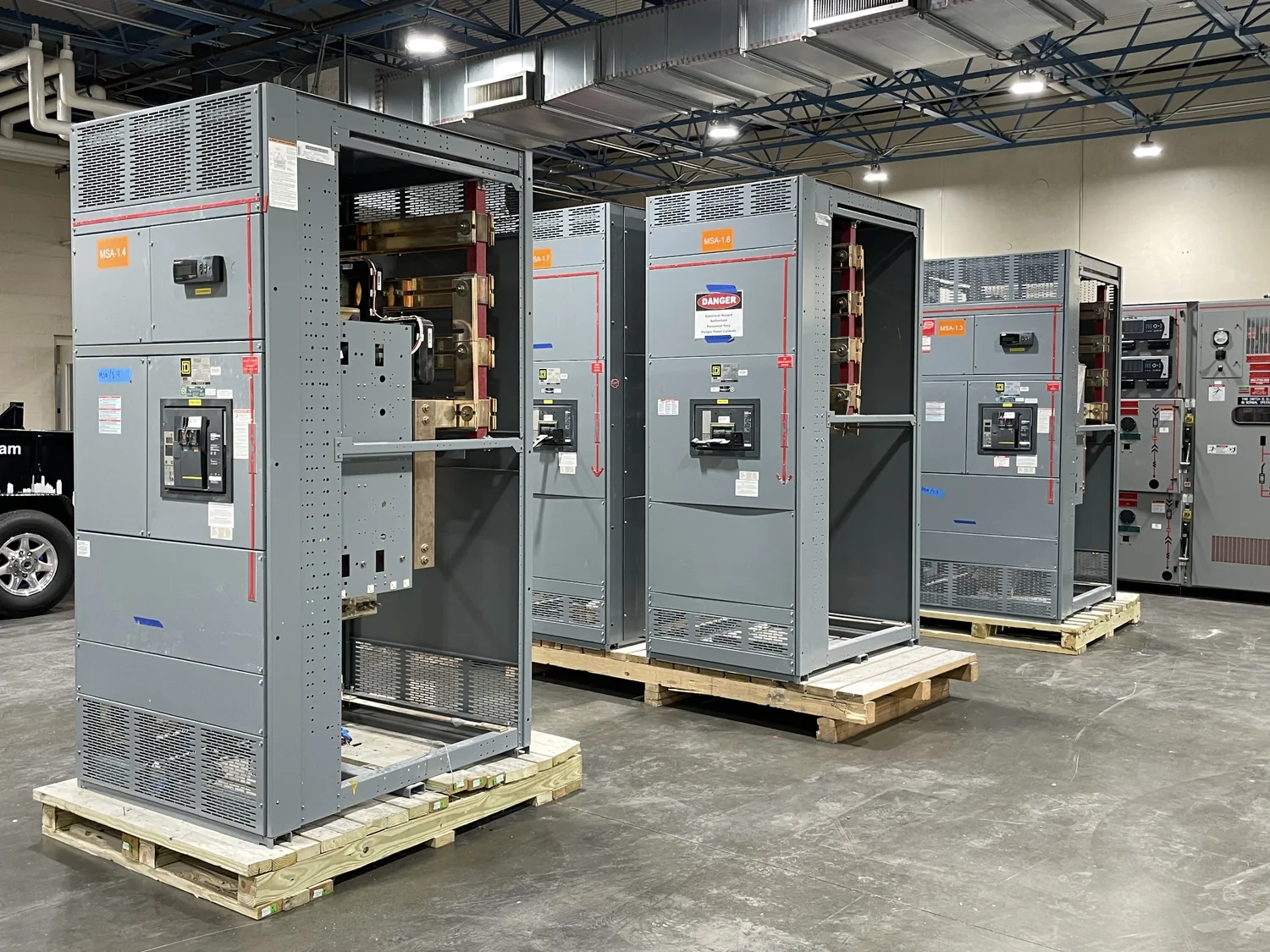
Switchgear disposition during a mining-facility decommissioning
Decommissioning a bitcoin mining facility can leave substantial electrical equipment to remove, even when the site is shutting down or changing use. If your project is in Washington, DC, Northern Virginia, or Maryland, this buyer page explains how to prepare switchgear for review and coordinate a sale as part of the broader site schedule. The business described here buys electrical equipment; it does not sell equipment or provide an independent engineering assessment.
A useful first step is to identify the switchgear you want considered and distinguish it from equipment that must remain in service, be retained for another project, or be handled under a separate disposition arrangement. A mining facility’s electrical lineup may be integrated with other systems and site infrastructure, so the scope should be based on the actual equipment and agreed project boundaries—not on assumptions about the facility, the equipment’s condition, or its original application. All voltage classes are considered; provide the available ratings and identification details so the equipment can be reviewed accurately.
A purchase is subject to review. There is no need for the seller to test the equipment. A cash offer can be made after the available information and project scope have been considered, and payment is arranged upfront if the offer is accepted. No final price can be established from a general description alone, and an offer should not be treated as confirmed until the equipment and removal arrangements have been reviewed.
Information to gather before the scope is set
Start with clear, legible photos of each lineup and its nameplates. Include overall views that show how sections are arranged, close-ups of identification plates and visible ratings, and photographs of relevant doors, compartments, bus connections, controls, and accessories where safely accessible. Nameplate information may help identify the manufacturer, model or type, serial number, ratings, and other distinctions. Do not remove covers or approach exposed or energized components just to obtain photographs; follow site safety rules and have qualified personnel determine what can be viewed safely.
Provide the lineup dimensions, including approximate height, width, and depth, and note the number of sections or shipping splits if known. Mention visible damage, missing sections, apparent modifications, or accessories that are included, while avoiding unsupported conclusions about internal condition. If equipment records, drawings, or an existing inventory are available, they may help clarify what is included. The buyer may need additional information after reviewing the initial material; photographs and dimensions are a starting point, not a substitute for confirming the equipment in scope.
Clarify ownership and authority to sell before removal is scheduled. Identify who can approve the disposition, whether any other party has an interest in the equipment, and whether the proposed sale is subject to internal, contractual, lender, landlord, or other approvals. Also describe site access: the facility’s general location, access hours, check-in requirements, escort needs, loading-area conditions, and any restrictions on vehicle size, staging, or work windows. Share only details you are authorized to provide, and coordinate a site visit or additional information request through the appropriate project contact.
Plan electrical isolation and removal with qualified personnel
Switchgear must not be disconnected or handled by unqualified personnel. De-energization, isolation, verification, and disconnect work must be performed by qualified personnel under the site’s safety procedures and outage plan. The facility operator or responsible project team should establish which equipment can be taken out of service, when the work can occur, and how required site controls will be maintained. Coordinate timing with operations, electrical contractors, facility management, and other affected parties before setting a removal date.
The buyer handles crane services, rigging, disconnects, loading, freight, and hauling, subject to project arrangements and site access. Confirm responsibilities before removal so the parties understand the agreed scope, sequence, and any site-specific limits. In particular, clarify who is responsible for electrical isolation and disconnect work, how that work will be coordinated with qualified personnel, and when the equipment will be released for removal. The fact that the buyer handles disconnects as part of the agreed project does not authorize unqualified site personnel to perform electrical work.
Access and removal conditions can materially affect planning. Discuss door and corridor clearances, overhead obstructions, floor or ramp limits, turning space, exterior staging, loading access, and whether the equipment must be split or moved through a constrained route. Identify any limits on crane placement, rigging points, working hours, noise, truck access, security screening, or simultaneous site work. These details matter in the DC region, where a facility’s actual access and scheduling rules—not its general location—determine what arrangements are practical. Avoid assuming that a particular crane, route, or removal method will work until the site and scope have been reviewed.
Coordinate the sale with the wider decommissioning schedule
Switchgear disposition often shares a schedule with other decommissioning tasks, but removal should be sequenced around the facility’s operating and safety requirements. Tell the buyer whether the equipment is still serving a load, when the site expects it to be available, and whether there are fixed outage windows, project milestones, or deadlines for clearing the space. Provide a realistic access window and flag dependencies such as upstream or downstream equipment, adjacent assets, other contractors, or restricted loading periods. The buyer can then review the proposed timing and arrangements; availability and schedule are not guaranteed before coordination is complete.
Keep equipment that is not part of the sale clearly identified and protected from accidental inclusion. Where several lineups or groups of electrical assets are present, use an inventory or marked-up photographs to distinguish the intended purchase scope. Confirm what happens to loose accessories, spare parts, documentation, and items stored separately rather than assuming they are included. A clear boundary helps prevent confusion during a busy site transition and supports an orderly handoff without relying on guesses about what belongs to a particular lineup.
For an initial review, send the clearest available equipment photos and nameplates, lineup dimensions, ratings, a concise description of completeness and visible condition, ownership or sale-authority details, and the site’s access and removal constraints. Include the expected decommissioning timeline and any known outage or loading restrictions. The buyer can use that information to discuss scope, logistics, and a possible cash offer. If the offer is accepted, payment is arranged upfront, while crane, rigging, disconnects, loading, freight, and hauling are handled by the buyer under the project arrangements confirmed before removal. This process gives both sides a practical basis to proceed without promising a price, schedule, or removal method before review.