Switchgear freight scope: what sellers should expect
Planning freight for switchgear is not just a matter of choosing a truck. A removal scope has to account for the equipment’s configuration and dimensions, how it can be moved from its installed location, what site procedures apply, and whether the route from the equipment to the loading point is workable. For sellers in Washington, DC, Northern Virginia, and Maryland, those details should be reviewed before an offer and removal plan are finalized—not guessed from a brief description.
This buyer purchases switchgear and can make a cash offer. If an offer is accepted, payment is arranged upfront. The buyer handles the crane, rigging, disconnects, loading, freight, and hauling, subject to project arrangements and site access. The specific responsibilities and timing should be confirmed before removal so the seller and buyer share the same understanding of what is included. The buyer buys equipment; it does not sell switchgear.
No testing is required from the seller. The buyer considers all voltage classes, but a voltage class alone does not establish condition, completeness, marketability, or price. A final offer and freight scope require review of the actual equipment and project circumstances. No final price should be assumed until the relevant information has been considered.
Start with clear photos and nameplate details
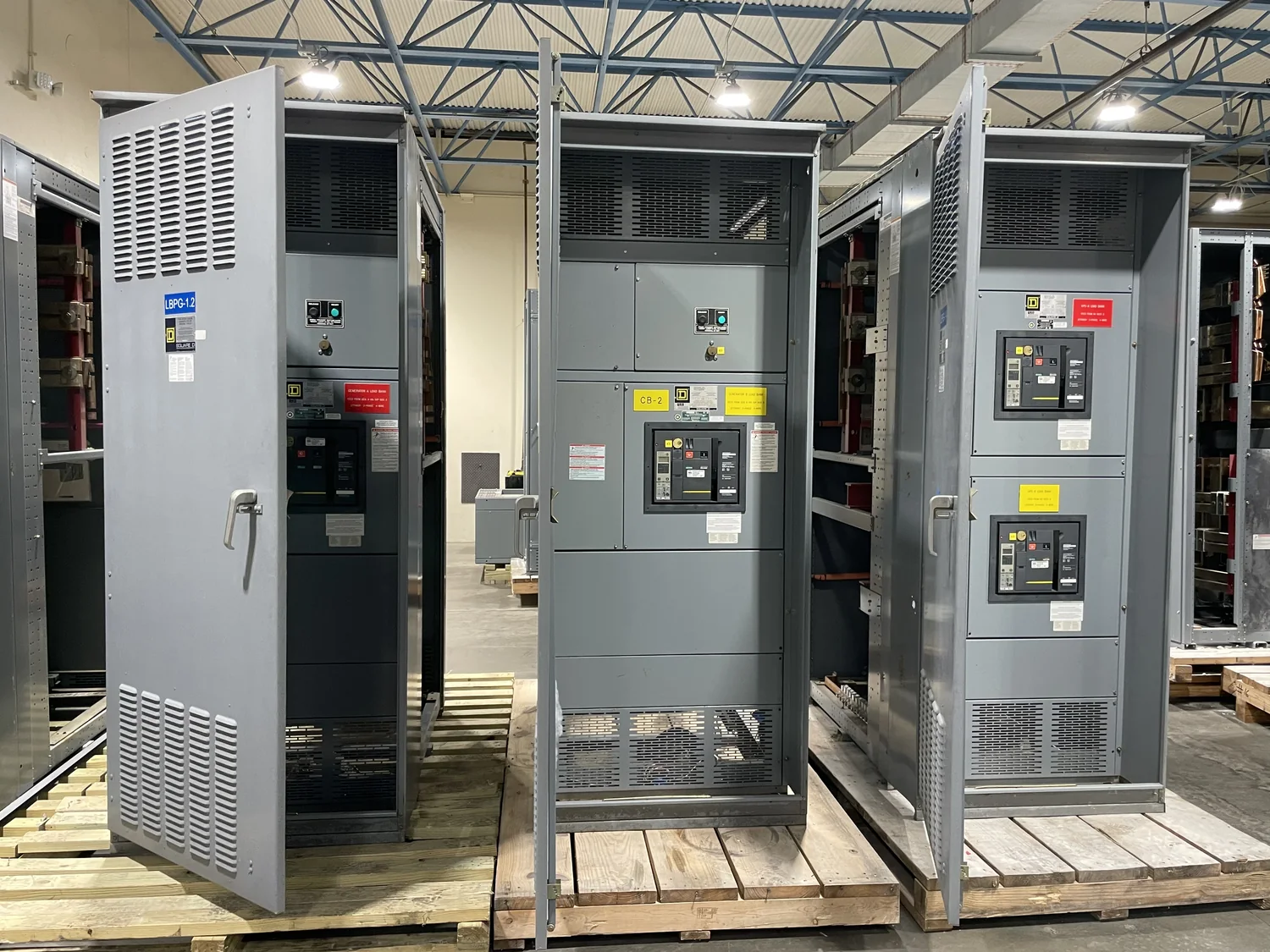
A useful first submission combines readable nameplate photographs with overall and close-up images of the switchgear. Capture the lineup from the front and, where safely accessible, the sides and rear; include sections, doors, labels, visible accessories, and any detached components that are part of the equipment. Photograph the nameplates straight-on and close enough to read the manufacturer, model or catalog identifiers, ratings, and other markings shown. Do not remove covers or enter restricted areas to obtain a picture. If a label is obscured, say so rather than guessing at its contents.
Photos help establish what is present, but they do not replace dimensions. Provide approximate overall lineup length, height, and depth, plus the dimensions of any separate sections or pieces, if known. Note whether the lineup is installed, partially dismantled, or already removed, and whether associated items such as breakers, relays, controls, bus components, or accessories are included. List missing, damaged, or separated parts when known. These details can affect how an offer is reviewed and what lifting, packaging, and transportation arrangements may be practical.
If exact ratings or configuration details are not available, send the clearest information you have and identify what remains unconfirmed. A buyer can review the available records and images, then request clarification where necessary. Avoid inferring that every section is included or that a lineup is complete simply because it appears assembled in a photograph. An accurate inventory is more useful than an optimistic description.
Ownership, access, and removal constraints
Before scope is set, establish who owns the equipment and who has authority to approve its sale and removal. Identify any other party whose approval, documentation, or coordination may be needed. The seller should also explain whether the equipment is in service, decommissioned, or awaiting an outage, and whether there are site restrictions on working hours, deliveries, contractor access, staging, or removal. These questions are especially relevant when a site has active operations or a tightly controlled schedule; they should be confirmed with the facility rather than assumed from its location.
Describe the full path from the switchgear to the loading area: door and corridor widths, turns, thresholds, stairs, elevators, ramps, loading-dock arrangements, overhead clearance, and any narrow or obstructed passages that could affect movement. Note the distance to the truck position, available staging space, floor or ground conditions, and any access limitations for a crane or rigging equipment. If the equipment is on an upper floor, below grade, behind security controls, or in a confined area, flag that early. These are planning prompts, not assumptions about any particular Washington, DC–area building.
The buyer handles crane, rigging, disconnects, loading, freight, and hauling, with the scope subject to project arrangements and actual site access. That does not authorize unqualified personnel to work on electrical equipment. De-energization, isolation, and disconnect work must be performed by qualified personnel under the site’s safety and outage procedures. The required people, approvals, sequence, and timing should be coordinated for the specific project before removal begins. Do not attempt to disconnect, move, or prepare energized equipment yourself.
Confirm freight responsibilities before scheduling
A clear written scope should identify the equipment being purchased, the agreed payment arrangement, what the buyer will remove, and the buyer’s responsibility for crane, rigging, disconnects, loading, freight, and hauling. It should also record any project-specific division of work, access conditions, planned removal window, and dependencies such as an outage or facility approval. Although the buyer bears those listed costs, practical arrangements still depend on the site being accessible and the agreed work being feasible. Resolve uncertainties before committing to a removal date.
Freight planning may depend on whether the switchgear can be moved as one lineup or must be handled as separate sections, how it can be lifted or secured, and whether components need to be identified or grouped. The dimensions and weight information available, lifting points or handling guidance if documented, center-of-gravity concerns if known, and the condition of the equipment can all be relevant. Provide existing drawings or handling documents if available, but do not create or rely on unverified lifting instructions. The removal plan must be assessed by the people responsible for the work.
Transportation and access can require coordination among the seller, facility personnel, qualified electrical contractors, rigging or crane providers, and the buyer. The route, vehicle access, staging, security check-in, and permissible work hours should be confirmed directly with the site. No regional schedule, building access, or lifting method should be presumed. The purpose of early information gathering is to surface constraints before a truck, crew, or removal window is scheduled—not to promise that every site condition can be accommodated.
A practical submission checklist for the DC region
To begin a review, send clear overall and detail photos, readable nameplates, approximate lineup and section dimensions, and an inventory of what is included or known to be missing. Add the equipment’s location within the facility, whether it is installed or removed, ownership and sale authority, and any available records that identify the lineup. Include the access route, loading-area details, known crane or rigging constraints, site rules, outage or access windows, and who will coordinate qualified disconnect work. Be candid about unknowns; a short list of items still to verify helps keep the scope realistic.
Once the information is reviewed, the buyer can discuss a cash offer and the project-specific removal arrangements. If the offer is accepted, payment is arranged upfront. The buyer handles the crane, rigging, disconnects, loading, freight, and hauling, with the final responsibilities and timing confirmed for the project and subject to site access. The seller is not required to test the equipment. An offer is not a substitute for reviewing the equipment, confirming authority to sell, or coordinating safe access and removal.
This process applies to sellers across Washington, DC, Northern Virginia, and Maryland without implying that a particular local office or facility arrangement exists. Sharing accurate equipment details and site constraints early gives both sides a sound basis for discussing value, freight scope, and timing. The final plan should reflect the actual switchgear, the site’s rules, and the people qualified to carry out the work.