Plan switchgear disposition early in a plant closure
A power plant closure or major changeout creates a tight sequence of decisions: operations must wind down safely, equipment must be identified, ownership and disposition must be confirmed, and removal must fit the site’s approved schedule. Switchgear can be a substantial part of that work. A clear disposition plan helps the seller understand what is being offered and gives the buyer a basis for reviewing scope before removal is arranged.
For facilities in Washington, DC, Northern Virginia, and Maryland, planning should account for the specific site’s access rules, security requirements, operating conditions, and outage schedule rather than assuming that nearby facilities share the same process. Start discussions while there is time to gather records and coordinate stakeholders. The right lead time depends on the equipment, the closure sequence, and the site’s constraints; no schedule should be treated as confirmed until the parties have reviewed the details.
This is a buyer-only service: the business buys eligible switchgear and does not sell equipment. It considers equipment across all voltage classes. The seller is not required to test the equipment for an offer. However, clear identification and useful condition and scope information help the buyer review what is included. A preliminary conversation is not a final price or a commitment to proceed; the offer and removal scope require review of the actual equipment and project arrangements.
Build an accurate equipment inventory
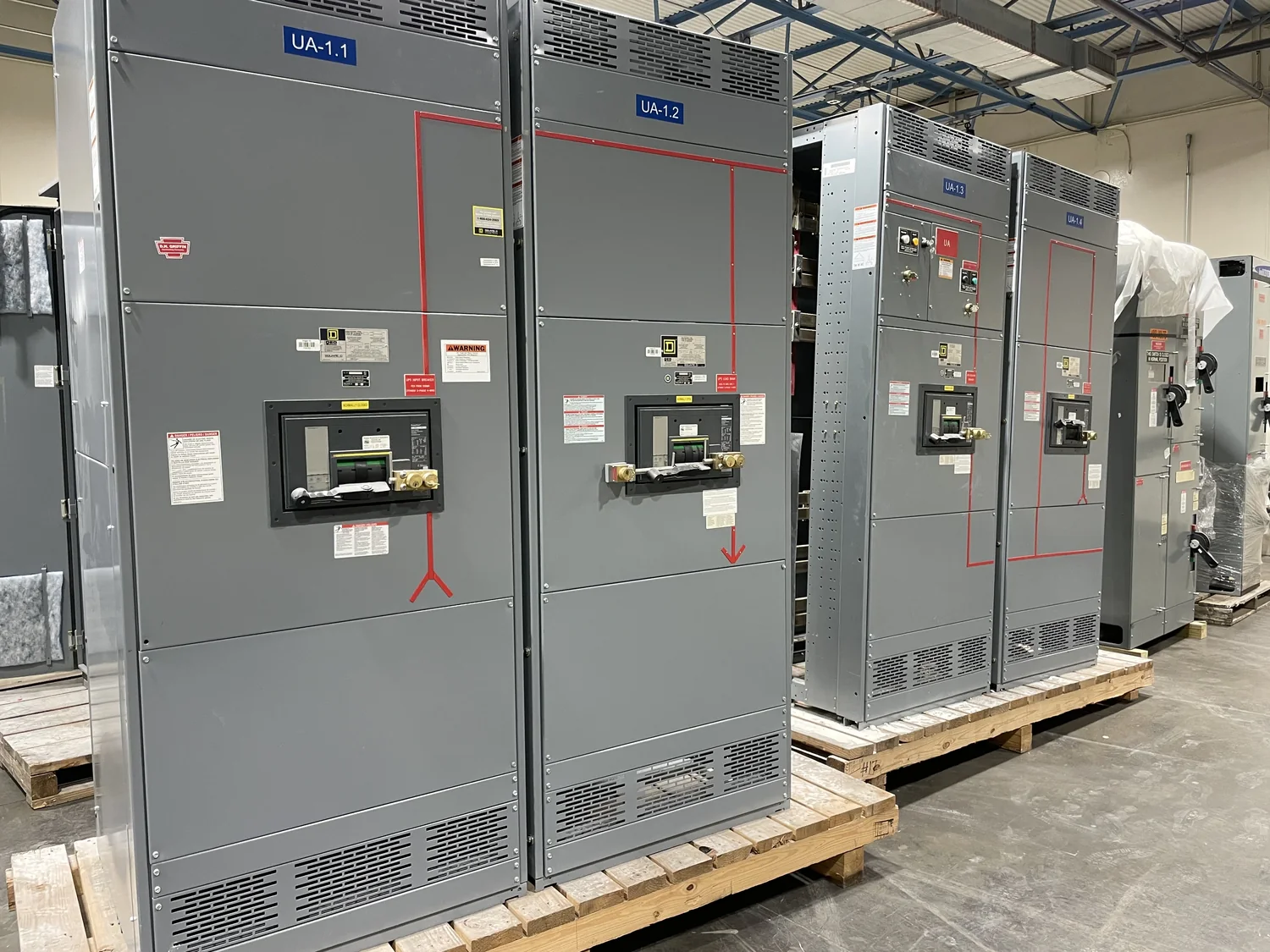
Begin with a lineup-by-lineup inventory. Photograph each lineup from a safe, approved position, including a broad view that shows how sections are arranged and closer views of available nameplates and visible labels. Provide readable nameplate details where possible, along with any existing schedules, drawings, asset lists, or records that identify the equipment. Do not remove covers or enter restricted areas to obtain a photograph. If a label cannot be read safely, note that it is unavailable rather than guessing.
Include the lineup’s approximate overall length, height, and depth, and identify the number and arrangement of sections if known. Note relevant ratings shown on labels or records, but do not infer a rating from appearance or assume that similar-looking sections have identical details. Photos of doors, internal components, accessories, and visible damage may help clarify completeness, provided the images can be obtained without exposing anyone to electrical or mechanical hazards. The buyer may ask follow-up questions when records or photos leave an important detail unclear.
Describe what is included with the offered equipment: for example, whether the scope includes associated sections, breakers, protective or control components, accessories, or other items identified in the seller’s records. This is an inventory question, not an invitation for unqualified staff to inspect energized or open equipment. A seller does not need to perform testing for the buyer to consider an offer, and should not arrange unsafe access simply to improve a listing. State what is known, distinguish it from what is unverified, and allow the buyer to assess the information during review.
Confirm ownership, authority, and project scope
Before setting a removal scope, establish who owns the switchgear and who has authority to approve its disposition. Plant closures can involve multiple asset owners, operators, lenders, contractors, or other parties with different responsibilities. The seller should confirm internally that the equipment may be sold and identify the person authorized to approve the transaction and coordinate site work. Provide the asset identifiers or records available to support that review; do not assume that physical possession alone establishes authority to sell.
Define the proposed scope in writing as the equipment is reviewed. Identify which lineups or sections are included, what associated items are included or excluded, and whether any equipment must remain in place. Note missing components, known damage, incomplete records, and any limits on inspection or access. A clear scope reduces the risk of a mismatch between the assets discussed and the assets presented for removal. It also gives both parties a practical basis for agreeing on responsibilities before anyone schedules a crew or transport.
The offer process depends on review, not on a generic price by voltage class or equipment type. The buyer can make a cash offer after reviewing the available equipment and project information. If the offer is accepted, payment is arranged upfront. Confirm the payment process and timing as part of the written transaction arrangements before removal begins. No final price should be assumed from photos alone, and no offer should be represented as guaranteed before the buyer has reviewed the scope.
Coordinate safe removal, access, and transportation
Removal planning must fit the site’s safety and outage procedures. Any de-energization, isolation, and disconnect work must be performed by qualified personnel under the facility’s approved procedures. Unqualified staff should not disconnect, open, move, or otherwise handle electrical equipment. The seller and buyer should coordinate the required work sequence, access permissions, timing, and points of contact with the site team before removal. The buyer’s purchase does not replace the facility’s controls or authorize work that the site has not approved.
The buyer handles the crane, rigging, disconnects, loading, freight, and hauling, subject to project arrangements and site access. Confirm responsibilities before removal, including what work is included in the buyer’s arrangements and what the site must coordinate or permit under its own rules. The buyer pays the crane, rigging, loading, freight, and hauling costs. Access, timing, and the practical removal plan still need to be agreed for the particular project; these obligations do not guarantee that a given method or schedule will suit every facility.
Share the practical details that shape the removal plan: delivery and pickup access, security and check-in requirements, available work windows, travel paths to the equipment, overhead or doorway limits, floor or loading-area constraints, and any restrictions on staging or vehicle movement. Provide dimensions and photos of the route and equipment where they can be collected safely. Flag known removal constraints early, such as limited clearances, confined work areas, restricted operating hours, or other site-specific conditions. The buyer can then review whether the proposed logistics are workable and coordinate the remaining details with the seller.
Set a workable timeline for the DC region
A closure or changeout schedule often has dependencies beyond equipment removal: plant operations, outage milestones, contractor sequencing, site access approvals, and asset-disposition decisions may all affect when switchgear can leave the facility. In the DC region, the relevant route and site arrangements will vary by project. Do not assume a particular facility has a loading dock, crane access, an available staging area, or a specific security process. Share the actual site requirements and constraints so the removal plan can be assessed rather than inferred from the location alone.
A useful planning sequence is to identify the equipment and ownership, gather photographs and nameplate information, provide lineup dimensions and completeness details, disclose access and removal constraints, and then review the scope and offer. Once an offer is accepted, confirm upfront payment arrangements and agree on the removal responsibilities, access window, and schedule. Build in time for the site’s required safety and outage coordination. If the closure plan changes, communicate the revised window before transport or removal arrangements are treated as settled.
Well-prepared information makes it easier to evaluate a potential purchase without asking the seller to conduct testing or take unsafe actions. Send what is available, label unknowns plainly, and invite follow-up review of the scope. With ownership clarified, qualified personnel responsible for disconnect work, and buyer-handled removal logistics coordinated to site access, the parties can make informed decisions about whether the switchgear disposition fits the plant’s closure or changeout plan.