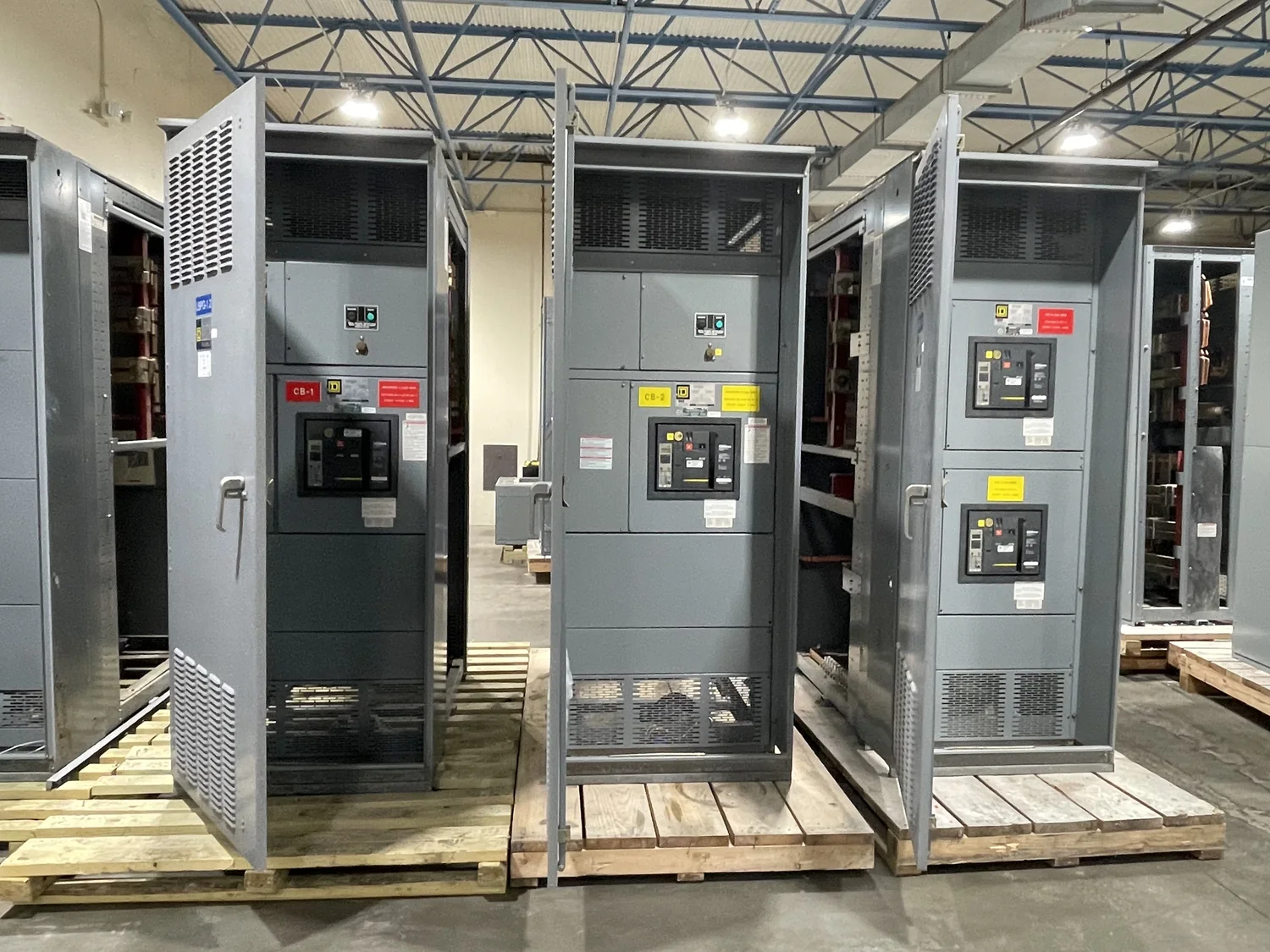
Switchgear rigging scope: what sellers should know
If you are preparing to sell switchgear in Washington, DC, Northern Virginia, or Maryland, rigging scope is a practical part of the disposition plan—not an assumption to leave until removal day. The buyer purchases equipment only; it does not sell switchgear. It can make a cash offer and, if you accept, arranges payment upfront. The seller is not required to test the equipment. A review is still needed before an offer, removal plan, or final price can be set.
A useful scope begins with a clear picture of the assets, their condition and completeness, ownership, and the route from their installed location to a pickup point. The buyer handles crane, rigging, disconnects, loading, freight, and hauling, subject to the project arrangements and site access. Confirm responsibilities, timing, and access before removal. Site-specific conditions can affect the plan, so no particular crane, crew size, schedule, or removal method should be assumed before the equipment and location are reviewed.
Information to gather before scope is set
Start with legible nameplate photos for each section or major piece of equipment, along with wide-angle photos showing the full lineup and its surroundings. Include close-ups of labels, visible damage, missing covers or components, and any equipment that appears to have been modified. Share the lineup’s approximate overall length, height, and depth, plus any known individual section dimensions. If dimensions are uncertain, say so rather than presenting estimates as confirmed measurements.
Ratings and identification details help the buyer understand what is being offered. Provide the information visible on the nameplates, such as manufacturer, model or catalog identifiers, voltage and current ratings, and other listed ratings, without trying to infer missing specifications. The buyer considers all voltage classes, but that does not replace equipment review. Also describe completeness: note whether the offer includes all sections, breakers, relays, accessories, bus components, doors, or other items associated with the lineup, and identify anything retained or already removed. Do not assume that a component is included simply because it is nearby.
Clarify who owns the equipment and who is authorized to approve its sale and removal. If the assets are subject to a lease, lien, customer agreement, or other ownership restriction, resolve that issue before arranging a sale. For a DC-region project, share the facility’s general location and the contact who can coordinate access, but do not send sensitive building or security information unless requested through an appropriate channel. These details help establish whether a site visit, additional images, or other review is needed before scope is confirmed.
Access, removal route, and site coordination
The installed location can shape the rigging plan as much as the switchgear itself. Describe the room and the path out: door and corridor clearances, stairs or elevators, turns, floor-level changes, overhead restrictions, and the distance from the equipment to a loading area. Share available doorway, hallway, loading-dock, and exterior access dimensions where practical. Mention whether the route passes through occupied areas or shared spaces, and whether there are restrictions on work hours, vehicle size, staging, noise, or temporary closures. These are project questions, not assumptions about any particular DC, Northern Virginia, or Maryland facility.
Tell the buyer about known obstacles to moving the equipment, such as tight turns, limited staging space, restricted dock access, weight limits, or a need to move other items first. If a crane or other lifting arrangement may be needed, explain what is known about exterior access, overhead obstructions, and potential staging areas. Do not decide that a lift is feasible based only on a photograph or a rough description. The buyer’s rigging and freight arrangements depend on the actual equipment, route, site access, and agreed project plan.
Coordinate removal with the facility’s responsible contacts, including operations, facilities, security, and any other parties whose approval or escort is required. In the DC region, travel, building access, loading arrangements, and work windows can vary by site and project; provide the known constraints early so they can be reviewed. Agree on a removal window and access procedure before scheduling. The buyer handles crane, rigging, loading, freight, and hauling costs, while specific responsibilities and arrangements should be confirmed for the project before removal begins.
Disconnects, safety, and outage procedures
Any de-energization, isolation, and electrical disconnect work must be performed by qualified personnel under the site’s safety rules and outage procedures. Do not ask unqualified staff to disconnect, move, or handle electrical equipment. The buyer handles disconnects as part of the agreed project logistics, but the work must be coordinated with the site and carried out by qualified personnel. Confirm who will authorize the outage, who controls switching and isolation, what procedures apply, and when the equipment can be released for removal.
A seller does not need to test the switchgear to request an offer. If test records, maintenance records, or known condition information are available, they may be shared for review, but do not energize or operate equipment solely to produce information for a sale. Be transparent about known damage, missing parts, water exposure, modifications, or uncertainty about condition. Clear disclosure supports a realistic review and helps prevent a mismatch between the described assets and the equipment prepared for pickup.
Keep the equipment in place until the removal plan, site authorization, outage timing, and access arrangements have been coordinated. Do not remove covers, components, or wiring to improve photographs unless qualified personnel and the site’s procedures authorize that work. Photos and measurements should be gathered only in a safe, permitted manner. If a requested view cannot be obtained safely, explain the limitation and discuss another way to provide the necessary information.
Offer, payment, and a practical checklist
After reviewing the equipment information and project constraints, the buyer can determine whether it can make an offer and what arrangements are appropriate. There is no guaranteed offer or final price before review. The seller is not expected to pay crane, rigging, loading, freight, or hauling costs: the buyer pays those costs, subject to project arrangements and site access. When an offer is accepted, payment is arranged upfront. Confirm the accepted equipment list, payment timing, removal responsibilities, access conditions, and scheduling before removal proceeds.
Before contacting the buyer, gather clear nameplate and equipment photos; approximate lineup and section dimensions; visible ratings and identification details; an inventory of included and excluded components; known condition information; and proof that the seller can authorize the sale. Add the site’s general location, a description of the removal route and loading access, known scheduling or security restrictions, and the contact responsible for coordinating the outage and site entry. Flag any crane, rigging, disconnect, or removal constraints already identified by the facility, without treating a preliminary observation as a confirmed engineering plan.
A complete first description does not need to answer every technical or logistical question. It should make uncertainties visible so they can be clarified before scope and timing are set. For switchgear in Washington, DC, Northern Virginia, or Maryland, early coordination among the seller, qualified site personnel, and buyer helps align payment, access, disconnect work, lifting, loading, freight, and hauling with the actual project. Final responsibilities and arrangements should be confirmed for the equipment and site before removal.