Plan switchgear disposition before the closure window
Closing an industrial plant or changing out its electrical system involves more than deciding which equipment will be removed. Switchgear may be part of a broader shutdown, demolition, renovation, or asset-disposition schedule, so the buyer’s review should begin while the equipment is still accessible and its scope can be documented. Early information helps determine whether the equipment merits an offer and what removal arrangements may be needed; it does not establish a final price or guarantee a purchase.
For projects in Washington, DC, Northern Virginia, and Maryland, share the actual site conditions rather than relying on assumptions about a facility’s location or access. Truck approach, loading-dock availability, interior travel paths, staging space, work hours, and any site-specific access rules can affect how a removal is arranged. If the facility has a fixed closure date, outage window, or demolition sequence, include those target dates in the initial discussion. Scheduling and responsibilities should be confirmed for the specific project before removal begins.
Build a useful equipment record
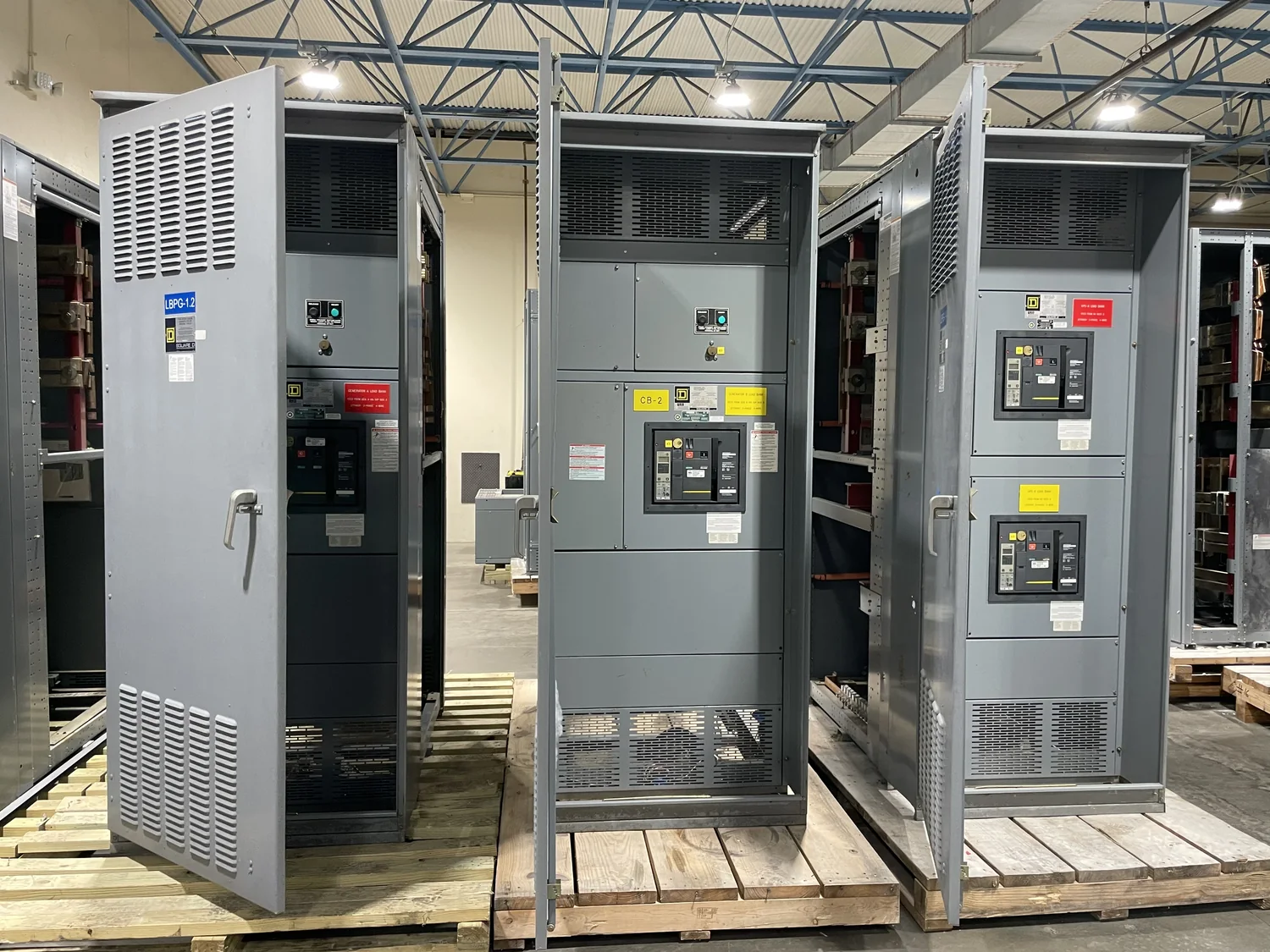
Start with clear, well-lit photos of the switchgear lineup from several angles. Include an overall view showing how sections connect, close views of available nameplates, and photographs of visible condition or missing components. Do not open energized equipment or remove covers to obtain a photograph. If a nameplate is unreadable, note that rather than guessing at its information.
Provide the manufacturer and model information shown on the equipment, voltage and other nameplate ratings that are visible, approximate section count, and any available drawings or equipment schedules. The buyer considers all voltage classes, but the equipment still needs to be reviewed based on its identity, configuration, completeness, and condition. Include lineup dimensions—height, width, and depth if known—and approximate weights or lifting information when documented. Indicate whether breakers, relays, control components, bus connections, doors, and other associated parts are present, missing, or being retained. Completeness and configuration can affect the scope of review; do not assume that a partial lineup will be evaluated like a complete one.
Also identify where the equipment sits in the plant and whether it is installed, disconnected, staged, or already removed. Photos and measurements help establish an initial scope, but they may not reveal hidden damage, access restrictions, or the work required to separate sections. No seller testing is required. Describe known condition accurately and share records that are already available; do not perform electrical testing or make a condition guarantee on the buyer’s behalf.
Confirm ownership, authority, and project boundaries
Before an offer is considered, clarify who owns the switchgear and who is authorized to approve its sale and removal. Plant closures can involve owners, tenants, contractors, lenders, receivers, or other parties with different responsibilities. The person submitting information should identify any approval process, title questions, or restrictions that may affect disposition. If the switchgear is part of a larger package, list what is included and what must remain in place so the review can address a defined scope.
State whether the equipment is being sold as a complete lineup, selected sections, or as part of a broader electrical-asset disposition. Note any known changeout or demolition sequencing, and identify equipment that must remain operational until a later shutdown stage. These details help avoid confusion about what an offer covers and when the equipment can be released. A review is specific to the equipment and project information provided; it is not a substitute for the facility’s engineering, safety, legal, or decommissioning decisions.
Coordinate safe removal and practical access
De-energization, isolation, and disconnect work must be performed by qualified personnel under the facility’s safety procedures and approved outage plan. Do not ask unqualified personnel to disconnect, dismantle, or handle switchgear. Coordinate the status of the equipment, required clearances, work permits or internal approvals, and the authorized work window with the site team. Any disconnect scope and responsibility boundaries should be settled before the removal date.
The buyer handles crane, rigging, disconnects, loading, freight, and hauling, subject to project arrangements and site access. Confirm the scope and responsibilities before removal: the buyer’s logistics plan depends on the equipment, the approved work sequence, and what the site can accommodate. Share door and corridor clearances, floor or threshold changes, stairs or elevators, available staging areas, dock or ground-level loading conditions, truck access, and any restrictions on equipment movement. Note overhead obstructions, limited turning space, access-hour rules, or other known constraints. If dimensions or weights are uncertain, say so; the project may require additional review before a lift or transport plan is set.
The specific arrangement should be agreed before work is scheduled, including site access, timing, removal boundaries, and the path from the equipment location to the loading point. The buyer’s responsibility for the listed logistics costs does not remove the need to confirm the work plan, site coordination, and access conditions for the particular facility.
Review the offer and schedule before release
After receiving the equipment details and project information, the buyer can review whether it is interested and make an offer if appropriate. Any commercial evaluation depends on the equipment and the practical removal scope; a final price cannot be determined from a general description alone. The seller is not required to test the switchgear. Clear photos, readable nameplates, dimensions, completeness notes, ownership and authorization details, access information, and target dates make the review more useful, but additional clarification may still be needed.
The buyer can make cash offers and pays upfront when an offer is accepted. Before accepting, ensure the offer’s equipment scope and the removal responsibilities are understood, and coordinate the agreed schedule with the site’s shutdown and safety procedures. Do not release equipment, change the lineup, or begin removal based on an assumed price or unconfirmed plan. A documented agreement for the specific project helps both parties align payment, equipment included, access, timing, and the buyer-handled crane, rigging, disconnects, loading, freight, and hauling.
For a plant closure or changeout in the DC region, a practical first submission is a concise equipment inventory, clear overview and nameplate photos, lineup dimensions, known condition and completeness, proof or confirmation of selling authority, site location and access notes, and the desired review and removal window. This gives the buyer a sound basis to discuss the equipment without presuming facts about the facility or promising a particular outcome.