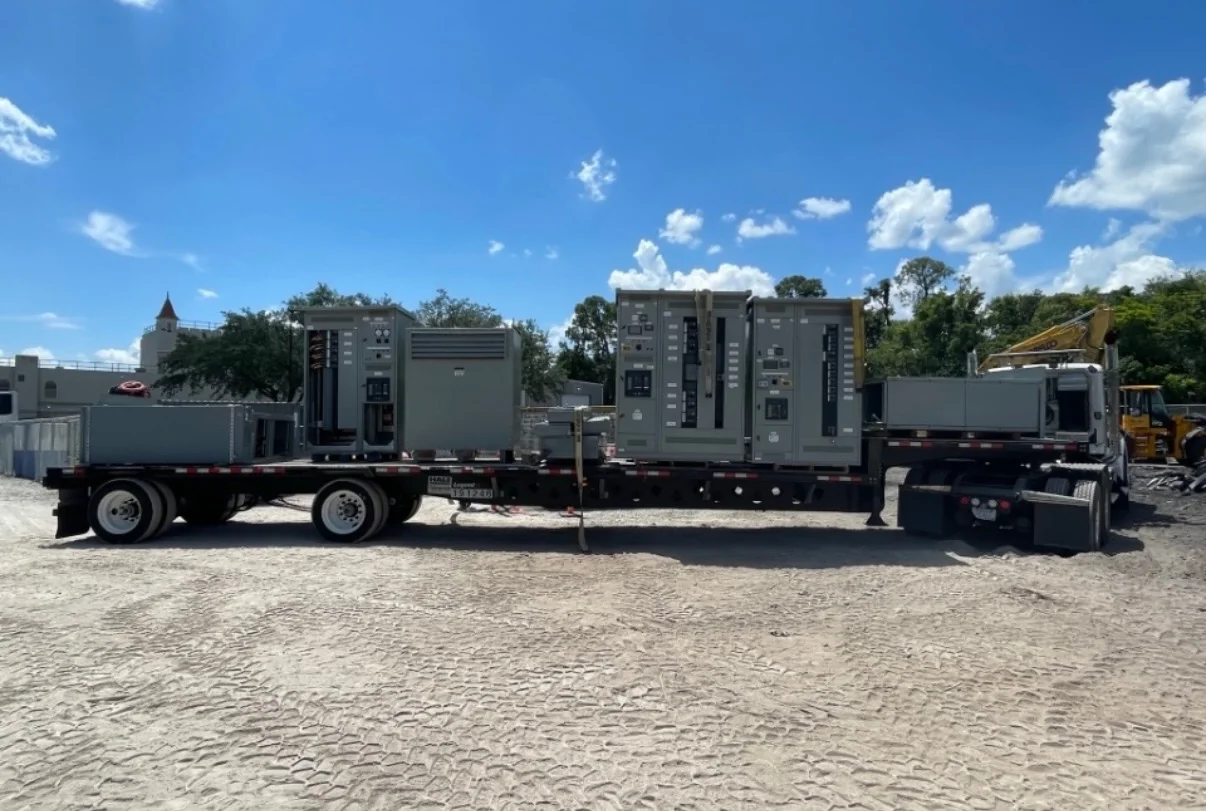
Power Plant Switchgear Decommissioning Buyer
Decommissioning a power plant can involve more than taking equipment out of service: the owner or project team must also determine which assets will be retained, transferred, recycled, or offered for purchase. If switchgear is being considered for sale, a clear early review can help align the disposition process with the wider decommissioning schedule. This buyer serves businesses and project teams in Washington, DC, Northern Virginia, and Maryland, and buys power plant switchgear; it does not sell equipment.
Each facility and project has its own equipment, ownership arrangements, safety rules, and access constraints. This guide explains what information is useful for an initial review and how removal responsibilities can be coordinated. It is not a final valuation, engineering assessment, or substitute for the site’s safety and outage procedures. An offer depends on review of the specific equipment and project details; no price can be confirmed from the general description alone.
Start with an accurate equipment inventory
The first step is to identify the switchgear being considered and distinguish it from equipment that must remain in service, transfer to another owner, or be handled under a different contract. Share clear, in-focus photos of the overall lineup, individual sections, visible nameplates, and any accessories or associated components included in the proposed disposition. Photos should show enough context to understand how the lineup is arranged, without requiring anyone to enter a restricted or energized area.
Provide the available nameplate information, such as manufacturer, model or catalog identification, ratings, serial numbers, and dates when legible. The buyer considers all voltage classes, but the project still needs an accurate description of the actual equipment. Do not infer ratings from appearance or treat an unreadable plate as confirmed data. If a nameplate is obscured, missing, or inaccessible, note that in the inventory and let the review team advise what additional information may help.
Include approximate lineup dimensions: overall length, height, depth, and the size or weight of individual sections if those details are available. Indicate whether the sections are connected, bolted together, mounted on a base, or accompanied by bus, breakers, control components, or other items included in the proposed sale. Completeness can affect the scope of review and removal planning, so identify known missing, damaged, modified, or previously removed parts. These details support an informed assessment; they do not by themselves establish condition or guarantee a purchase offer.
Confirm ownership, scope, and site access
Before setting scope, clarify who owns the switchgear and who is authorized to approve its sale and release. Power plant decommissioning may involve an owner, operator, asset manager, contractor, lender, or other parties with distinct responsibilities. The person requesting a review should identify the appropriate decision-maker and note any known restrictions on title, transfer, removal, or timing. The buyer can review the information provided, but ownership and authority to sell must be resolved by the parties responsible for the equipment.
Access details matter just as much as the asset description. Explain where the lineup is located, how equipment and removal crews would reach it, and whether the route includes narrow doors, stairs, elevators, low clearances, uneven surfaces, overhead obstructions, or restricted work areas. Note the location of loading areas, potential crane access, site traffic rules, escorts, security check-in, operating-hour limits, and any other known restrictions. These are planning questions, not assumptions about a particular facility in the DC region.
Share relevant scheduling constraints early, including the project’s target removal window, outage sequence, site shutdown milestones, and any periods when access is unavailable. In Washington, DC, Northern Virginia, and Maryland, travel, deliveries, and site entry can require coordination among multiple project parties, but the actual plan depends on the facility and its rules. Confirm dates, access permissions, work boundaries, and responsibilities directly with the site team before removal arrangements are finalized.
Coordinate safe disconnection and removal
Any de-energization, isolation, and disconnection must be performed by qualified personnel under the site’s safety rules and outage procedures. Do not ask unqualified staff to open, disconnect, move, or handle electrical equipment. The site team must determine which circuits and sections can be released, establish the required safe work conditions, and coordinate the timing of disconnect work with the decommissioning plan. The buyer does not replace the facility’s electrical authority, safety process, or qualified contractors.
Removal logistics are arranged for the project and confirmed before work begins. The buyer handles the crane, rigging, disconnects, loading, freight, and hauling, subject to agreed project responsibilities, site access, and schedule. Discuss the proposed removal sequence, equipment boundaries, lifting and transport constraints, and any site-specific requirements during scope review. Responsibility for the work and access must be clear before removal; do not assume that a particular crew, method, or date is available until the parties coordinate it.
A useful planning package may include equipment photos and nameplates, lineup dimensions, known section weights, a site layout or access description, loading-area details, and the contact responsible for site coordination. If those details are not yet known, say so rather than guessing. The review can identify what remains to be confirmed before a removal plan and project responsibilities are agreed.
Review the offer and payment arrangements
After reviewing the available equipment and project information, the buyer may make a cash offer. The offer is specific to the switchgear under review and may depend on confirming its identity, included components, ownership, access, and removal scope. An initial conversation or photo review is not a guaranteed purchase, a final price, or a commitment to remove equipment before the project details are agreed.
If an offer is accepted, payment is arranged upfront. The buyer pays for the crane, rigging, loading, freight, and hauling, with the applicable responsibilities and logistics confirmed for the project before removal. No testing is required by the seller as a condition of requesting a review. If test records already exist, they may be shared as background, but the seller need not arrange testing solely to submit the equipment for consideration. Any questions about records or documentation can be discussed during the review.
To begin, send the clearest available photos, readable nameplate details, approximate lineup dimensions, a list of included or missing components, ownership and authorization information, and a description of site access and removal constraints. Add the preferred project window and the contact who can coordinate with the site team. This practical starting point helps the buyer assess the proposed switchgear and identify what must be clarified before an offer or removal plan can be considered.