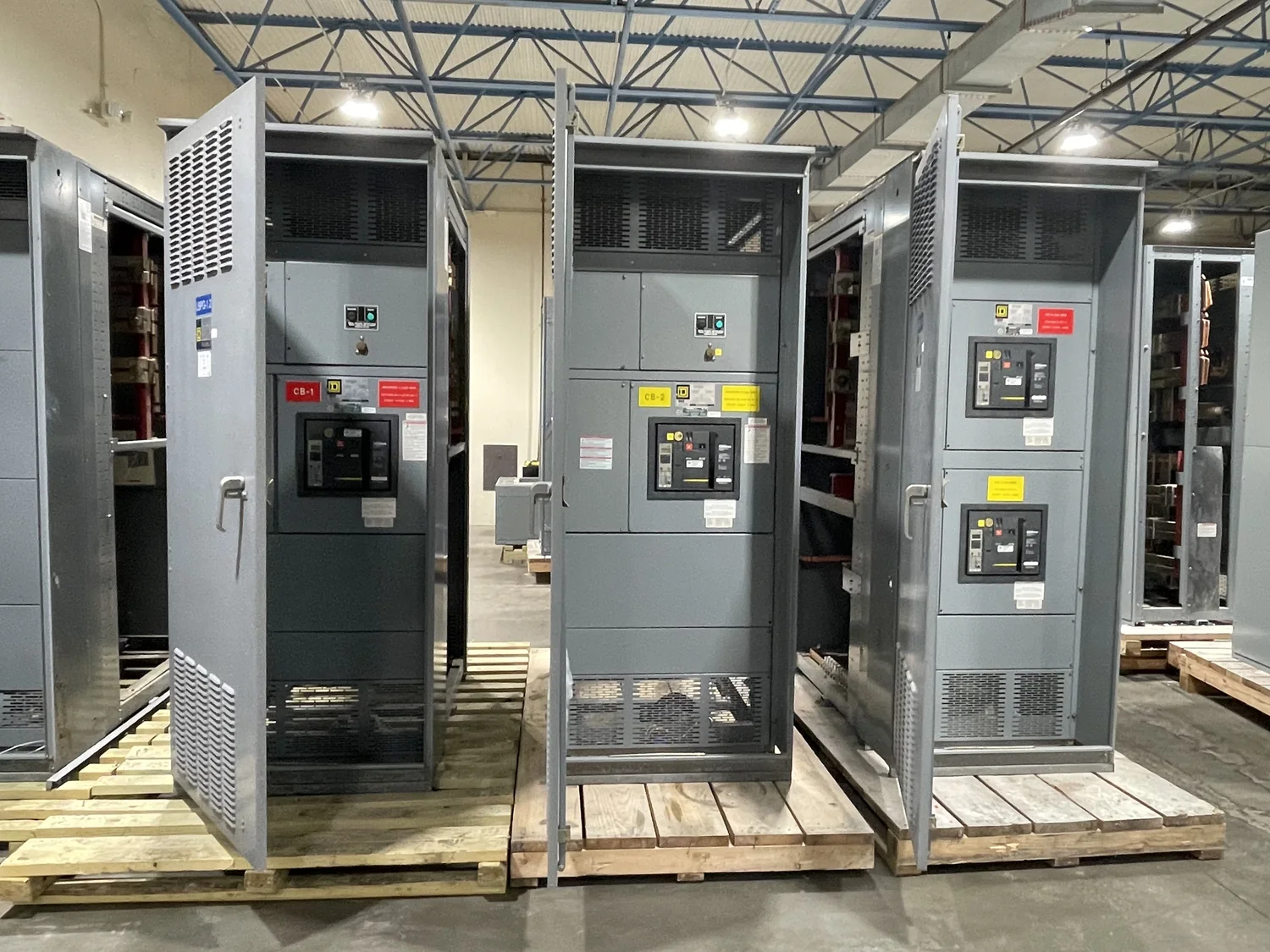
Industrial Plant Switchgear Decommissioning Buyer
When an industrial plant is being decommissioned, switchgear disposition is one part of a larger sequence involving equipment ownership, outage planning, site access, and removal. Businesses in Washington, DC, Northern Virginia, and Maryland can request a purchase review for switchgear they intend to sell. The buyer buys equipment only; it does not sell replacement gear or provide electrical decommissioning services. The buyer can make a cash offer, and when an offer is accepted, payment is arranged upfront. The seller is not required to test the equipment as a condition of requesting an offer.
A useful first step is to identify the equipment and the boundaries of the proposed sale. A plant may have a complete lineup, individual sections, associated components, or equipment that remains connected to other site systems. Clarify which items are available, which are excluded, who owns them, and whether any lease, lien, project contract, or other restriction affects disposition. These details help establish what can be reviewed and what must be resolved before a removal date is set. The buyer considers all voltage classes, but a final price or removal scope cannot be established from voltage alone; the equipment and project details need review.
Prepare the equipment information for review
Clear photographs and accurate identifying information help the buyer understand what is being offered before arranging a site visit or removal plan. Photograph each lineup from the front and, where safe and permitted, the sides and rear. Include wide views that show how sections connect, as well as close-ups of each available nameplate and visible identification label. If the gear has multiple sections, label the photographs or provide a simple lineup sequence so the images can be matched to the equipment list. Do not remove covers or approach energized equipment to obtain a photograph; follow the facility’s access and safety rules.
Share the nameplate information that is legible, such as manufacturer, model or type, serial number, ratings, and any other markings shown. Include approximate lineup dimensions—overall length, height, and depth—and identify section sizes or unusual projections if known. Mention whether the offering includes breakers, relays, control components, bus, barriers, doors, or other associated parts, and note any known missing, damaged, modified, or separated items. Completeness can affect how equipment is assessed and whether removal needs to be planned as a full lineup or as separate sections. These details are for review, not a substitute for a technical inspection or a guarantee of value.
If some information is unavailable, say so rather than guessing. A seller does not need to test the switchgear to submit it for consideration. For equipment with unreadable plates or incomplete records, photographs, approximate dimensions, an equipment inventory, and a clear description of what is included may still support an initial review. The buyer may ask follow-up questions before making an offer or confirming the proposed scope.
Coordinate ownership, access, and the removal window
Plant decommissioning schedules can involve several parties, including the asset owner, facility management, electrical contractors, demolition teams, and logistics providers. Identify the person authorized to approve the sale and the site contact who can coordinate access. Explain where the switchgear is located, how crews and lifting equipment would reach it, and whether the route includes narrow doors, stairs, ramps, low clearances, restricted loading areas, or other obstacles. In the DC region, access arrangements can vary from one site to another; do not assume that street access, staging space, loading hours, or equipment entry will be available without confirmation.
Provide the anticipated shutdown or outage window, target removal dates, site operating restrictions, and any deadline imposed by a broader decommissioning or construction schedule. Timing should be coordinated with the facility’s own procedures and the availability of the qualified personnel and equipment needed for the work. The buyer and seller should confirm responsibilities, access conditions, scope, and schedule before removal. An initial discussion does not establish that a particular date, method, or project arrangement will be feasible.
The site should also disclose known access limits and removal constraints early. Relevant factors may include overhead obstructions, floor loading limits, equipment-room thresholds, travel distance to the loading point, shared corridors, elevator restrictions, traffic or security controls, and whether the switchgear must be divided into sections to exit the building. These are project-specific questions: a photograph of the lineup alone cannot show every condition that may affect lifting, rigging, or hauling. Share available site plans or route photographs if they can be provided safely and with permission.
Plan safe disconnection and equipment removal
Any de-energization, isolation, and disconnection must be performed by qualified personnel under the site’s safety, outage, and work-control procedures. Do not ask unqualified staff to open, disconnect, move, or handle electrical equipment. The facility and its qualified electrical personnel determine and carry out the required electrical work; timing and access for that work must be coordinated as part of the project. The buyer’s purchase review does not replace the site’s safety planning, authorization process, or technical responsibilities.
For removal logistics, the buyer handles crane, rigging, disconnects, loading, freight, and hauling, subject to the project arrangements and site access. The parties should confirm how those responsibilities fit with the facility’s own electrical work, any contractor scope, the agreed equipment boundaries, and the actual removal conditions before work begins. The buyer pays the crane, rigging, loading, freight, and hauling costs, with responsibilities confirmed before removal. This practical confirmation helps avoid assumptions about who is supplying equipment, coordinating access, or performing a particular task.
A removal plan may depend on the lineup’s dimensions, weight information if available, center-of-gravity or lifting information if documented, section configuration, and the route from its installed position to the loading area. The seller should share existing drawings or handling information when available, but should not estimate technical lifting details without a sound basis. Confirm whether doors, covers, bus connections, or other components will be included, and whether any items have already been removed or separated. Site access, lifting clearances, and the condition of the route should be checked by the project team before a crew or transport is scheduled.
Request an offer and confirm the sale terms
To begin, send the buyer clear switchgear photographs, nameplate details, lineup dimensions, an inventory of included components, ownership confirmation, and information about site access and removal constraints. Include the location within the Washington, DC, Northern Virginia, or Maryland service area, the proposed schedule, and the relevant site contact. If equipment is part of a larger plant closure, distinguish the switchgear being offered from items that will remain on site or be handled under another contract. Complete information can support a more informed review, while missing details may prompt follow-up questions.
The buyer reviews the equipment and project information before making an offer. There is no responsible way to promise a final price or removal arrangement without that review, and an offer should not be treated as confirmation that every schedule or access condition is workable. If the seller accepts an offer, payment is arranged upfront. Before removal, confirm in writing the equipment included in the sale, the payment arrangement, the agreed schedule, site access, and the division of project responsibilities. The buyer pays the crane, rigging, loading, freight, and hauling costs, with those responsibilities confirmed before removal.
A straightforward disposition process starts with accurate asset information and early coordination—not with assumptions about the plant, equipment condition, or site. Sellers do not need to perform testing to request consideration, but they should be ready to establish ownership, identify the offered scope, and coordinate safe access with qualified site personnel. With those points addressed, the buyer can review the switchgear and the practical conditions for its removal and determine whether an offer is appropriate.