A practical inventory guide for switchgear accessories
If you are preparing surplus switchgear accessories for disposition in Washington, DC, Northern Virginia, or Maryland, a clear inventory can help a buyer understand what is available and what removal may involve. The buyer purchases equipment; it does not sell parts. An inventory does not need to be a formal engineering document, but it should distinguish accessories from the switchgear lineup itself and describe what is included, where it is located, and whether items are loose, installed, or stored separately.
Start with a simple list of the items you believe are available. Depending on your inventory, that could include removable components, attachments, or associated parts; avoid guessing at technical names if labels are unclear. Record visible manufacturer and model information exactly as shown, along with any catalog, part, or serial numbers. Note quantities and whether each item appears complete. If an item’s identity is uncertain, mark it as unidentified and provide a photo rather than relying on an assumption.
The buyer considers all voltage classes, and sellers are not required to test equipment. An initial review is based on the information available, not a promise that every listed component can be identified or accepted. Clear, candid details help establish the scope for review and reduce avoidable follow-up.
Photos and nameplates that help establish scope
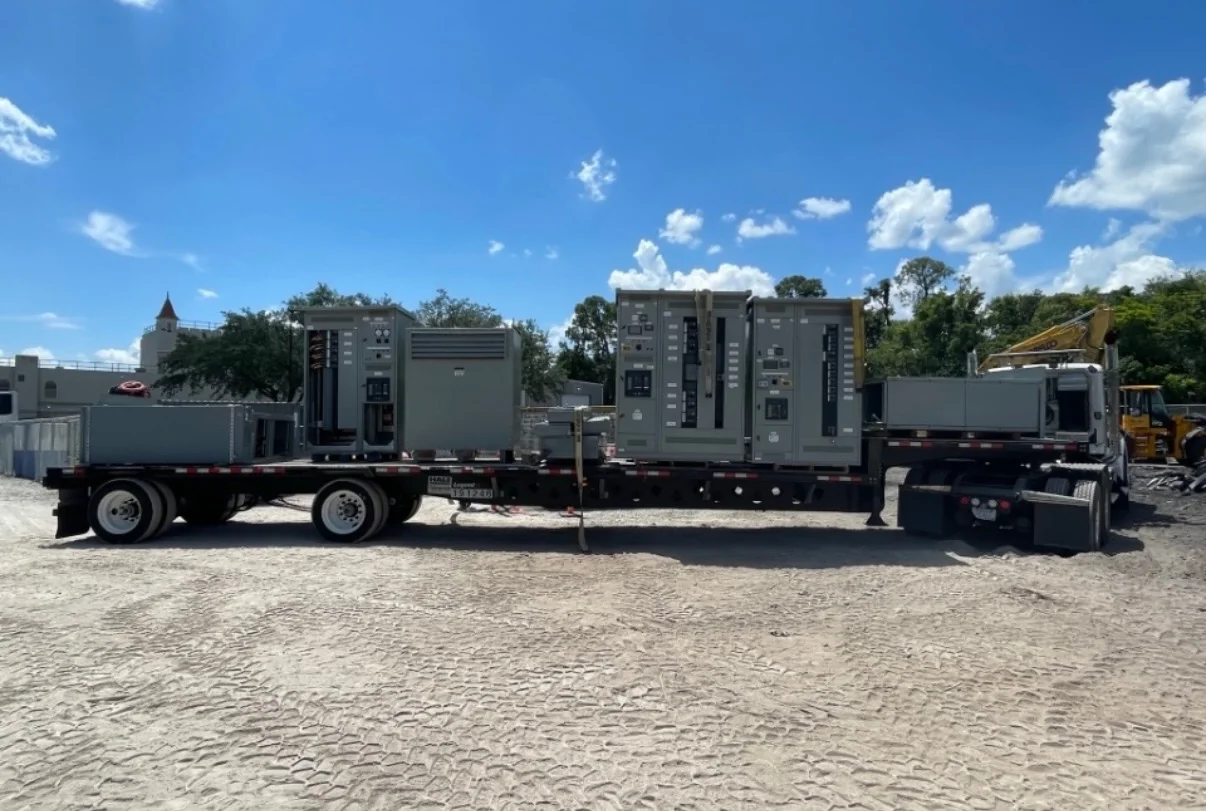
Take well-lit, in-focus photographs of the overall switchgear lineup and each accessory or group of accessories. Include close-ups of nameplates, labels, markings, and any visible part numbers. A photo showing where an accessory fits or how it is stored can provide useful context, but do not open energized equipment or remove covers for photography. If a label is inaccessible or unreadable, say so rather than attempting to reach or expose it.
For a lineup or larger assembly, provide approximate overall dimensions: height, width, and depth, plus the number of sections or shipping pieces if known. For loose inventory, give approximate dimensions and weight when available, and identify whether items are palletized, boxed, or otherwise secured. Measurements do not need to replace a site survey; they help the buyer assess handling, transport, and access requirements before agreeing on removal arrangements.
Also describe the condition in observable terms. Mention missing covers, broken or visibly damaged parts, corrosion, incomplete assemblies, or unknown storage history if relevant. Avoid claims about operating condition unless supported by records or a qualified inspection. No seller testing is required, and the buyer may request additional information or review before making an offer.
Ownership, completeness, and commercial review
Confirm that you own the equipment or are authorized to sell it, and identify any ownership restrictions or other parties whose approval may be needed. If the accessories are part of a larger asset-disposition project, clarify whether the sale includes only listed items or also includes associated switchgear sections, cabinets, or other material. A precise boundary prevents misunderstandings about what remains at the site and what is included in the transaction.
Completeness matters because accessories may be offered as individual items, grouped lots, or as part of a broader package. For each group, note whether related pieces, hardware, documentation, or storage containers are present, if known. Do not assume a component is compatible with a particular lineup based on appearance alone; provide the identification details and photos so the buyer can review them. The buyer does not claim manufacturer endorsement, and any brand or model information is used to describe the equipment under review.
The buyer can make a cash offer after reviewing the inventory and project details. A final price is not established from a generic guide or a single photograph; it depends on the specific equipment, completeness, condition information, and removal circumstances. If an offer is accepted, payment is arranged upfront. Confirm the payment timing and transaction scope before scheduling removal, and do not treat an initial discussion as a guaranteed offer.
Site access, disconnection, and removal planning
Removal planning should account for the route from the equipment to the loading area, door and corridor clearances, floor or ground conditions, overhead restrictions, staging space, loading access, and any limits on vehicle or lifting-equipment placement. Share relevant site rules, access windows, security or escort arrangements, loading-dock constraints, and known restrictions on deliveries or work hours. In the DC region, travel and site scheduling can involve different property procedures across the District, Northern Virginia, and Maryland; coordinate the actual dates and access conditions with the people responsible for the facility rather than assuming a standard arrangement.
The buyer handles the crane, rigging, disconnects, loading, freight, and hauling, subject to project arrangements and site access. The parties should confirm the division of responsibilities, scope, access, timing, and any site-specific coordination before removal. The buyer pays the crane, rigging, loading, freight, and hauling costs, with responsibilities confirmed for the project. If equipment is indoors, elevated, tightly grouped, or located where access is restricted, provide those details early so the removal plan can be reviewed realistically.
Do not disconnect, open, move, or handle electrical equipment unless qualified and authorized to do so. De-energization, isolation, and disconnect work must be performed by qualified personnel under the site's safety and outage procedures. Coordinate the required outage window, isolation steps, and handoff with facility operations and the qualified electrical personnel responsible for the work. Removal timing should be set only after these arrangements and site access have been reviewed.
Prepare a clear request for review
A useful first submission brings the inventory, photos, dimensions, and project context together. Include the site’s general location within the Washington, DC region; the number of lineup sections or accessory groups; available nameplate and part-number information; approximate dimensions; what appears complete or missing; and whether the equipment is installed, stored, or already staged. Add confirmation of ownership or selling authority and describe access, removal constraints, and scheduling considerations.
If some information is not available, identify the unknowns plainly. A buyer can review what is provided and ask focused follow-up questions; missing details should not be filled with guesses. Keep any existing records, labels, and inventory sheets available, but do not perform electrical work or testing to prepare the submission. The goal is to let the buyer assess the potential purchase and logistics safely, then confirm scope, offer, payment arrangements, and removal responsibilities before work is scheduled.