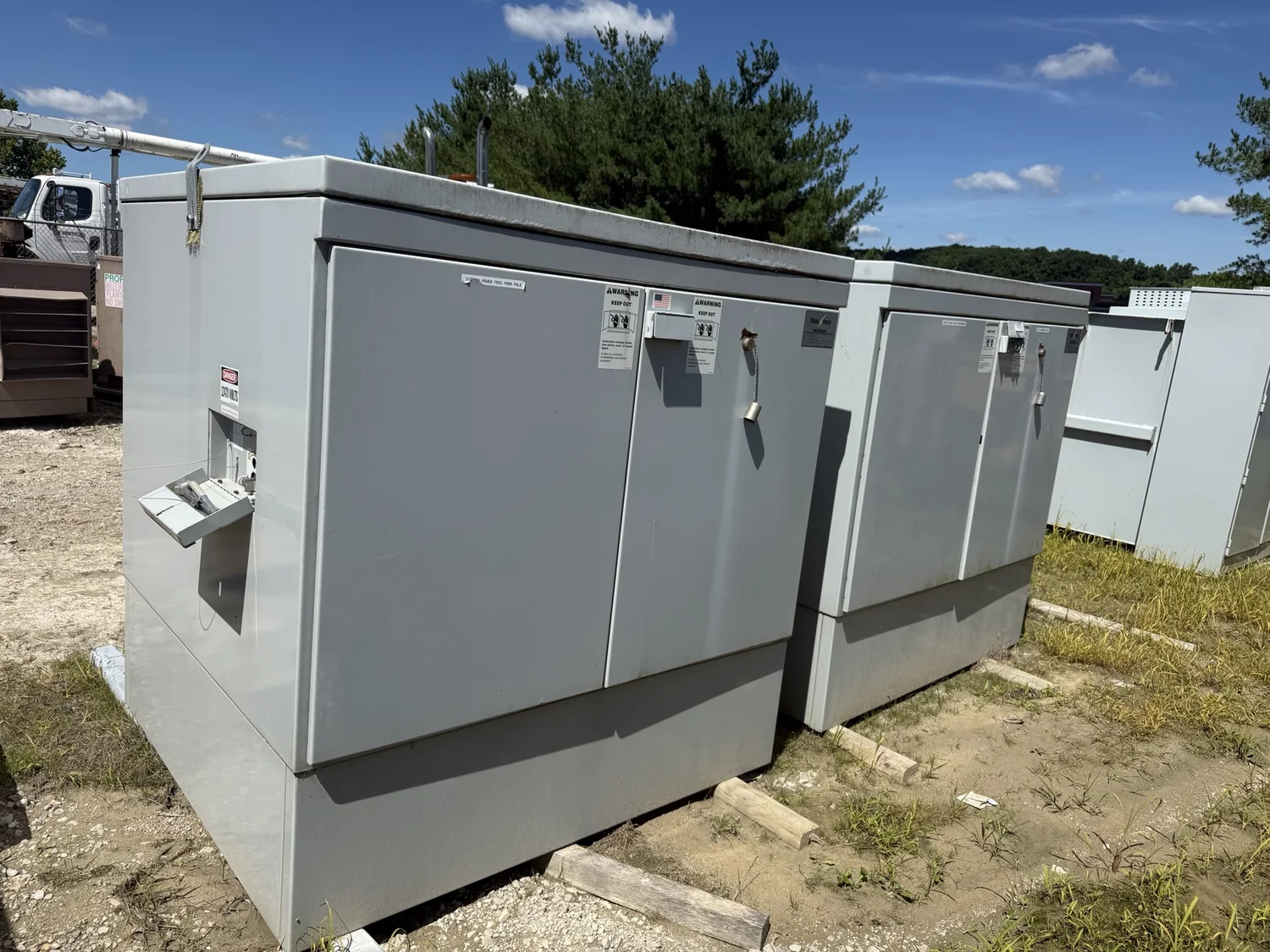
Switchgear Enclosure Review for Sellers in the Washington, DC Region
If you have switchgear to sell in Washington, DC, Northern Virginia, or Maryland, an enclosure review is a practical first step toward understanding whether the equipment may be a fit for purchase. The review helps establish what is present, how much of the lineup is included, and what arrangements may be needed to remove it. It is an evaluation for a potential purchase—not a sales quote for replacement equipment or a promise that an offer will be made.
The buyer purchases electrical equipment only; it does not sell switchgear. Equipment in any voltage class may be considered, but suitability and value depend on the particular asset and project. Clear information about the enclosure, its contents, ownership, condition, and site access helps the buyer determine whether to make an offer and how removal could be planned. No final price should be assumed before that review is complete.
What to Share for an Initial Review
Start with clear, well-lit photos of the full lineup and its surroundings. Include front and rear views when safely available, the ends of the lineup, visible sections, and any detached or separately stored components you want considered. Close-up photos of legible nameplates are especially useful. Do not remove covers or enter restricted areas to obtain images; follow site rules, and ask qualified site personnel to take photographs where access is controlled.
Share the available nameplate information and any records that identify the equipment, such as manufacturer, model or catalog identifiers, ratings, and other legible markings. These details help distinguish a complete lineup from a partial assembly and support a more informed review. If a plate is missing, obscured, or unreadable, say so rather than guessing. Provide lineup dimensions—overall length, height, and depth where available—and identify whether those measurements include projecting handles, bus connections, attached sections, or other features that affect clearance and handling.
Describe what is included and what is not. Relevant details can include enclosure sections, breakers, bus, control components, doors, barriers, and loose parts, but do not assume that every item in or near the gear belongs to the sale. Note any known damage, modifications, missing components, storage history, or uncertainty about completeness. This is not a substitute for a technical inspection, and the seller is not required to test the equipment. The buyer does not require seller-performed testing to consider a purchase.
Ownership, Access, and Removal Constraints
Before scope is set, identify the owner and the person authorized to approve the sale. If the equipment is owned by a business, property owner, utility, lender, or another party, clarify who can authorize disposition and what documentation or internal approval may be needed. Confirm whether the proposed sale covers the complete lineup, selected sections, or equipment already removed and stored elsewhere. Clear boundaries prevent confusion about what the buyer is evaluating and what may be removed.
Access details matter as much as equipment details. Explain where the switchgear is located, how removal crews and equipment would reach it, and any known limitations such as narrow doors, stairs, low ceilings, loading-dock rules, restricted operating hours, security check-in, or shared work areas. For sites in the DC region, coordinate early around building access, traffic or delivery windows, and any site-specific scheduling requirements; these vary by facility and should be confirmed with the people who control the site. Provide approximate travel paths and available clearances when known, but do not create measurements by entering unsafe or restricted spaces.
Removal constraints should be disclosed before the scope and schedule are finalized. Note whether equipment is on a raised floor, anchored, connected to adjacent gear, located near occupied operations, or subject to outage windows or other project controls. Identify any known hazardous-material concerns, site rules, insurance requirements, or limits on staging and temporary storage. The buyer and seller should confirm responsibilities, sequence, access, and timing for the specific project rather than relying on assumptions.
Safe Disconnection and Practical Site Planning
De-energization, isolation, verification, and disconnection must be handled by qualified personnel under the site's safety procedures and outage controls. Do not attempt to disconnect, open, move, or handle energized electrical equipment to prepare it for sale. The timing and scope of disconnection need to be coordinated with the site’s responsible personnel, and any required outage or authorization must be arranged through the appropriate site process.
For removal planning, useful details include whether cables, bus connections, control wiring, foundations, or adjacent equipment affect separation; whether the lineup can be moved as a whole or may need to be separated into sections; and whether lifting points or equipment weights are documented. If weight information is unavailable, say so. The buyer can review the available information and coordinate removal requirements for the project, but safe access, suitable lifting plans, and work sequencing depend on the actual equipment and site conditions.
The buyer handles crane, rigging, disconnects, loading, freight, and hauling, subject to project arrangements and site access. That allocation does not remove the need to coordinate who performs electrical work, when the site will release the equipment, and what access or outage conditions apply. Confirm these responsibilities and logistics before removal is scheduled. No removal plan should be treated as fixed until the equipment, route, timing, and site constraints have been reviewed.
Offer and Payment Expectations
After reviewing the photos, nameplates, dimensions, completeness, ownership, and access details, the buyer can assess whether it is interested and whether it can make an offer. The review may lead to follow-up questions or a request for additional information. A preliminary discussion is not a guaranteed purchase, a final valuation, or a commitment to remove equipment before the relevant scope and arrangements are agreed.
The buyer can make a cash offer. If an offer is accepted, payment is arranged upfront, with the payment and removal arrangements confirmed for the project. The buyer pays the crane, rigging, loading, freight, and hauling costs; responsibilities and access conditions should still be confirmed before removal. Sellers do not need to test the switchgear to request a review. Providing accurate information, including what is unknown, is the most useful way to help determine next steps.
To begin, send clear equipment photos, readable nameplates where available, lineup dimensions, a description of what is included, and the ownership and site-access details. Include the location within Washington, DC, Northern Virginia, or Maryland, plus any scheduling windows or removal restrictions already known. With those basics, the buyer can review the opportunity and discuss whether an offer and project-specific removal plan may be appropriate.