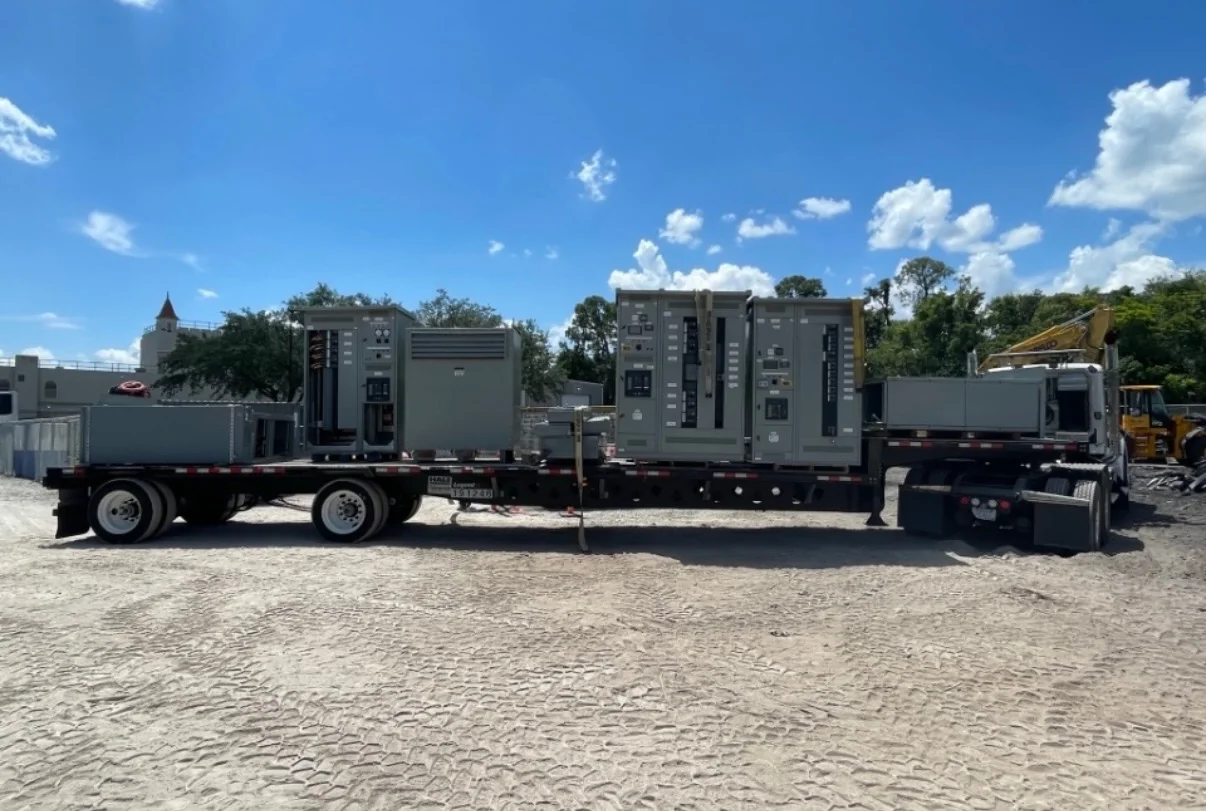
Selling Data Center Switchgear During a Decommissioning
If your organization is decommissioning a data center in Washington, DC, Northern Virginia, or Maryland, switchgear may be among the more complex assets to disposition. A buyer needs to understand what equipment is present, how it is configured, who owns it, and what the site will require before removal can be planned. This page is for organizations considering a sale; the business described here buys equipment and does not sell it.
A preliminary review helps establish whether the equipment may be of interest and what information is needed to discuss an offer. It is not a final valuation or a promise to buy. Switchgear is considered across all voltage classes, but the specific configuration, condition information, completeness, and practical removal requirements can affect review. No seller testing is required to submit equipment for consideration.
What to Send for an Initial Review
Clear photographs and legible nameplate images are useful starting points. Photograph the complete lineup from several angles, the individual sections, accessible labels, and visible accessories or attachments. Nameplates can help identify equipment details such as manufacturer, model or type, ratings, and other markings. Do not rely on a single wide shot if labels and section details are too small to read. If a nameplate is missing, damaged, or inaccessible, note that rather than guessing at its information.
Include approximate lineup dimensions—overall length, height, and depth—and, when available, the number and arrangement of sections. A basic equipment list can note what is included with the switchgear, such as associated breakers or other components, without assuming that every item is part of the sale. Completeness matters: identify known omissions, separately stored parts, or items that will remain at the facility. Photos and dimensions support an initial scope discussion, but a buyer may need clarification or a site review before defining the equipment included in an offer.
Also provide the facility’s general location, your organization’s ownership or authority to sell the assets, and a point of contact who can coordinate review. If the equipment is leased, financed, jointly owned, or subject to another party’s approval, disclose that early. The buyer needs to understand who can authorize the sale and whether any release or internal disposition steps must be completed before removal. Avoid sending sensitive site-security information unless it is necessary and approved for sharing.
Access, Scheduling, and Removal Planning
Data center work is often coordinated with decommissioning phases, access controls, operating areas, and other contractors. Share the anticipated schedule, site access process, applicable work windows, and any known restrictions on truck entry, staging, elevators, corridors, doors, or loading areas. In the DC region, conditions vary by facility and site; do not assume that a particular loading route, parking arrangement, or removal window will be available. Access and timing must be confirmed for the specific project before removal is scheduled.
The buyer handles crane, rigging, disconnects, loading, freight, and hauling, subject to project arrangements and site access. Responsibilities, sequencing, and any site-specific coordination should be confirmed before removal. Information about floor loading limits, overhead clearance, turning space, dock availability, restricted routes, lift requirements, or limits on equipment movement may be important where applicable. These details help determine whether the proposed removal approach can be coordinated with the facility and its other work.
De-energization, isolation, and electrical disconnect work must be performed by qualified personnel under the site’s safety and outage procedures. Do not ask unqualified staff to disconnect, open, move, or handle electrical equipment. Coordinate required approvals, outage windows, work boundaries, and access with the facility’s responsible personnel. The buyer can plan its removal responsibilities with the project team, but the site must communicate and manage its own safety controls and any operating requirements.
Payment and Offer Review
After reviewing the available information, the buyer may make a cash offer for the equipment it is prepared to purchase. If the offer is accepted, payment is arranged upfront. The offer and payment arrangements should be confirmed before removal proceeds, along with the equipment included, the parties’ responsibilities, and any project conditions that affect timing. No final price can be stated without review of the specific equipment and removal scope.
The buyer pays the crane, rigging, loading, freight, and hauling costs, with the practical arrangements confirmed for the project. This does not remove the need to agree on site access, scheduling, disconnect coordination, or the exact scope. Clarify in writing what equipment is included and when it will be made available, especially if the decommissioning plan separates switchgear from related assets or stages removal over time.
A Practical Information Checklist
Before requesting a review, gather clear equipment photos, readable nameplates where available, approximate lineup dimensions, a description of included and missing components, the facility’s general location, ownership or sale authority, and a contact for access and scheduling discussions. Add known removal constraints and the expected decommissioning timeline. If some details are not yet known, identify them as pending; an accurate list of open questions is more useful than unsupported assumptions.
With that information, the buyer can assess whether further details or a site visit are needed and discuss a possible cash offer. The process is specific to the equipment and facility, and any offer depends on review rather than a generic price estimate. For sellers in Washington, DC, Northern Virginia, and Maryland, the central planning steps remain the same: establish the asset scope, confirm authority to sell, coordinate qualified electrical work through the site, and agree on access and removal responsibilities before scheduling the move.