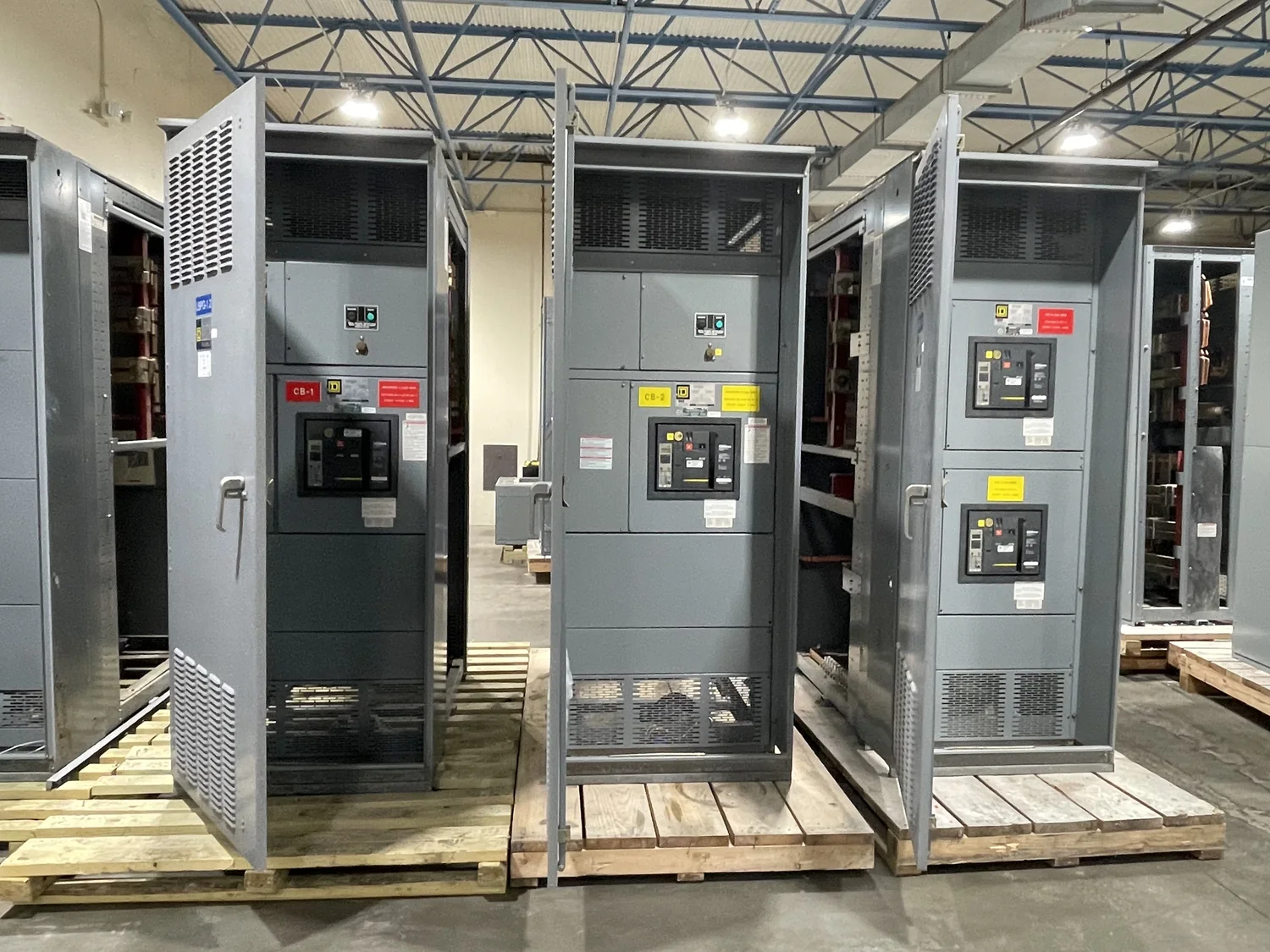
Selling Switchgear During an Industrial Plant Closure
An industrial plant closure can leave a substantial switchgear lineup to address alongside other facility assets. If you are considering a sale in Washington, DC, Northern Virginia, or Maryland, the practical first step is to establish exactly what equipment is present, who owns it, and how it can be accessed and removed. Those details help determine whether the switchgear fits a purchase review and what the removal plan may require.
This business buys electrical equipment; it does not sell equipment or arrange a replacement system. It can make a cash offer after reviewing the available information, and payment is arranged upfront if you accept the offer. The seller does not need to test the equipment. All voltage classes are considered, but that does not mean every lineup will receive an offer or that a price can be determined without review. Equipment condition, completeness, documentation, ownership, and removal constraints can all affect the decision.
Start With Photos, Nameplates, and Lineup Details
For an initial review, provide clear photographs of the complete lineup and closer views of its nameplates and visible sections. Useful images show the front, sides, rear where safely accessible, lineup connections, and any obvious damage or missing components. Do not open energized equipment or enter restricted areas to take photographs; coordinate access with the facility’s qualified personnel and follow its safety procedures.
Share readable nameplate information where available, along with the number of sections, overall lineup dimensions, and any known ratings or configuration details. Include the equipment’s location within the plant and whether it is installed, already disconnected, or otherwise staged. These details are useful for estimating the scope of a review and planning removal; they are not a substitute for an on-site assessment when project conditions call for one. If records or drawings are available, they may help clarify the lineup, but do not assume that documentation is required before making an inquiry.
Be candid about completeness and condition. Note known missing sections, removed components, storage history, visible deterioration, modifications, or uncertainty about what is included. Avoid representing unverified specifications or performance as fact. A purchase decision and any offer remain subject to review of the actual assets and agreed scope.
Confirm Ownership, Scope, and Site Access
Before setting a removal scope, identify the legal owner and confirm that the person coordinating the sale has authority to act for that owner. If the plant is closing, assets may be subject to internal approval, a lender’s interest, a landlord arrangement, a sale process, or other ownership and disposition requirements. Resolve those questions through the appropriate parties before scheduling work. The buyer may request information that helps establish that the equipment is available for sale and clarifies what is included.
Describe the site’s access conditions rather than assuming a lineup can be moved directly out of the building. Relevant details may include the equipment’s floor or room, door and corridor clearances, stairs or elevators, loading-area conditions, travel distance to the pickup point, and any known restrictions on vehicle or lifting equipment. Share approximate dimensions and photographs of the route when they are available and can be gathered safely. Building rules, security procedures, operating areas, and coordination with a landlord or facility manager may also affect access and timing.
The DC-region setting can make advance coordination especially important when a closure, property handoff, or limited access window is involved. No particular site condition should be presumed. Confirm the actual schedule, access permissions, work hours, and site contacts for the facility. A review of the equipment alone cannot establish that removal is feasible without understanding the route and project constraints.
Plan Disconnection and Removal Safely
Any de-energization, isolation, and disconnect work must be performed by qualified personnel under the site’s safety, lockout, and outage procedures. Do not ask unqualified staff to disconnect, move, or handle switchgear. The facility and its qualified personnel should coordinate the required outage, isolation boundaries, verification, and authorization before removal work begins. The buyer’s review does not replace the site’s electrical-safety responsibilities or its procedures for controlling access to the work area.
Subject to the project arrangement and site access, the buyer handles the crane, rigging, disconnects, loading, freight, and hauling. Confirm responsibilities and the agreed scope before removal, including when disconnect work will occur and who will provide any site-specific approvals or coordination. Access limitations, equipment weight and dimensions, lifting points, nearby structures, floor conditions, and the route to the loading area can affect the removal plan. These details should be reviewed rather than assumed.
Agree on timing with the site contacts and qualified personnel, particularly if removal depends on a closure milestone, a building handover, or an outage window. The planned date should account for access authorization, safe preparation, the removal sequence, and the availability of any required lifting or transport resources. Do not treat an initial conversation or preliminary review as confirmation that a specific date or removal method is feasible.
Review the Offer and Confirm the Arrangement
Once the equipment information, ownership, access, and scope are sufficiently clear, the buyer can review the opportunity and make a cash offer if appropriate. There is no final price to quote from the page alone. Any offer depends on review of the specific switchgear and the agreed assets and project conditions; an inquiry does not guarantee a purchase. If you accept an offer, payment is arranged upfront. Confirm the payment arrangement and the included equipment before the removal plan proceeds.
Before work is scheduled, document what is being purchased, what is excluded, the payment terms, the expected timing, and the parties’ responsibilities. Confirm that the buyer’s responsibility for crane, rigging, disconnects, loading, freight, and hauling matches the project arrangement and the actual site-access plan. If the lineup has changed since the initial photos or information were supplied, share the update so the scope can be reconsidered before removal.
To begin, assemble clear equipment photos, available nameplate details, lineup dimensions, a summary of completeness and known condition, ownership or sale-authority information, and practical access and scheduling notes. Include any removal constraints you already know. This information gives the buyer a more useful basis for review while keeping the final offer and removal plan tied to the actual equipment and site—not to assumptions about the facility.