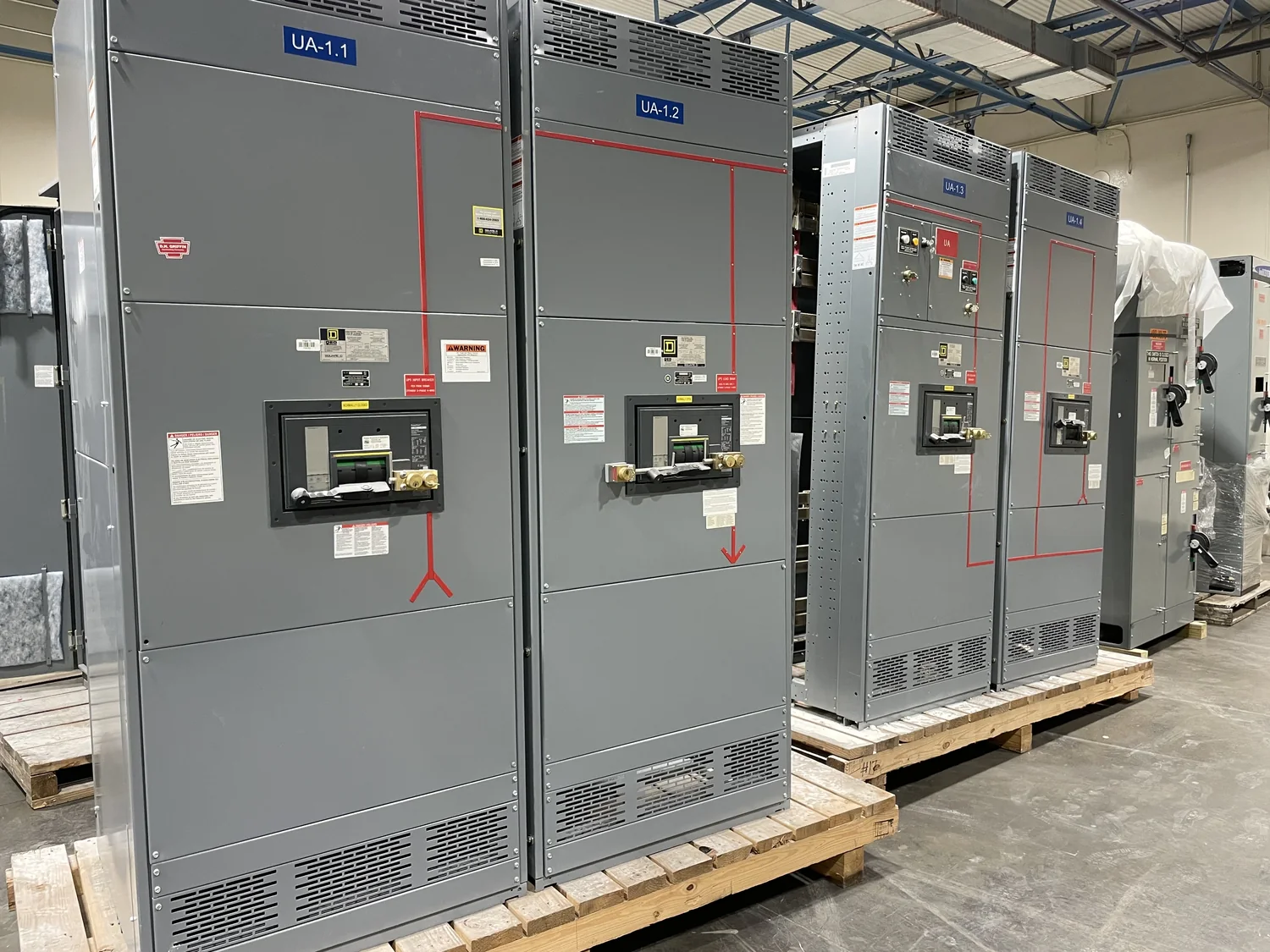
Selling Switchgear During a Power Plant Teardown
When a power plant is being decommissioned, renovated, or cleared for another use, switchgear can be one part of a larger equipment-disposition effort. A buyer may consider switchgear from a teardown in Washington, DC, Northern Virginia, or Maryland, but whether a particular lineup is a fit depends on its condition, completeness, ownership, and the practical demands of removing it from the facility. The buyer purchases equipment only; it does not sell switchgear.
A useful first step is to identify what is being offered and how it relates to the larger project. Switchgear may be presented as a complete lineup, several sections, or selected components. Describe the proposed scope plainly, including any parts already removed, retained for the project, or excluded from the sale. Do not assume a whole lineup and loose components will be assessed the same way: the buyer needs to review what is actually available before defining a purchase scope or making an offer.
The DC-region context makes project coordination especially important, but no facility’s access conditions should be assumed. A site may have its own rules for contractor entry, vehicle routing, work hours, outage windows, escorts, documentation, or coordination with other demolition trades. Share the relevant requirements early so the proposed evaluation and removal plan can be discussed against the real site conditions. A preliminary conversation is not a substitute for the facility’s safety procedures or approval process.
Information to Share Before Scope Is Set
Provide clear photographs of the switchgear from the front, rear, sides, and above where safe and practical. Include individual sections, visible bus connections, doors, barriers, and any components that are part of the offered equipment. Photos should show the lineup in context as well as details such as visible damage, corrosion, missing covers, or components that have already been removed. Do not open equipment or approach exposed electrical parts to take pictures; arrange any necessary access through qualified site personnel and follow facility rules.
Send legible nameplate photographs and transcribe the information if a plate is difficult to read. The buyer may need manufacturer and model identifiers, equipment type, ratings shown on the plates, section or unit identifiers, and any other markings that help distinguish the offered equipment. The buyer considers all voltage classes, but that does not establish suitability or value for a specific unit. No manufacturer-specific or voltage-specific conclusion should be assumed from a brief description, and the equipment must be reviewed before an offer can be determined.
Share approximate lineup dimensions, including overall length, height, and depth, along with the number of sections and any known shipping or lifting dimensions. Note whether the lineup is assembled, separated, or still installed, and identify unusually heavy sections if that information is available. Describe completeness: for example, whether the offered scope includes the sections, bus, breakers, relays, controls, auxiliary equipment, or other components shown in the photographs. These details help the buyer understand what is included and what removal may involve; they do not replace a site-specific inspection or final scope review.
Ownership, Access, and Removal Planning
Confirm who owns the equipment and who has authority to approve its sale and removal. For a teardown, ownership and disposition authority may involve the asset owner, a project representative, a contractor, or another party. The buyer needs a clear path to verify that the person arranging the sale can authorize the equipment’s transfer. Identify any known liens, ownership restrictions, project holdbacks, or components that must remain on site, and resolve questions before removal is scheduled.
Explain how the equipment can be reached and removed. Useful details include floor or level, door and aisle dimensions, overhead clearance, loading-area location, surface and route conditions, elevator or dock limitations, and restrictions on truck or crane placement. Note whether sections can pass through the available route intact or whether disassembly is being considered. Also identify nearby structures, active plant areas, other demolition work, or scheduling constraints that may affect access. The buyer can coordinate crane, rigging, loading, freight, and hauling subject to project arrangements and site access, with responsibilities confirmed before removal.
Removal planning must also account for electrical and site safety. De-energization, isolation, verification, and disconnection must be performed by qualified personnel under the facility’s safety and outage procedures. Do not ask unqualified personnel to disconnect, open, move, or handle electrical equipment. Coordinate the required qualified work, site access, and timing with the facility and project team. The buyer’s logistics coordination does not replace the site’s controls or authorize work that the facility has not approved.
Offer, Payment, and Seller Responsibilities
After reviewing the available details, the buyer can consider the equipment and make a cash offer if it is a fit. There is no need for the seller to perform testing as a condition of submitting the equipment for consideration. If test reports or maintenance records already exist, they may be shared as background, but do not arrange testing solely for the buyer unless separately agreed. A description, photograph, or preliminary discussion is not a final valuation; the offer depends on review of the actual scope and project logistics.
If an offer is accepted, payment is arranged upfront. The buyer pays the crane, rigging, loading, freight, and hauling costs, subject to the agreed project arrangements and site access. Before removal, confirm in writing what equipment is included, what is excluded, when payment will be made, who will provide required site coordination, and how access and removal timing will work. Clarify any seller obligations or site costs that are outside the buyer’s stated logistics responsibilities rather than relying on assumptions.
Keep the equipment and project records aligned while the scope is being reviewed. If the lineup changes, a component is removed, ownership authority changes, or access conditions differ from what was described, notify the buyer before the offer or removal plan is finalized. This helps avoid confusion about what is being purchased and gives both parties a chance to revisit the scope and arrangements. No offer should be treated as guaranteed until the buyer has reviewed the information and the parties have agreed on the purchase and removal terms.
A Practical Submission for the DC Region
For a first review, send the facility’s general location in the Washington, DC, Northern Virginia, or Maryland service area; clear overall and detail photos; readable nameplates; approximate lineup dimensions and section count; a concise list of included and excluded components; and a brief description of condition and completeness. Add the owner or authorized representative’s contact information, confirmation that the equipment may be offered for sale, and a summary of access, loading, crane, scheduling, and removal constraints. Avoid sharing sensitive facility information beyond what is needed to evaluate the equipment and coordinate access.
A concise, accurate package gives the buyer a practical basis to decide what follow-up is needed. It also helps identify whether further photographs, a scope discussion, or site coordination should occur before an offer is considered. The buyer purchases switchgear and can make cash offers, with payment upfront upon acceptance; it does not sell equipment, require seller testing, or promise a particular price before review. For a teardown project, establish the scope, authority, safety responsibilities, access, and removal schedule with the relevant parties before equipment is disconnected or moved.