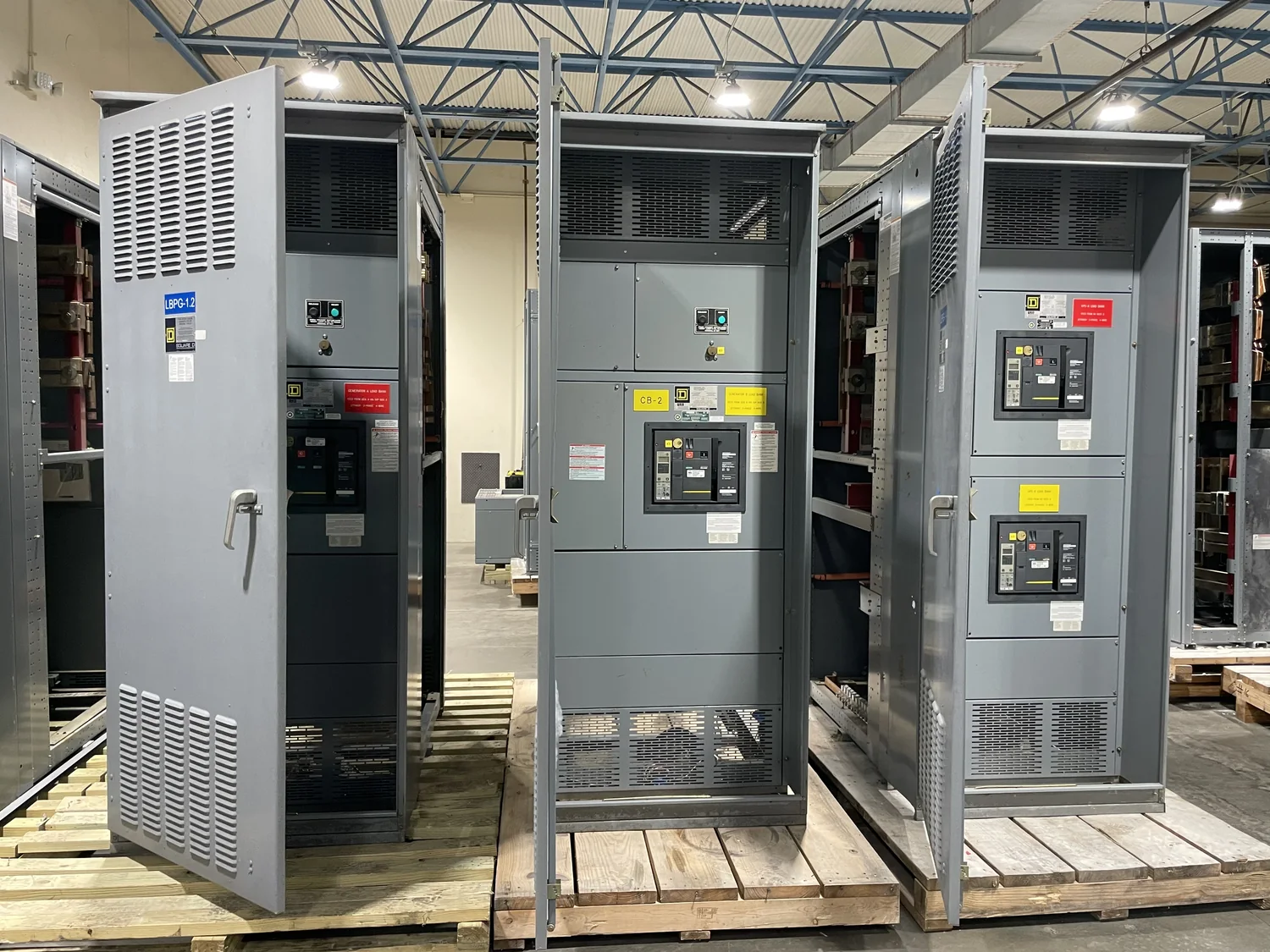
Sell Surplus Switchgear in Arlington County, Virginia
Surplus switchgear can be difficult to scope when records are incomplete, equipment is still installed, or a lineup includes sections added at different times. A useful first step is to gather the information you already have and clearly mark what remains unknown. For sellers in Arlington County, Virginia, an initial review can help determine whether the equipment may fit a disposition project and what site details need to be confirmed before removal is planned.
We buy surplus switchgear; we do not sell equipment. We consider all voltage classes, and sellers are not required to test equipment before submitting it for review. We can make a cash offer, and payment is arranged upfront when an offer is accepted. Any offer depends on review of the equipment and the proposed project scope, so a final price cannot be set from a general description alone.
Start with Photos and Available Nameplate Records
Send clear photographs of each accessible nameplate, along with broad views of the complete lineup and individual sections. If a nameplate is missing, unreadable, obstructed, or available only in an old record, say so rather than trying to reconstruct its contents. Include photos of visible labels, section markings, doors, breakers, bus or cable compartments where safely accessible, and any apparent damage or missing components. Do not remove covers or enter restricted areas just to obtain a photograph; follow the site’s access and safety procedures.
Useful nameplate information may include the manufacturer, model or catalog identifiers, serial numbers, ratings, and dates shown on the equipment. Share only what can be read or verified, and identify the source when information comes from drawings, asset lists, or prior records rather than the nameplate itself. If records conflict, provide both versions and note the discrepancy. Documenting uncertainty helps the buyer ask focused follow-up questions without treating an estimate as a confirmed specification.
Organize photographs by lineup, room, or section, using filenames or a brief list to explain what each image shows. A simple sequence—overall lineup, left-to-right section views, then available labels—can make the review easier. Avoid assumptions about equipment configuration or internal condition based on exterior appearance. The seller does not need to perform testing for an initial review.
Describe the Lineup and Its Completeness
Provide the overall lineup length and approximate height and depth if those measurements can be obtained safely. Note how many sections are present, whether the lineup appears to be one assembly or multiple groups, and whether any sections have already been removed. Dimensions are especially helpful when access, doorways, corridors, elevators, staging areas, or loading routes may limit movement. If measurements are approximate, label them as such and explain how they were taken; do not delay an inquiry to obtain measurements that require unsafe access.
Describe what is included with the switchgear as accurately as you can. For example, note whether associated breakers, relays, control components, cabinets, or other sections are present, removed, stored separately, or of uncertain status. Identify known missing parts and anything that may not be included in the proposed disposition. Photos of detached components and a basic inventory can help clarify completeness, but avoid promising that a component belongs with a particular lineup unless that is verified.
Include the equipment’s current status, such as installed, disconnected, or already staged, while distinguishing confirmed facts from assumptions. If the gear is part of a larger system or shares space with equipment that is not included, point that out. Clear boundaries around what is and is not being offered help avoid misunderstandings during review and removal planning.
Confirm Ownership, Site Access, and Removal Constraints
Before scope is set, provide the seller or owner’s name, the basis for the seller’s authority to dispose of the equipment, and any known restrictions on transfer or removal. Ownership details matter because the buyer needs to understand who can authorize the transaction and coordinate access. Do not share confidential records unnecessarily; the goal is to establish that the equipment can be offered and that an authorized contact can discuss the project.
Describe the site access and scheduling context without assuming that a particular route, loading area, or lifting method will work. Relevant details may include the equipment’s floor or level, available doors and corridors, turning space, loading location, operating hours, appointment requirements, staging space, and any known restrictions on trucks or lifting equipment. Mention nearby obstructions, limited clearance, shared work areas, or other constraints that could affect removal. These details are planning inputs, not a substitute for a project-specific site review.
The buyer handles crane, rigging, disconnects, loading, freight, and hauling, subject to project arrangements and actual site access. Responsibilities, timing, equipment, and access conditions should be confirmed before removal. De-energization, isolation, and disconnect work must be performed by qualified personnel under the site’s safety and outage procedures. Do not ask unqualified personnel to disconnect, open, move, or otherwise handle electrical equipment. Coordinate outage windows and site access with the appropriate facility representatives and qualified workers.
Plan a Clear Review and Upfront Payment
When you contact us, provide the best available photo set, nameplate information, lineup dimensions, known component inventory, ownership and authorization details, and a description of access and removal constraints. A short list of unknowns is useful: for example, “serial number not legible,” “section count uncertain,” or “loading route not yet confirmed.” This is more reliable than filling gaps with guessed ratings or configuration details.
After reviewing the information, the buyer may ask for clarification or additional photographs before determining whether to make an offer. A cash offer is project-specific and should account for the equipment presented and the agreed removal scope; no price is guaranteed before review. If an offer is accepted, payment is arranged upfront. The buyer pays crane, rigging, loading, freight, and hauling costs, with the practical responsibilities and arrangements confirmed for the project before removal.
For Arlington County projects, early coordination is particularly useful when access depends on scheduled building entry, an approved work window, or a specific loading arrangement. Share those conditions during the initial discussion, along with any dates that are firm or still flexible. A well-documented equipment package and realistic access notes help both sides assess the proposed disposition and coordinate next steps without relying on unverified technical details.