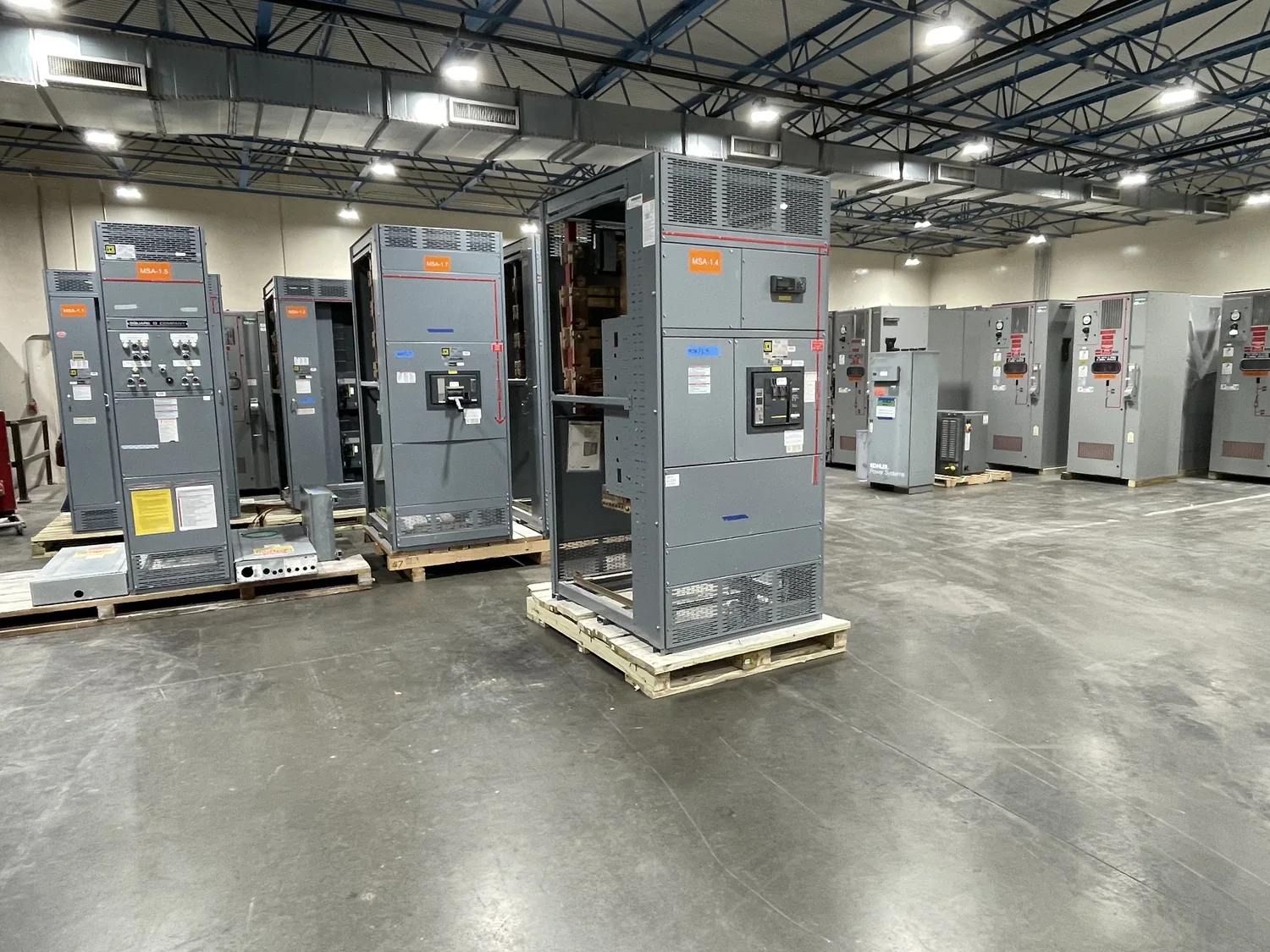
Sell surplus switchgear in Fairfax County, Virginia
If your business has surplus switchgear in Fairfax County, we can review it for purchase. We buy electrical equipment; we do not sell it. A clear, organized description helps us understand what is available and what the project may involve before either side commits to removal. We consider equipment across all voltage classes, and the seller does not need to test it for us to review a potential purchase.
A useful first step is to send clear photographs of the equipment, its nameplates, and the surrounding area. Include the number of sections or lineups, approximate dimensions, and any available information about completeness or known missing components. Photos and records are for review, not a substitute for a site-specific assessment. We do not set a final price from a general description alone; the offer depends on the equipment and the practical scope of the transaction.
What to include with your inquiry
Nameplate photos can help identify the equipment and its stated ratings, configuration, and other markings. Photograph each accessible nameplate in focus, and include wider views that show the full lineup and how its sections are arranged. If labels are obscured, damaged, or unreadable, say so rather than guessing at the details. Do not open energized equipment or enter restricted areas to get a photo; obtain images only through site-approved procedures and personnel.
Share the lineup’s approximate height, width, and depth, along with the number of sections and any known shipping or handling dimensions. Note whether sections are connected, separated, or stored, and identify available accessories or components that are included. Mention apparent damage, corrosion, missing covers, or other known condition concerns. No seller testing is required, and you should not energize equipment solely to help with a sale review.
Please also confirm who owns the equipment and who is authorized to approve its sale and removal. If ownership records, asset tags, or internal approvals are relevant, identify what documentation is available. Include the facility’s general location within Fairfax County, the appropriate project contact, and any requirements for arranging a site visit or coordinating with facilities, security, or property management.
Plan access, loading, and the removal route
Fairfax County facilities can have very different site conditions, so loading access and route planning need to be assessed for the specific project. Tell us where the switchgear is situated, how it can be reached, and whether the path includes narrow doors, corridors, stairs, ramps, low clearances, tight turns, or other constraints. Provide approximate doorway and route clearances where known, as well as the distance to the intended loading point. Do not assume that equipment can be moved through a route based on its appearance alone.
Dock scheduling, loading windows, truck access, parking restrictions, security check-in, and limits on work hours may affect the removal plan. Describe any known booking process, delivery or loading restrictions, required escorts, or coordination with building operations. If the equipment is below grade or located in a space with limited overhead clearance, flag that early. These details help the parties determine whether the planned method and timing are practical; they are not assumptions about any particular Fairfax County facility.
Lineup dimensions, weight information if available, separation points, and the route from its current position to the loading area all matter when considering handling. If drawings, equipment schedules, or prior rigging information are available, they may help with scoping. Final responsibilities, access, timing, and the removal method must be confirmed for the actual project and site before work begins.
Qualified disconnection and site coordination
Any de-energization, isolation, and disconnect work must be performed by qualified personnel under the facility’s safety requirements and outage procedures. Do not ask unqualified staff to disconnect, dismantle, lift, or handle electrical equipment. The site’s designated personnel must determine the applicable controls, work boundaries, and timing, and coordinate them with the project team before removal.
The buyer handles crane and rigging, disconnects, loading, freight, and hauling, subject to project arrangements and site access. Responsibilities and scope should be confirmed before removal, including coordination with the facility’s qualified electrical personnel for disconnect work and with site contacts for access and scheduling. The buyer pays the crane, rigging, loading, freight, and hauling costs. The precise approach depends on the equipment, route, site conditions, and agreed project plan; no particular lifting method or schedule should be assumed before those details are reviewed.
Offer and payment process
After reviewing the available information, we can discuss whether the switchgear is a fit for purchase and make a cash offer. Photos, nameplates, dimensions, completeness, ownership, access, and removal constraints all help inform that review. An offer is not final until the equipment and transaction scope have been assessed, so do not rely on an indicative discussion as a guaranteed price.
If you accept an offer, payment is arranged upfront. The seller is not asked to test the equipment as a condition of review. Before removal, confirm the agreed equipment, payment arrangements, access and dock timing, qualified disconnect coordination, loading plan, and each party’s responsibilities. For businesses in Fairfax County and across the Washington, DC, Northern Virginia, and Maryland service area, a complete initial information package can make that project-specific review more efficient without presuming facility conditions or a particular outcome.