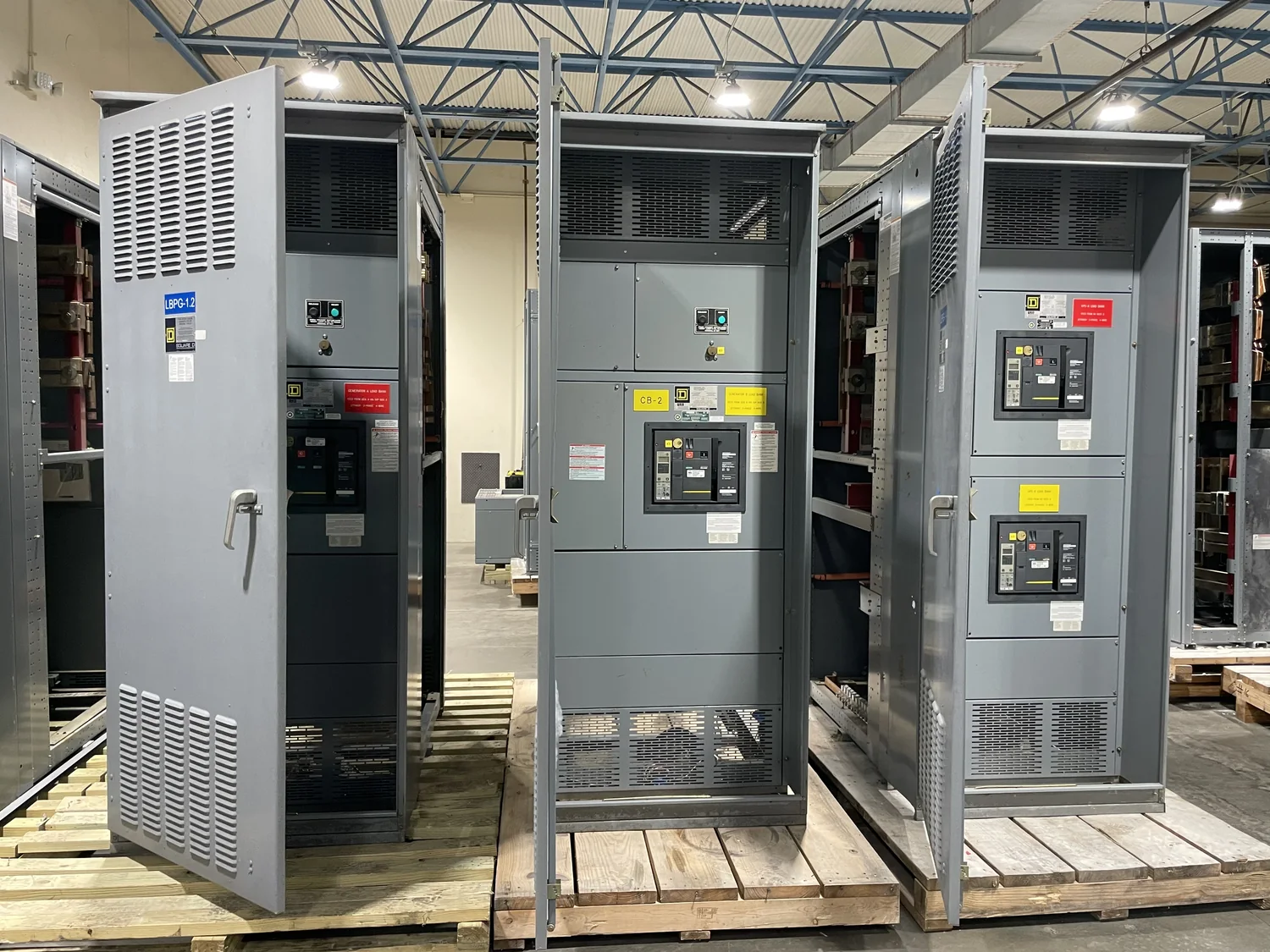
Surplus Switchgear Pickup Planning in the Washington, DC Region
Planning pickup for surplus switchgear takes more than identifying equipment that is no longer needed. A safe, workable removal depends on a clear understanding of the lineup, its condition and completeness, who owns it, how it can be accessed, and what work the site requires before it can be moved. These details help establish a realistic scope for equipment in Washington, DC, Northern Virginia, or Maryland, where facility access, building rules, operating schedules, and transportation arrangements can vary from one project to another.
We buy surplus switchgear and can make a cash offer after reviewing the available information. If you accept the offer, payment is arranged upfront. The buyer handles crane, rigging, loading, freight, and hauling, with responsibilities and arrangements confirmed for the project before removal. There is no testing requirement for the seller, and we consider equipment across all voltage classes. A review is still needed before an offer or removal plan can be finalized; neither price nor pickup timing should be assumed before the relevant details are understood.
Start With Photos, Nameplates, and Lineup Dimensions
A useful first submission combines clear, current photographs with nameplate information and approximate lineup dimensions. Photograph the full switchgear lineup from a few angles, then capture individual sections, visible labels, and nameplates closely enough to read them. Include the front and rear where accessible, along with a wider view showing the equipment in relation to its room, doorway, or loading route. Do not enter restricted areas or approach energized equipment to take pictures; arrange access through the facility’s responsible staff and follow site safety procedures.
Nameplate details can help identify equipment and describe its ratings and configuration without relying on a guess based on appearance. Share legible photographs rather than transcribed information when possible, and note any details that are missing, obscured, or uncertain. No particular manufacturer or voltage should be assumed from the page’s service-area focus: all voltage classes are considered, subject to review of the specific equipment.
Provide approximate height, width, and depth for each lineup or section, plus the number of sections if known. Mention whether sections appear joined, separated, anchored, or associated with other equipment that might affect removal. If dimensions are estimates, label them as such. Door clearances, corridors, stairs, elevators, turns, overhead obstructions, and the distance to a feasible loading point may also matter. These measurements and photographs help frame the scope, but an on-site review or additional information may be needed when access or removal conditions are not clear.
Describe Completeness, Condition, and Ownership
Explain what is included in the proposed sale and what is not. Switchgear may be offered as a complete lineup, as individual sections, or with associated components and accessories; describe the actual scope rather than assuming that everything visible is included. Note any missing doors, covers, breakers, compartments, controls, or other parts you know about, and identify components that have already been removed or are being retained. If the equipment’s condition is unknown, say so. Testing is not required from the seller, and no testing result should be implied if none is available.
Confirm that you have authority to sell the equipment, or explain who must approve its disposition. Ownership and any internal approval or documentation requirements should be resolved before a removal date is set. If equipment is part of a larger facility project, clarify which assets are included and whether any items must remain in place. This helps avoid mismatched expectations about the purchase scope, payment, and what the buyer is expected to remove.
The review is based on the information available and may lead to follow-up questions. Photos, nameplates, dimensions, and a clear inventory are practical starting points, not a substitute for confirming material facts about the assets and site. An offer is made after review; it is not a final price estimate based only on a general description or a photograph of one section.
Coordinate Safety, Access, and Removal Responsibilities
The buyer handles crane, rigging, disconnects, loading, freight, and hauling, subject to project arrangements and site access. The buyer’s responsibility for coordinating removal does not authorize unqualified people to disconnect, move, or handle electrical equipment. De-energization, isolation, and disconnect work must be performed by qualified personnel under the site’s safety procedures and any required outage controls. The facility’s responsible parties should coordinate safe work boundaries, authorization, and timing before removal proceeds.
Discuss access and scheduling early. Useful details include the facility’s available work windows, check-in or escort requirements, loading-area rules, vehicle or equipment restrictions, and whether a crane or other lifting method could be considered. Do not assume a particular approach is suitable: the equipment’s location, weight, route, clearances, building conditions, and site requirements all affect planning. Crane, rigging, disconnect, loading, freight, and hauling responsibilities and arrangements should be confirmed for the specific project before removal.
In the DC region, a pickup may involve coordinating among facility staff, property or building management, contractors, and transportation providers. That is a planning consideration, not a claim about any particular site or a guarantee of a schedule. Share known constraints and the right project contacts so the parties can confirm access, sequencing, and responsibilities. If site details are not yet known, identify them as open items rather than treating them as settled.
What to Send Before Setting a Pickup Scope
For an efficient review, send clear equipment photos, readable nameplates, approximate lineup dimensions, and a concise description of what is included. Add the equipment’s location within the facility, ownership or sale-authority details, access conditions, and any known removal constraints. Mention whether disconnect work has been planned by qualified personnel, whether outages or site approvals affect timing, and any limits on loading access or work hours. The more complete the initial information, the easier it is to identify questions that need resolution before a scope is set.
After reviewing those details, we can discuss the equipment and make a cash offer when appropriate. If you accept, payment is arranged upfront. The buyer pays the crane, rigging, loading, freight, and hauling costs, while the specific arrangements—including disconnect responsibilities, site access, and timing—are confirmed for the project. There is no seller testing requirement, and equipment from any voltage class can be considered. An offer and pickup plan remain subject to review and project coordination; neither should be treated as guaranteed before the details are confirmed.
For a seller in Washington, DC, Northern Virginia, or Maryland, the practical next step is to assemble the asset information and identify the people who can confirm ownership, safety requirements, access, and scheduling. That gives everyone a better basis to discuss a suitable removal plan without assuming facility conditions or committing to a price or date prematurely.