Switchgear asset disposition after a changeout
A switchgear changeout can leave equipment that still has potential resale value, even when it no longer fits the facility’s operating needs. Disposition is the process of evaluating that removed or soon-to-be-removed equipment and arranging a practical transfer. For organizations in Washington, DC, Northern Virginia, and Maryland, the first step is not to assume a value or schedule a truck. It is to document what is available and clarify who owns it, where it is located, and what site conditions may affect removal.
We buy switchgear; we do not sell equipment. We consider equipment across all voltage classes, and sellers do not need to test it before submitting it for review. We can make a cash offer, and when an offer is accepted, payment is arranged upfront. The offer and removal scope depend on a review of the actual equipment and project details, so no final price or removal plan can be confirmed from a general description alone.
Start with the equipment record and clear photographs
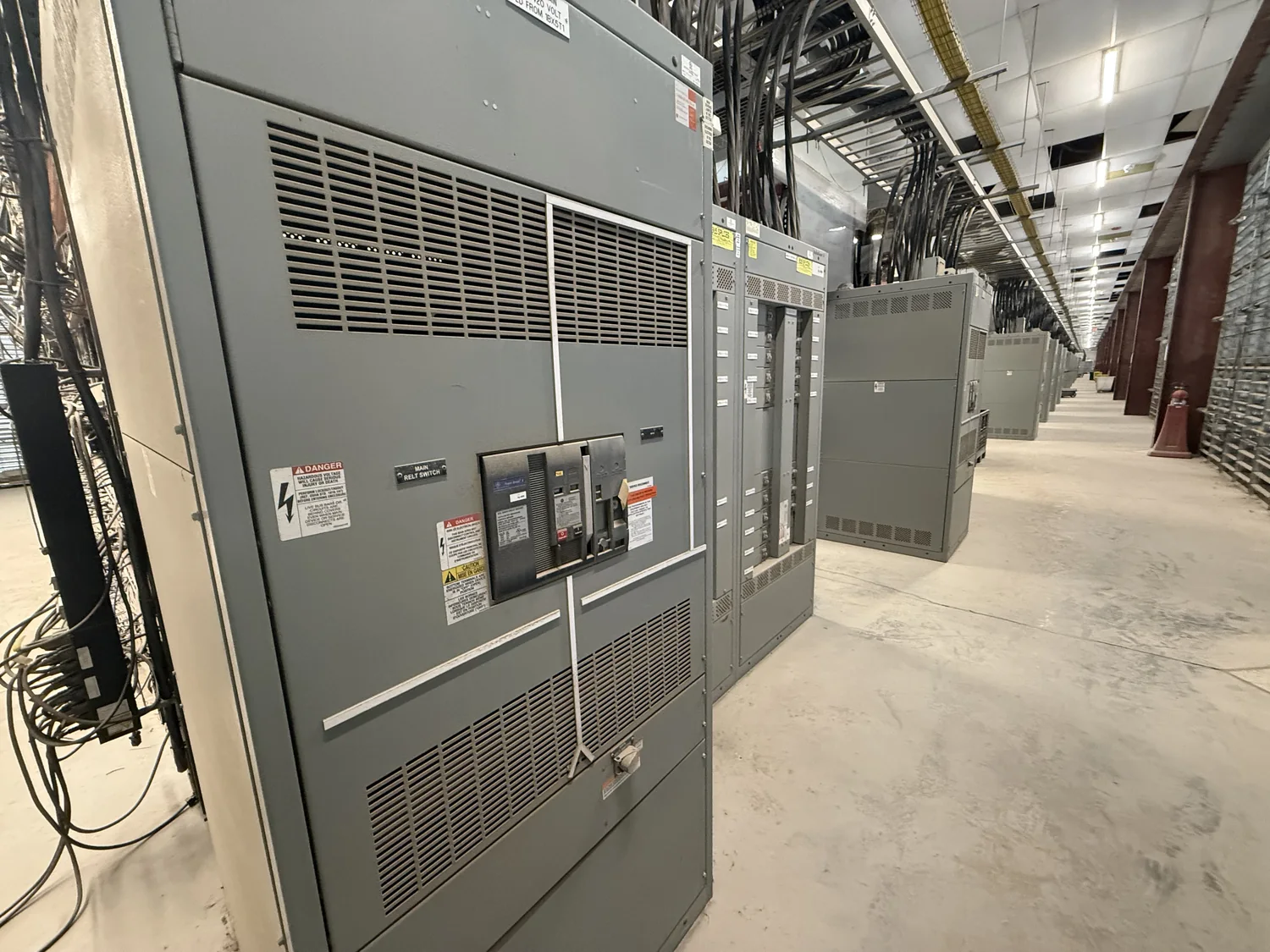
Send clear photographs that show the complete lineup, its sections, visible condition, and any included components. Close-up images of each legible nameplate are especially useful; avoid glare, distance, or angles that obscure identifying information. If labels are damaged or unreadable, say so rather than guessing at the model, ratings, or configuration. Include any available documentation that helps identify what is present, but do not delay an initial inquiry just because records are incomplete.
Provide the lineup’s overall dimensions and, if available, the dimensions of individual sections. Note the number of sections and identify items that may be included in the disposition, such as associated enclosures or other components. Completeness can affect review: disclose missing parts, components retained for reuse, visible damage, modifications, or uncertainty about what belongs with the lineup. The buyer should be able to distinguish the switchgear being offered from equipment or materials that will remain at the facility.
Nameplate details, photos, dimensions, and a straightforward inventory help establish the scope for review; they do not replace an inspection or guarantee an offer. Describe the equipment as accurately as you can, and flag anything that is uncertain. We do not require seller testing as a condition for submitting the equipment for consideration.
Confirm ownership, access, and removal constraints
Before scope is set, identify the owner or authorized seller and confirm that the equipment can be transferred. If the switchgear is subject to a lease, financing arrangement, project contract, or another party’s approval, clarify that status early. Share the facility location within the DC-region service area, the equipment’s current position, and the best site contact for coordinating access. No local office or facility-specific arrangements should be assumed; access and scheduling are established for each project.
Describe the route from the equipment to the loading area, including relevant door or corridor limitations, stairs, elevators, overhead obstructions, floor or dock constraints, and any restricted access hours. Mention whether the lineup is indoors or outdoors, whether it is already removed from its operating position, and whether parts are separated or staged. These details can influence the removal method, crew planning, equipment needs, and feasible timing. If a crane or other lifting equipment may be needed, the buyer’s review must account for site access and project arrangements; do not assume a crane can reach or set up at a particular location.
Also disclose removal constraints that could affect the work, such as adjacent equipment that must remain, limited working space, shared loading areas, building rules, or an outage window. For facilities in Washington, DC, Northern Virginia, and Maryland, travel and access timing should be coordinated around the particular site and project—not inferred from the region alone. Share known scheduling deadlines, but treat dates as subject to confirmation after the scope and access plan are reviewed.
Coordinate safe disconnects and project logistics
Any de-energization, isolation, and disconnect work must be performed by qualified personnel under the site’s safety rules and outage procedures. Do not ask unqualified staff to disconnect, move, or handle electrical equipment. The facility and its qualified personnel must coordinate the required safe work, access, and timing for the project. The seller should explain what work has already been completed and what remains, without assuming that equipment is ready for removal merely because a changeout has occurred.
The buyer handles crane, rigging, disconnects, loading, freight, and hauling, subject to project arrangements and site access. Responsibilities and the planned work sequence should be confirmed before removal, including how the equipment will be made accessible and when qualified personnel can complete any required disconnect or isolation work. Discuss who coordinates site entry, any facility-required procedures, the loading area, and the expected removal window. These conversations help align the scope; they do not authorize anyone to bypass site safety rules or perform work outside their qualifications.
A practical removal plan depends on the actual lineup, route, lifting and loading conditions, and the timing available at the facility. If the equipment’s condition, dimensions, location, or included components change after the initial review, report the change before removal so the parties can reassess the plan. Responsibilities are confirmed for the project rather than presumed from a standard arrangement.
Review the offer and prepare for removal
Once the equipment information and project details have been reviewed, we can determine whether to make a cash offer and discuss the proposed scope. The offer is not final until the equipment and relevant details have been reviewed, and it should not be treated as a guaranteed valuation. If the offer is accepted, payment is arranged upfront. Confirm the agreed payment and removal arrangements before the equipment is released, and make sure the person accepting the offer is authorized to do so.
Before the scheduled work, verify that the lineup and included items match the agreed description, that ownership and transfer authority are clear, and that site access and qualified-personnel coordination are in place. Confirm the removal window, access route, loading conditions, and the buyer’s responsibilities for crane, rigging, disconnects, loading, freight, and hauling. If site conditions or scope have changed, raise them promptly rather than relying on the original assumptions.
A well-documented disposition review helps a facility move from changeout to removal with fewer avoidable surprises. Clear photos, readable nameplates, lineup dimensions, completeness notes, ownership confirmation, and honest access details provide a useful starting point. With the scope reviewed and safety and logistics coordinated for the specific site, sellers across Washington, DC, Northern Virginia, and Maryland can decide whether an upfront-paid cash offer and buyer-managed removal fit their project.