Switchgear Bus Configuration Review for Sellers in the Washington, DC Region
If your facility is considering the sale of switchgear, a bus configuration review helps establish what equipment is present and how it may be handled as an asset. Bus arrangement can affect how a lineup is divided, identified, and removed, so a brief description alone may not be enough to define the scope. The buyer reviews the information you provide before making an offer; there is no guaranteed price or removal plan before that review.
This guide is for sellers across Washington, DC, Northern Virginia, and Maryland. It focuses on practical preparation rather than assumptions about a particular facility, manufacturer, or voltage specification. The buyer purchases equipment only—it does not sell switchgear. It considers all voltage classes, and the seller is not required to test equipment as a condition of requesting an offer. If an offer is accepted, payment is arranged upfront, with project responsibilities and timing confirmed before removal.
What to Document About the Bus and Lineup
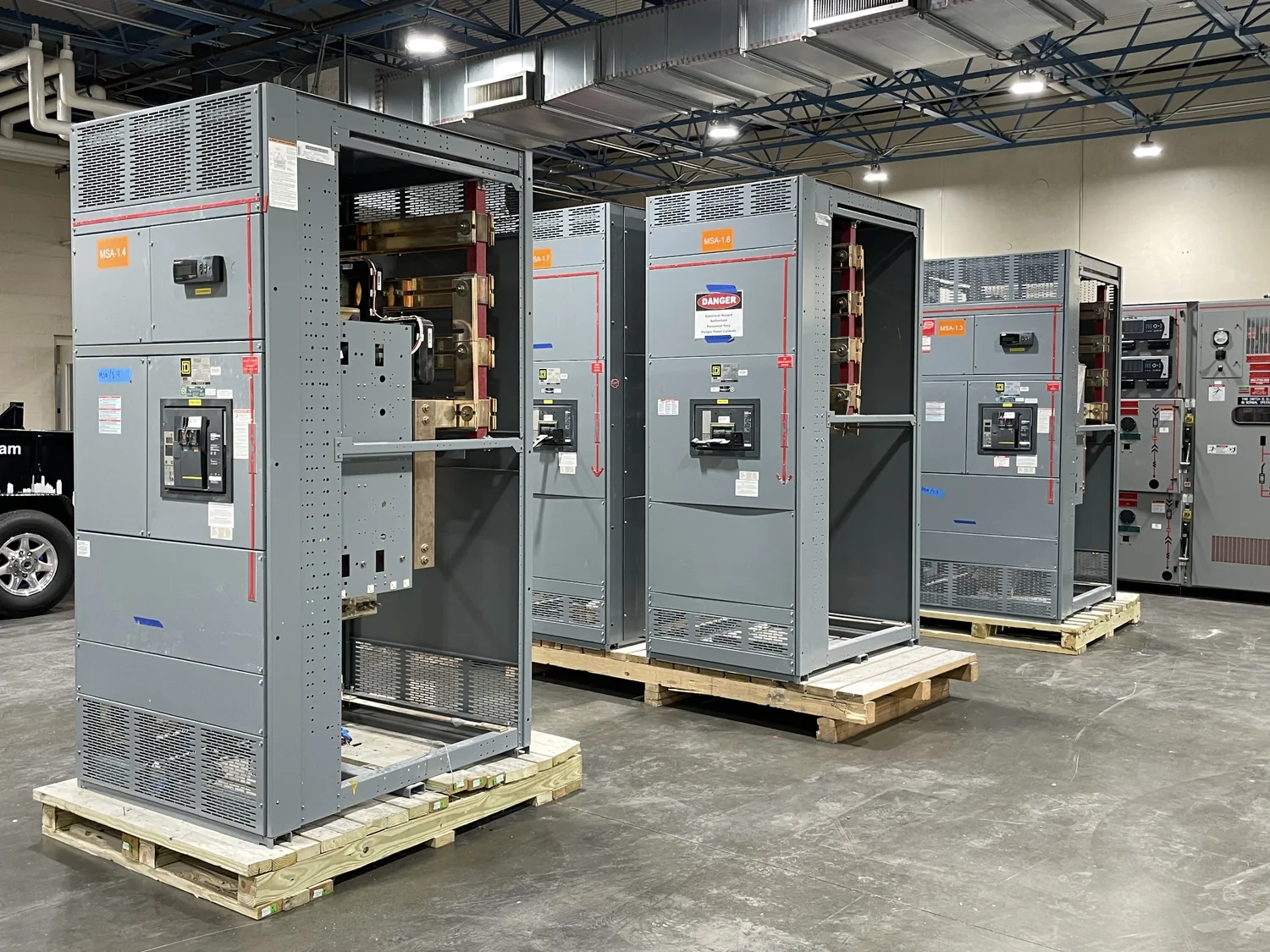
Start with clear photos that show the full lineup, its sections, and visible bus connections or transitions where safely accessible. Include close views of nameplates, labels, and identification markings, plus wider views that show how sections sit together. Photos are for review only: do not remove covers, open compartments, or approach exposed electrical parts to obtain them. If a photo cannot be taken safely under site rules, note what is unavailable instead.
Provide legible nameplate information when visible, including manufacturer and model identifiers, ratings, and other listed configuration details. Do not guess at missing information. A lineup description, section count, and any known bus arrangement or separation between sections can help clarify what is being offered. Note whether the equipment is complete or whether components, doors, covers, or other parts are absent. Disclose known modifications or items that are not included so the buyer can assess the actual scope rather than assume a standard configuration.
Measure overall lineup length, height, and depth if those measurements can be obtained safely, and identify any projections or nearby obstructions that affect handling. If the lineup is divided into sections, section-by-section dimensions and approximate weights, when known, may be useful. Do not treat estimates as verified shipping measurements; the buyer may need to confirm dimensions or handling details during review.
Ownership, Access, and Removal Conditions
Before requesting an offer, confirm that you own the equipment or are authorized to sell it, and clarify whether the sale includes the full lineup or only specified sections. Identify anything excluded from the sale and any known liens, ownership questions, or internal approvals that could affect transfer. A clear scope helps prevent misunderstandings when equipment is identified, priced, and scheduled for removal.
Access information is just as important as equipment details. Describe where the switchgear is located, the route from its current position to the loading area, and any stairs, narrow doors, elevators, floor transitions, restricted corridors, or other obstacles. Share practical site constraints such as permitted work windows, loading-area limits, security or escort requirements, and scheduling coordination needs. These details are particularly useful when planning work across the DC region, where a project’s access and timing depend on the individual property and its operating requirements. No facility conditions should be assumed from the location alone.
Also describe removal constraints: whether sections can be moved intact, whether the equipment is anchored, and what nearby equipment or building features may restrict maneuvering. These are planning questions, not instructions for the seller to perform removal work. The buyer’s review and project arrangements determine the handling plan, subject to site access and coordination.
Qualified Disconnection and Project Coordination
Any de-energization, isolation, and disconnection must be handled by qualified personnel under the site’s safety procedures and outage requirements. Sellers should not ask unqualified staff to disconnect, dismantle, or handle electrical equipment. Coordinate the required work, approvals, access, and timing with the responsible site personnel before removal is scheduled. The buyer can coordinate project responsibilities with the seller, but the exact division of work must be confirmed for the specific project.
The buyer handles crane, rigging, disconnects, loading, freight, and hauling, subject to project arrangements and site access. Confirm these responsibilities before removal, including how disconnect work will be coordinated with qualified personnel and what work windows the facility can support. The buyer pays all crane, rigging, loading, freight, and hauling costs; the project plan should still document the agreed scope and any site-specific coordination needed. This clarity is useful when arranging access among facility staff, contractors, and the buyer, without presuming particular permits, services, or site conditions.
Requesting an Offer
To begin a review, provide the photos and nameplate images you can safely obtain, lineup and section dimensions, any known bus configuration details, completeness information, and a concise description of what is included. Add ownership or authorization details, the equipment location within the facility, access conditions, removal constraints, and scheduling considerations. If some information is unknown, say so; an accurate note is more useful than an unsupported estimate.
The buyer reviews the submitted information and can make a cash offer after assessing the equipment and project scope. No seller testing is required, and all voltage classes are considered. An offer is not final until the relevant equipment, ownership, logistics, and arrangements have been reviewed and confirmed. If accepted, payment is arranged upfront. Removal timing and responsibilities are coordinated for the specific project, with the buyer handling crane, rigging, disconnects, loading, freight, and hauling subject to agreed arrangements and site access.