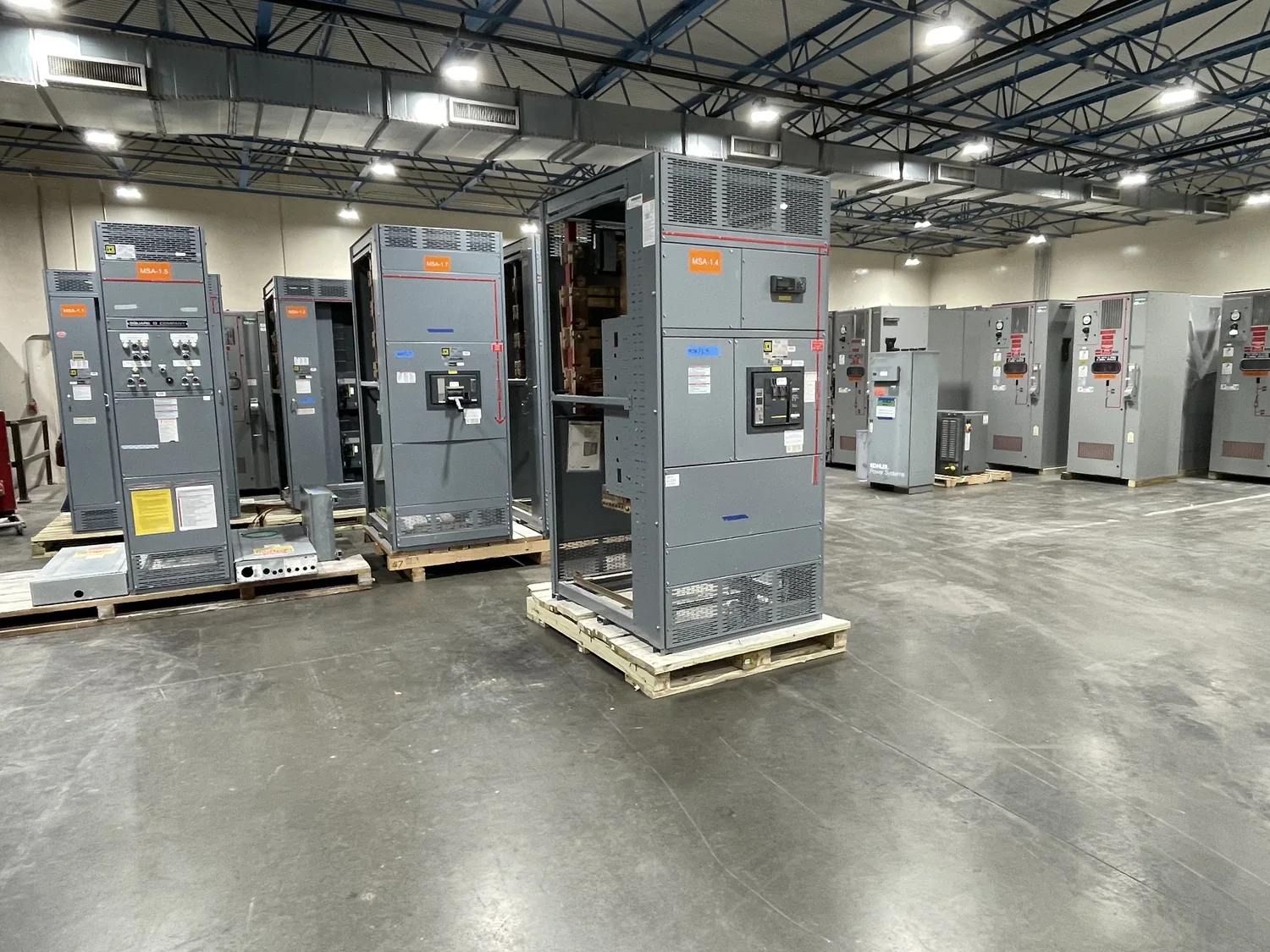
Switchgear Buyer Crane and Rigging Planning
Selling switchgear can involve more than agreeing on an equipment price. A lineup may be inside an electrical room, below grade, behind other equipment, or accessible only through a specific corridor or loading area. Before a removal plan can be set, the buyer needs enough information to understand what is being considered, where it is located, and how it might be moved safely from the site.
For sellers in Washington, DC, Northern Virginia, and Maryland, access and scheduling can vary considerably from one facility to another. A downtown building, a campus, a utility space, and an industrial site may each have different delivery routes, loading restrictions, operating hours, and outage requirements. Share the known constraints rather than assuming a standard crane or rigging plan will work. The buyer purchases equipment only; it does not sell switchgear. It can make a cash offer after reviewing the available details, and payment is arranged upfront when an offer is accepted.
Start With Equipment Identification and Photos
Send clear, well-lit photographs of the complete switchgear lineup and its surroundings. Useful views include the front and rear where accessible, each section, visible nameplates, bus or cable entry areas, and any labels that help identify the equipment. Include close-ups of nameplates and rating information, along with an overall view that shows how the lineup is arranged. Do not remove covers or enter restricted areas to obtain photographs; follow site rules and have qualified personnel assist when access requires it.
Nameplate details, equipment type, ratings, manufacturer and model information, and the number of sections may help the buyer understand the asset. The buyer considers all voltage classes, but the seller does not need to perform testing to submit equipment for review. If a nameplate is missing, unreadable, or inaccessible, say so and provide whatever identification is safely available. Photos and descriptions support an initial review; they do not replace an inspection or guarantee an offer.
Provide approximate lineup dimensions, including overall length, height, and depth, if known. Note whether sections appear joined, whether there are separate cabinets or auxiliary components, and whether any parts are missing or have already been removed. Mention known breakers, relays, control components, bus sections, or accessories only to the extent they can be identified without dismantling equipment. Completeness can affect how the asset is reviewed and what removal scope may be practical.
Describe the Route From Equipment to Pickup
Rigging decisions depend on the entire path out of the building, not just the switchgear’s location. Share the floor or level, door and corridor widths, ceiling clearances, turns, stairs, elevators, ramps, dock or ground access, and the distance to a possible loading position. Mention relevant restrictions such as limited staging space, occupied areas, loading-dock reservations, operating-hour limits, security check-in, vehicle restrictions, or requirements to protect floors and walls. If dimensions are approximate, label them as estimates so the removal plan can be confirmed against site conditions.
Crane access may be relevant when equipment must be lifted through an opening or over an obstruction, but it should not be assumed. Potential lift points, overhead obstructions, nearby structures, pavement or ground conditions, permitted staging areas, and the ability to position equipment all require project-specific review. Rigging equipment and methods likewise depend on the switchgear’s configuration, weight information when available, and route conditions. Do not estimate a lift from photographs alone or treat an initial discussion as approval of a specific method.
The buyer handles crane, rigging, disconnects, loading, freight, and hauling, subject to the project arrangements and site access. Responsibilities, access conditions, timing, and the removal scope should be confirmed before removal is scheduled. If the site has special procedures for contractors, vehicles, lifting, escorts, or work in occupied spaces, disclose them early so the plan can account for those requirements.
Coordinate Ownership, Disconnection, and Site Procedures
Confirm who owns the switchgear and who has authority to approve its sale and removal. If the equipment belongs to a landlord, tenant, utility, contractor, or another organization, clarify the necessary approvals before an offer is accepted or work is arranged. Also identify whether the lineup is in active service, already de-energized, isolated, or awaiting an outage. These details help establish a workable sequence but do not substitute for the facility’s safety procedures.
De-energization, isolation, and disconnect work must be performed by qualified personnel under the site’s applicable safety and outage procedures. Sellers should not attempt to disconnect, dismantle, lift, or handle electrical equipment unless they are qualified and authorized to do so. Coordinate the required outage window, switching or isolation steps, access permissions, and work timing with the responsible site personnel. The buyer can coordinate the removal scope with the seller, but site control and required safety approvals must be addressed for the specific project.
Explain any known removal constraints, such as connected conduit or bus, embedded or anchored sections, restricted access, adjacent equipment that must remain in place, or a requirement to preserve parts of the installation. Do not modify or remove components just to prepare for a buyer’s review unless the work has been authorized and planned by qualified personnel. Clear information about what can be removed, what must remain, and who will perform each task reduces ambiguity before mobilization.
Align the Offer and Removal Plan Before Scheduling
A useful initial submission combines equipment information with practical site details: clear photos, readable nameplates where available, approximate lineup dimensions, completeness, ownership and sale authority, equipment location, route and access conditions, and known removal restrictions. Include a contact who can answer questions and coordinate with facilities or operations staff. If details are not known, identify them as unknown rather than guessing. The buyer may request additional information or a site review before confirming the scope.
No testing is required from the seller. The buyer reviews the information and can make a cash offer, but a final price cannot be set responsibly without reviewing the equipment and relevant project details. If an offer is accepted, payment is arranged upfront. The buyer pays the crane, rigging, loading, freight, and hauling costs, with the specific responsibilities and arrangements confirmed before removal. This does not mean every site condition or schedule is automatically covered; access, timing, and work scope remain subject to project review and coordination.
Before removal, confirm the accepted equipment scope, payment arrangement, pickup timing, site access, required outage coordination, and the responsibilities of the parties. The same confirmation should address staging and loading arrangements and any access limits that could affect the plan. A clear handoff helps the seller understand what is being sold and allows the buyer to arrange removal around the actual equipment and site conditions in the Washington, DC region, including Northern Virginia and Maryland.