Plan the changeout around the equipment and the outage
A switchgear changeout timeline is shaped by more than the day a replacement lineup arrives. Sellers also need to coordinate the existing equipment’s review, ownership and disposition, site approvals, outage window, safe disconnection, removal route, and handoff. In the Washington, DC region—including Northern Virginia and Maryland—access and scheduling are specific to each facility and project. Do not assume that a particular building has a loading dock, crane access, available staging area, or a preferred work window; confirm those details with the people responsible for the site.
If you are replacing equipment and want to sell the existing switchgear, start the buyer discussion early enough to review the asset and plan removal alongside your project schedule. An initial review can help identify information still needed, but it does not establish a final price or guarantee a removal date. The buyer purchases equipment only; it does not sell replacement switchgear. A cash offer can be made after review, and payment is arranged upfront if the offer is accepted, with payment and removal responsibilities confirmed before work proceeds.
Start with a useful equipment record
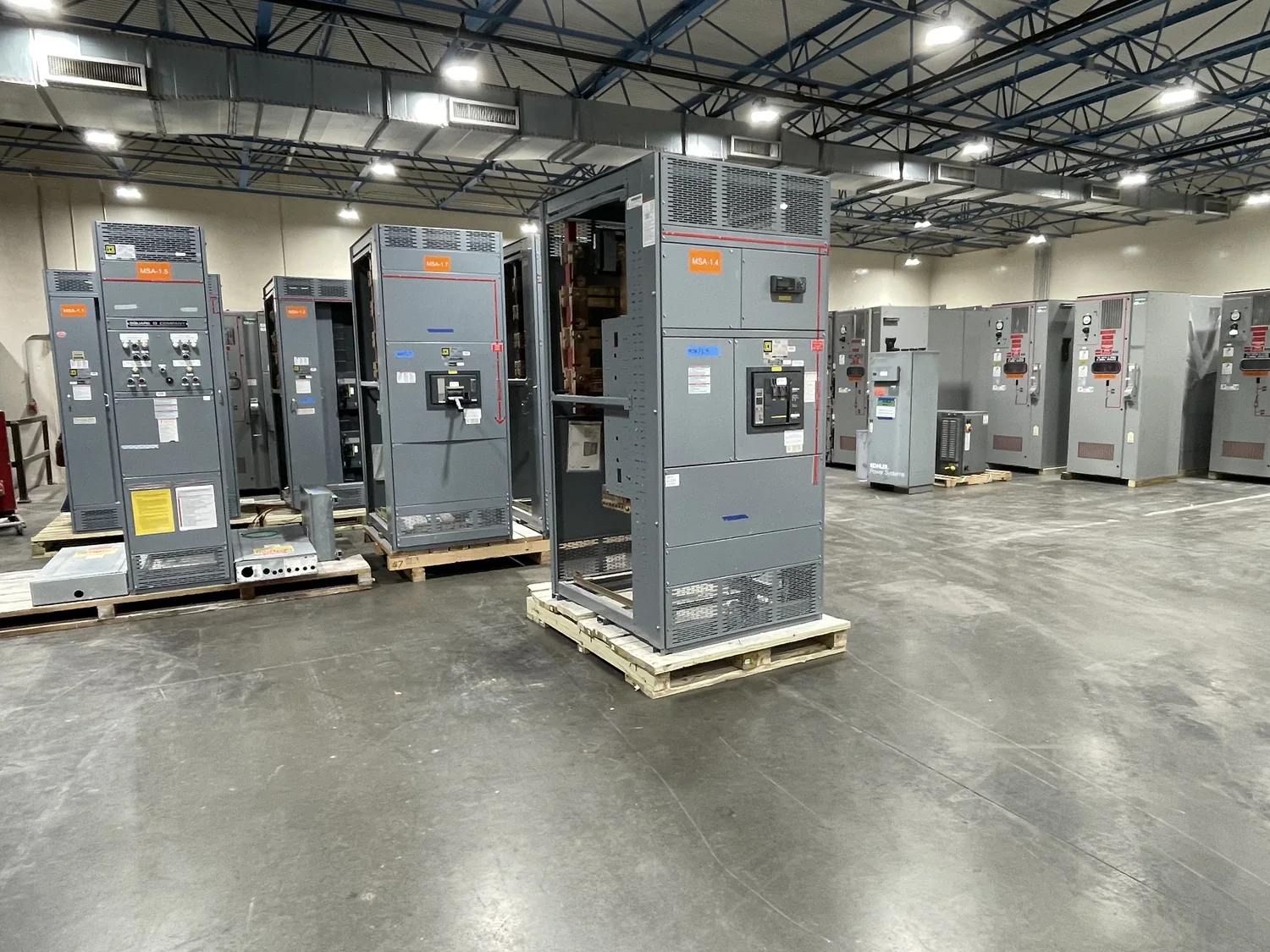
Clear photographs and accurate identifying details make an early review more useful. Photograph each lineup from several angles, including the front, sides, rear where safely accessible, and any visible sections or attachments. Include readable nameplates and labels, but do not open covers or enter restricted areas to obtain a picture. Qualified site personnel should determine what may be accessed and when. If a label is worn or obscured, a wider image that shows its location can still help the reviewer understand what additional information may be needed.
Provide lineup dimensions, including overall length, height, and depth where available, and note whether the equipment is one assembly or multiple sections. Identify visible breakers, meters, relays, bus sections, compartments, and included accessories without guessing at specifications. Nameplate information and ratings matter across all voltage classes, so share what is legible rather than filtering out equipment based on voltage. Completeness also matters: note missing sections, removed components, known damage, modifications, or items that are not included in the sale. The seller is not required to test the equipment. Do not arrange testing solely for a buyer review unless the parties separately agree that it is appropriate and safe.
Confirm ownership, scope, and the removal window
Before scope is set, establish who owns the equipment and who has authority to sell it. If a facility owner, tenant, contractor, lender, or another party has an interest in the asset, identify the decision-maker and confirm that sale and removal are authorized. Share the site’s location at an appropriate level for planning, a project contact, and any access rules or scheduling restrictions. These details help the buyer assess whether a proposed removal window and logistics plan are workable; they are not a substitute for site approval.
Discuss the anticipated sequence with the project team: when the replacement work is planned, when the existing lineup can be released, how long the site can support removal activity, and whether equipment must remain in place until a specific milestone. Changes to the outage or construction schedule can affect the planned handoff. Agree on a target window and confirm it again as the project approaches. A preliminary conversation should not be treated as a firm appointment, completed scope, or final offer until the equipment and project arrangements have been reviewed and confirmed.
Coordinate safe disconnection and site access
De-energization, isolation, and electrical disconnect work must be performed by qualified personnel under the site’s safety rules and outage procedures. Do not ask unqualified staff, a buyer’s driver, or a general removal crew to disconnect energized equipment or carry out electrical work. The facility’s authorized personnel should determine the required shutdown, isolation, verification, and release steps, and coordinate timing with the project team and buyer before removal.
The buyer handles crane, rigging, disconnects, loading, freight, and hauling, subject to project arrangements and site access. This does not authorize anyone to bypass site controls or perform electrical work without the required qualifications and approvals. Confirm in advance which disconnect activities are within the agreed scope, who is responsible for each task, and how the site will release equipment for removal. Share access constraints that could affect the plan, such as door and corridor dimensions, stairs, elevators, overhead clearance, turning space, floor or loading-area limits, security check-in, work-hour rules, and available staging space. These are planning questions, not assumptions about any particular DC-area property.
Set the handoff before equipment leaves
A realistic changeout plan accounts for the physical route out of the facility as well as the equipment itself. Provide dimensions for the lineup and, if known, the narrowest door, corridor, gate, or other passage on the removal route. Note whether sections can be separated, whether accessories or loose components are included, and whether the equipment must be removed intact or in pieces. Do not dismantle or alter the lineup to make it easier to remove without coordination; changes may affect the equipment description, handling plan, and offer review.
Before removal, confirm the equipment included, the agreed schedule, site access and safety requirements, buyer and seller responsibilities, and any project-specific arrangements for crane, rigging, disconnects, loading, freight, and hauling. The buyer pays those costs, with responsibilities confirmed before removal. Payment is arranged upfront when an offer is accepted; the timing and method should be settled with the buyer before the equipment is released. A final offer depends on review of the actual equipment and relevant project details, so photos and preliminary information are a starting point—not a price guarantee. Providing a clear asset record and coordinating early with qualified site personnel gives the project team a practical basis for fitting disposition into the wider changeout timeline.