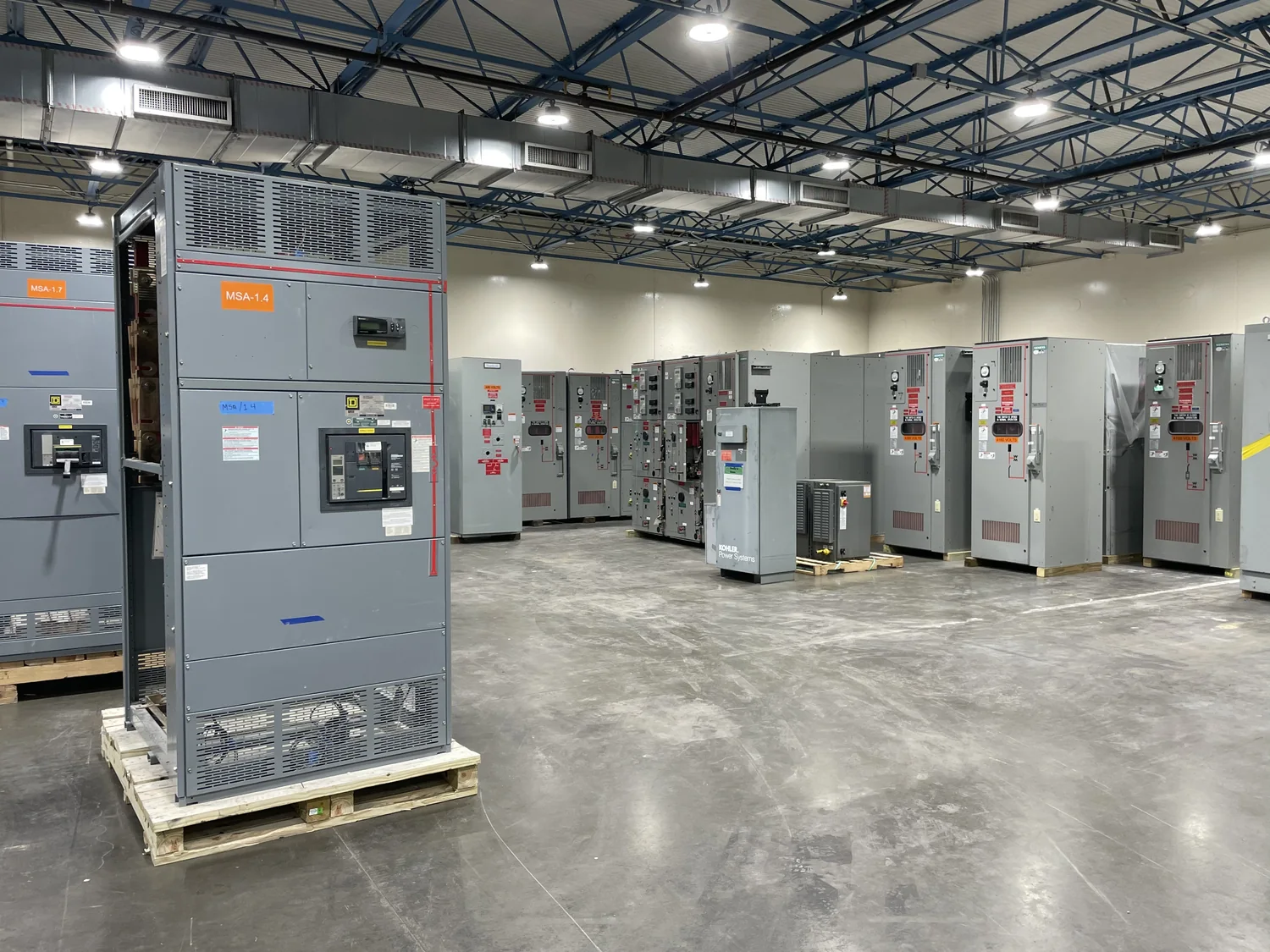
What a Switchgear Completeness Review Covers
A switchgear completeness review is a practical first step in deciding whether equipment may fit a buyer’s purchasing criteria and how a potential removal could be scoped. For sellers in Washington, DC, Northern Virginia, and Maryland, it helps organize the information needed to discuss the asset before arranging a site visit or removal plan. The review is not a field inspection, electrical test, certification, or guarantee of value. It is an information-based assessment, with any offer subject to the buyer’s review of the equipment and project details.
Switchgear often consists of a lineup or assembly of sections, devices, controls, and accessories. A seller’s understanding of what remains can differ from the equipment’s actual configuration, especially after renovations, partial replacements, or component removals. The review therefore focuses on the lineup as it exists today: what is present, what is missing or separated, and whether the available records and photographs describe the same equipment. Sellers do not need to test the equipment to request consideration, and the buyer considers all voltage classes. No specific voltage rating or completeness level should be assumed to determine an outcome without review.
Information to Gather Before Scope Is Set
Clear, current photographs are among the most useful starting points. If practical and safe, provide overall views of the lineup and individual sections, plus close-ups of nameplates and visible labels. Include photographs of the front and rear where those areas are safely accessible, along with any separately stored components believed to belong to the lineup. Do not remove covers or enter restricted areas to obtain pictures. A qualified person should handle any access that requires opening electrical equipment or working near hazards.
Nameplate information may help identify the equipment and distinguish one lineup from another. Useful details can include the manufacturer, model or catalog information, serial numbers, rated voltage, current ratings, and other legible markings. These details are for identification and review; they do not establish condition, operability, or a final price. If a nameplate is damaged, obscured, or unavailable, say so rather than guessing. The buyer should not be given unsupported claims about a product’s capabilities or condition.
Provide the lineup’s approximate overall dimensions, including length, height, and depth if known, and note the number of sections. Measurements should be presented as estimates unless verified. Mention unusual shapes, attached enclosures, bus duct or other connected equipment, and separate crates or loose parts that may affect the scope. An equipment list, drawings, or prior inventory can help, but explain whether those records are current and whether they cover the entire lineup. Completeness can depend on the specific configuration and what is actually included, so a list alone may not resolve discrepancies.
Completeness, Ownership, and Site Access
Describe what is included and what is not. For example, identify any sections removed from the lineup, components stored elsewhere, missing doors or panels, or accessories that are believed to be associated with the equipment. Note whether the equipment is installed, disconnected, stored, or partly dismantled. Be candid about unknowns. A useful review distinguishes observed facts from assumptions, rather than treating an incomplete inventory as proof that every expected component is present.
Confirm that the seller has authority to offer the equipment for purchase and identify any ownership, lease, lien, project, or other restrictions that could affect transfer. The buyer may need to confirm ownership and the seller’s authority before an offer or removal scope can be finalized. Do not represent equipment as available for sale if another party controls it or approval is still outstanding.
Access details matter in the DC region, where a project’s route, building rules, traffic constraints, loading arrangements, and available work windows can affect scheduling. Share the site location at an appropriate level, the equipment’s floor or area, the route from its current position to the loading point, and any known limits on doors, elevators, corridors, dock use, staging, or vehicle access. Include site contacts, required advance coordination, working hours, and any restrictions on photography or contractor access. These are planning questions, not assumptions about a particular facility. The actual schedule depends on site access, project readiness, and coordination among the parties.
Safe Removal and Project Responsibilities
No seller should disconnect, move, or handle electrical equipment unless qualified and authorized to do so. De-energization, isolation, and disconnect work must be performed by qualified personnel under the site’s safety and outage procedures. The timing and access for this work must be coordinated for the project. Do not treat a buyer’s interest or an accepted offer as authorization to bypass site controls, outage approvals, or required safety steps.
The buyer handles crane, rigging, disconnects, loading, freight, and hauling, subject to the project arrangements and site access. The buyer pays those costs, with responsibilities and scope confirmed before removal. This does not mean every site condition or schedule is automatically covered: the parties need to establish what work is required, what access is available, and how the planned removal fits the facility’s procedures. Sellers should flag known obstructions, restricted routes, limited staging, unusual lifting needs, or other constraints early. No one should assume a particular crane, rigging method, vehicle, or removal date before the project is reviewed.
A clear handoff helps avoid mismatched expectations. Confirm whether the equipment will remain in place until the coordinated removal, who controls access, when qualified personnel can complete disconnect work, and whether the site has separate approval or documentation steps. The buyer’s handling of removal logistics does not replace the facility’s authority over its property, access, or safety rules.
Offer Review and Payment
Once the buyer has reviewed the photos, nameplates, dimensions, completeness information, ownership details, and access constraints, it can determine whether to make an offer and what additional review may be needed. An initial discussion is not a final price, and no amount should be assumed before the equipment and project information have been reviewed. If important details change—for example, the lineup differs from the photographs, ownership approval is incomplete, or removal access is more restricted than described—the scope and offer may need to be reconsidered.
The business buys switchgear; it does not sell equipment. It can make a cash offer, and payment is arranged upfront when an offer is accepted. Sellers are not required to test equipment as a condition of requesting consideration. Before accepting, make sure the equipment being offered, payment arrangement, removal responsibilities, access plan, and timing are understood and confirmed. A complete, accurate submission gives the buyer a more useful basis for review while leaving room to resolve project-specific questions before any removal is scheduled.